
Background
After nearly 20 years in exile, Bangladesh Nationalist Party (BNP) leader Tarique Rahman has re-emerged at the centre of Bangladeshi politics, with opinion polls suggesting he could win one of the country’s most consequential elections. His return follows the dramatic ouster of long-time prime minister Sheikh Hasina in August 2024 after a youth-led uprising, ending an era dominated by the rivalry between Hasina and Rahman’s mother, former premier Khaleda Zia.
From Exile to Centre Stage
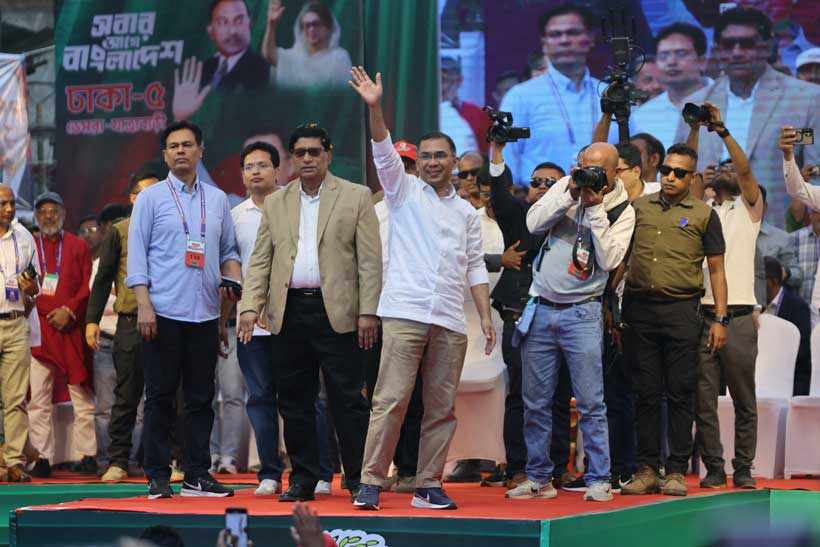
Rahman left Bangladesh in 2008 after his release from detention during a military-backed caretaker government, citing medical treatment. From London, he watched as his party was marginalised, its leaders jailed and its organisational structure weakened. His return to Dhaka last Christmas, greeted by massive crowds, marked a striking reversal of fortunes and symbolised the BNP’s revival after years in political exile.
A Dynastic Legacy, Recast
Born into one of Bangladesh’s most powerful political families, Rahman is the son of independence figure and former president Ziaur Rahman. Though he never held formal office during his mother’s premiership, he was widely accused of operating a parallel power structure in the early 2000s, allegations he has consistently denied. Since returning, Rahman has sought to shed that image, presenting himself instead as a restrained and conciliatory leader focused on stability rather than vendetta.
Policy Signals and Political Promises
Rahman has pledged to rebalance Bangladesh’s foreign relations, moving away from perceived overreliance on India and seeking broader investment partnerships. Domestically, he has emphasised social welfare for poor families, economic diversification beyond garment exports, and institutional reform. His proposal to limit prime ministers to two terms over a maximum of 10 years is aimed squarely at preventing a repeat of what critics see as Hasina-era authoritarianism.
Legal Battles and Image Rehabilitation
Under Hasina’s rule, Rahman was convicted in absentia in multiple corruption cases and sentenced to life imprisonment over a 2004 grenade attack on a Hasina rally. He has always maintained the charges were politically motivated and has since been acquitted following the change in power. His softer public tone, emphasis on reconciliation, and even the viral popularity of the family’s pet cat have helped humanise his image and broaden his appeal beyond core BNP supporters.
Control Within the Party
Inside the BNP, Rahman’s authority is largely uncontested. He is now directly managing candidate selection, alliances, and strategy roles he once carried out from abroad. Party insiders say this hands-on leadership has restored discipline and confidence after years of fragmentation.
Personal Analysis
Tarique Rahman’s rise reflects both personal political survival and a deeper transition in Bangladesh’s political order. His cautious rhetoric suggests an awareness that voters are fatigued by cycles of revenge politics and authoritarian drift. Yet the challenge ahead is structural, not just rhetorical. Rahman inherits a country with weakened institutions, polarised politics, and high public expectations. His dynastic background may open doors within the BNP, but it also raises questions about whether meaningful democratic renewal can emerge from familiar family rule. If Rahman succeeds, it will be less because of his lineage and more because he convinces a sceptical public that this time, power will be exercised with restraint and eventually, willingly shared.