
To advance climate justice and empower vulnerable communities, we need to rethink architectural education. Climate resilience and social equity should be embedded as foundational pillars of our curriculum — not sidelined as electives or afterthoughts
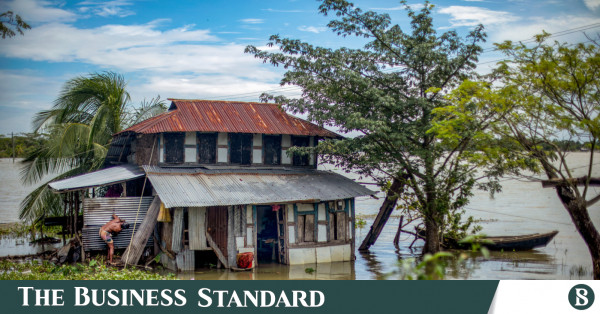
Architecture students should be asked to design flood-resistant homes for coastal communities, not just museums and skyscrapers, as part of their assignments. Photo: TBS
“>

Architecture students should be asked to design flood-resistant homes for coastal communities, not just museums and skyscrapers, as part of their assignments. Photo: TBS
With climate change accelerating and social inequalities widening, architects have a more important role to play than ever. In addition to designing beautiful buildings, architecture aims to create resilient, sustainable environments that benefit all segments of society, especially the most vulnerable. It is therefore imperative that our architecture classrooms prepare a new generation of climate-conscious and socially responsible professionals.
In order to promote climate action and uplift marginalised populations, we must rethink what and how we teach. It is crucial to integrate climate change and social inequality into the core of architectural education rather than treat them as optional or secondary topics. Beginning in the first year of study, topics such as climate adaptation, sustainability, affordable housing, disaster resilience, and community engagement must become foundational discussions.
In order to focus on real-world problems faced by vulnerable communities, studio projects and assignments can be revised. An alternative design studio could, for example, ask students to design low-cost, flood-resistant housing for displaced populations in coastal Bangladesh instead of a conventional museum or skyscraper.

By utilising local materials, passive cooling techniques, and modular construction methods, they could create affordable and environmentally friendly buildings. This type of constraint stimulates creativity as well as grounds students in the responsibilities of their future professions.
Fostering partnerships between academic institutions and real communities is another effective method. A field visit provides students with the opportunity to learn about the challenges faced by marginalized groups, such as informal settlers, climate refugees, or low-income rural residents. It is possible to establish collaborative projects in which students work directly with communities to develop solutions that meet their actual needs. As a result, students are able to cultivate empathy and a deeper understanding of the role architecture plays in promoting equity and resilience.
It is also crucial to include practical problem-solving exercises in courses on environmental design, building science, and sustainability. In a building technology course, students might conduct energy simulations of different types of buildings to minimise carbon footprints. As part of the project, students may be required to propose retrofitting strategies to make existing buildings more energy-efficient while keeping low-income groups in mind. The merging of technical proficiency with a consciousness of social and environmental impact is achieved in this way.
It is also important to foster interdisciplinary learning. Collaborating with peers in environmental science, social work, urban planning, and public health programmes is important for architecture students. It is possible to broaden their perspective by attending joint workshops and seminars on topics such as climate adaptation planning, participatory design, or sustainable rural development, which will prepare them for the complexities of real-world projects involving multidisciplinary collaboration.
It is also possible to motivate employees through design competitions and internal awards. The institutions can organise annual competitions in which students design solutions to real climate or social challenges, such as cooling urban heat islands, rehabilitating slum areas, or designing schools for climate-affected regions. Public exhibitions of winning entries or collaborations with local governments or NGOs are possible options. Students are inspired when such efforts are recognised, but the public is also made aware of these efforts.
In shaping this new mindset, faculty members play a pivotal role. Through lectures, critiques, and project briefs, teachers should emphasise the importance of architecture serving humanity and the planet. Case studies of successful socially driven projects, such as Hassan Fathy in Egypt, Anna Heringer in Bangladesh, or the green urban initiatives in Medellín, Colombia, should be integrated into the curriculum to show students that impactful, climate-responsive architecture is both achievable and necessary.
Changing how success is defined within the academic setting is also crucial. There has been a tradition of celebrating grand, iconic designs in architecture schools. Design must be valued for its thoughtfulness, sustainability, and social impact, regardless of its size. Rather than focusing on aesthetic innovation alone, studio juries and evaluations should recognise students who demonstrate an understanding of social dynamics, environmental stewardship, and user participation.
The use of technology can also be an important enabler. It is important to introduce digital tools such as energy modelling software, GIS mapping, and participatory design platforms at an early stage in the curriculum. Environmental risks can be assessed, climate-resilient settlements can be planned, or real-time community input can be gathered digitally. As important as traditional design skills in today’s world is the ability to leverage technology to benefit society and the environment.
In addition, schools can implement long-term community engagement programmes whereby each new batch of students works on a continuous project over time, establishing a lasting relationship with a marginalised community. Students can observe their designs’ impact over time and learn patience and persistence as they create meaningful change. Aspirations and values shaped by such experiences are deeply ingrained in students.
It is imperative to transform the architecture classroom into a catalyst for fighting climate change and supporting marginalised communities. We need architects who don’t just design for clients but for communities; architects who don’t aim for prestige but for the planet, as Bangladesh and the world face increasingly severe environmental and social challenges. It is our responsibility to inspire, equip, and challenge students to become those architects in our classrooms.
TBS Sketch
“>

TBS Sketch
Dr Sajal Chowdhury is an architect, educator and Head at the Department of Architecture, CUET, and a researcher focusing on Environmental Experience Design, IEQ, Architectural Science and Well-being.
Disclaimer: The views and opinions expressed in this article are those of the author and do not necessarily reflect the opinions and views of The Business Standard.