
Three days after the Sheikh Hasina-led government was ousted on August 5, 2024, following massive student-led protests, an interim government was formed under the leadership of Nobel Laureate Muhammad Yunus. Syeda Rizwana Hasan, a prominent environmental lawyer, was sworn in as an advisor, overseeing the Ministry of Environment, Forest and Climate Change.
A lawyer by training, Hasan has worked with the Bangladesh Environmental Lawyers Association (BELA) since 1993, taking over as chief executive in 1997. BELA has been instrumental in using public interest litigation to promote environmental protection. As a well-known environmental lawyer, Hasan has tackled issues ranging from the protection of wetlands in and around Dhaka, to the harmful impacts of shrimp farming on traditional agriculture and the destruction of forests. Her work has been globally recognised. In 2009 she won the Goldman Environmental Prize, was recognised by Time magazine as one of 40 Environmental Heroes of the World the same year, and received the Ramon Magsaysay Award in 2012.
Dialogue Earth spoke with Hasan about her priorities and plans as Bangladesh transitions from 15 years of Awami League rule, paving the way for a new government.
Excerpts of the interview follow.
Dialogue Earth: What are your priorities as the environmental advisor in the interim government?
Rizwana Hasan: The Ministry of Environment, Forest and Climate Change was previously led by Saber Hossain Chowdhury, who is well-regarded, both in Bangladesh and internationally. He had set the priorities of the ministry in consultation with civil society actors. My first priority is to ensure that his action plan continues.
Beyond that, I aim to take actions that will restore public confidence in environmental governance. I want to infuse the spirit of the [recent] revolution into the bureaucratic process, ensuring that people’s grievances are addressed and that they are informed about the ministry’s activities. Specific actions, such as addressing pollution from plastic bags or tackling noise and river pollution, are still being finalised, as I am still in the process of consulting with relevant stakeholders.
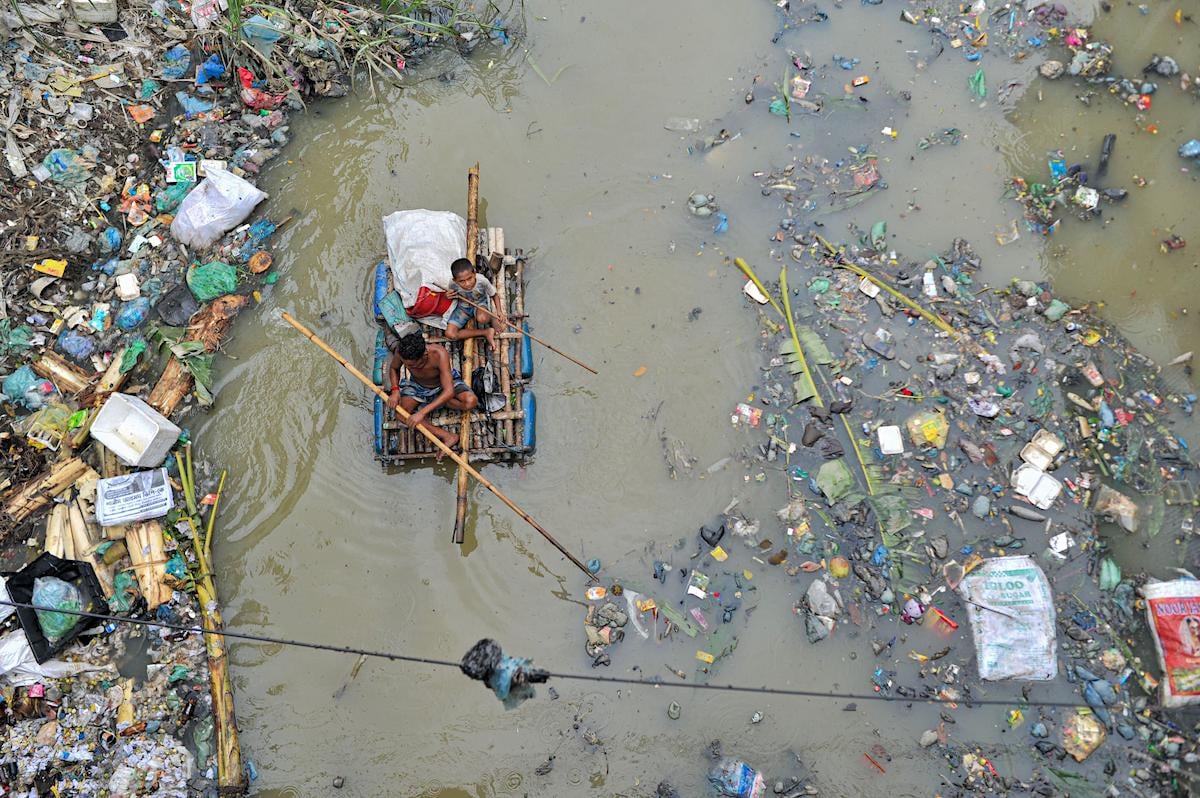
For example, on plastic pollution, there will be regular drives against the use of plastic bags and other single-use plastic items. We have developed a time-bound phase-out plan, potentially starting with coastal areas to make them single-use plastic free. [The Multi-sectoral Action Plan for sustainable plastic management in Bangladesh set a target of a target of recycling 50% of plastics by 2025, and the phase out of 90% of single-use plastic by 2026 – eds]
On air, water and noise pollution, we need to establish a robust monitoring mechanism to avoid gathering data in a disorganised manner. Additionally, we must involve local communities in monitoring pollution.
There is also a list of encroachers [on forest land and rivers] that has been prepared. They will be evicted. We still have to decide whether to conduct a countrywide drive against them or to focus on a specific area and set an example. The government must recover all seized land, but I will prioritise setting an example [by recovering forestland and rivers from specific areas].
What legal reforms are required for the protection of the environment?
The Forest Act, 1927 and the Bangladesh Environment Court, 2010 need to be reformed. If I had the option to amend the constitution, I would advocate for the environment to be recognised as a fundamental right, rather than just a fundamental principle of state policy, which is not enforceable. We also need a law regulating the indiscriminate felling of trees.
What should the government’s approach be for managing transboundary rivers?
While river management primarily falls under the Ministry of Foreign Affairs and the Ministry of Water Resources, I will be supporting them by providing information and data on the negative consequences of transboundary actions on our part of the rivers.
What should be the government priority in dealing with climate change impacts in Bangladesh?
Addressing climate change requires action at both nationally and globally. At the national level, we have the Climate Change Trust Fund. I have to ensure that its resources are directed to the communities that need them most and are being used for long-term solutions and that funds are not misused.
At the global level, we need to advocate for adequate funding and push for a zero-carbon policy, which is also part of the interim chief adviser’s campaign agenda [of “Zero Poverty, Zero Unemployment & Zero Net Carbon Emissions”].
The interim government will soon hand over power to an elected political party, what do you hope to accomplish in this short time?
My goal is to ensure that Bangladeshis do not have to breathe polluted air. Before my term ends, I want to put in place mechanisms that will restore the health of our rivers so that they flow freely. I also want to ensure, that after I leave, nobody of this generation will need to use single-use polythene bags – a transition similar to what Tanzania has achieved. Ultimately, I would like to leave Bangladesh a greener and more sustainable country.