
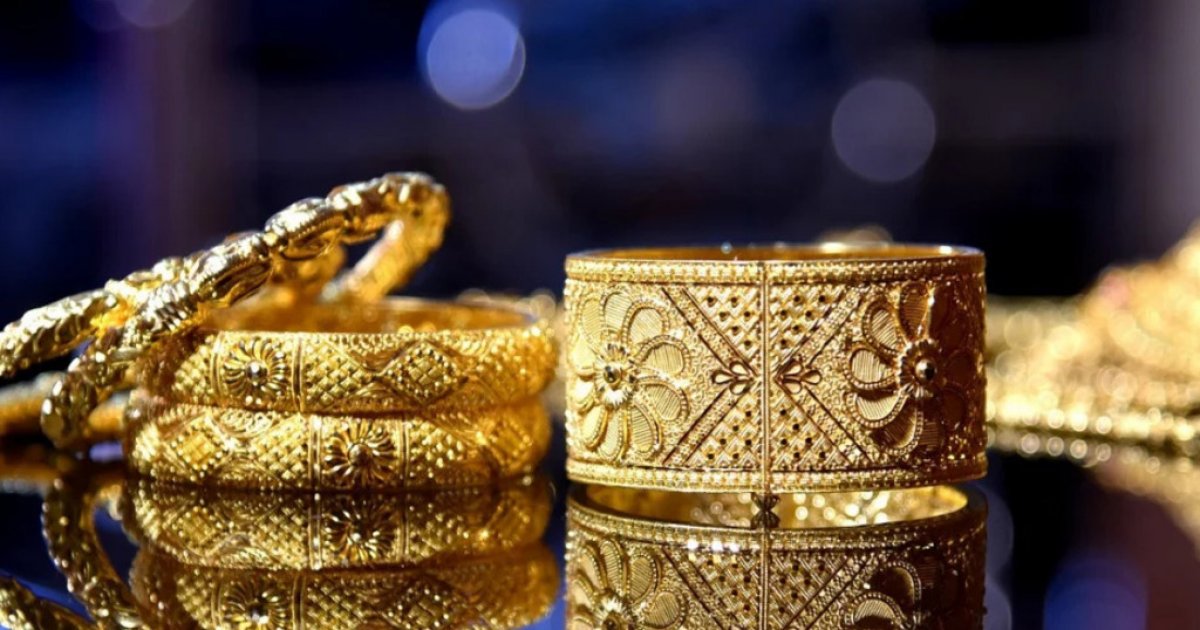
Gold prices in Bangladesh are rising at a historic pace, with premium gold now exceeding Tk250,000 per bhori, making jewelry increasingly unaffordable—particularly during the wedding season.
Beyond consumer impact, economists say the surge reflects deeper concerns about currency confidence, inflation pressure, weak investment alternatives, and broader economic uncertainty.
Analysts describe the price rise as a sign of eroding public trust in the taka. When people fear that cash savings may lose value, they traditionally shift toward gold as a safer store of wealth. This growing preference is seen as a “silent signal” of economic anxiety.
Inflation remains another key driver. Although official data suggests inflation has eased slightly, households continue to feel strain from rising food, rent, education, and healthcare costs.
In this environment, gold is increasingly viewed as a hedge against future price shocks, pushing demand and prices higher.
At the same time, confidence in alternative investment channels remains weak.
The stock market has struggled to stabilize, real estate carries higher risk, and business conditions remain uncertain. As a result, gold has emerged as a low-risk refuge for savings.
Former World Bank Dhaka chief economist Zahid Hussain said inflation weakens purchasing power, encouraging people to move toward gold.
He noted that lower global interest rates typically lift gold prices, as investors shift away from low-yield financial instruments.
He also pointed out that Bangladesh’s gold pricing structure lacks full transparency, but long-term investment habits show people generally prefer land or gold, as both tend to retain value over time.
SM Nazer Hossain, senior vice-president of Consumers Association of Bangladesh (CAB), said rising gold prices are putting financial pressure on low-income families, particularly for weddings and social obligations. He alleged that because gold imports are not fully legal, smuggling syndicates influence pricing, while weak regulatory oversight allows traders to exploit the market.
He argued that legalizing gold imports could help stabilize prices and increase government revenue.
The price of 22-carat gold has climbed from Tk6,900 per bhori in 2000 to Tk257,191 in January 2026, marking a 3,627% increase in 25 years.
Analysts say the largest single-year jump occurred in 2025, when prices rose by around Tk119,000 per bhori, the sharpest increase in the country’s gold market history.
Price milestones show a steady upward trajectory: Tk42,165 in 2010, nearly Tk70,000 in 2020 during the pandemic, and over Tk100,000 in 2023.
In December 2024, the Bangladesh Jewellers Association (Bajus) set the price at Tk138,288, before global interest rate uncertainty and international market shifts accelerated the climb in 2025.
Amit Ghosh, treasurer of Bajus, said domestic prices largely track global trends but soaring rates have caused gold sales to drop by at least 30% over the past year. New purchases have declined sharply, with most buyers now opting to reuse old gold instead of purchasing new jewelry.
Ghosh added that weak overall business conditions are worsening the downturn in gold sales. Unlike countries where gold functions as a formal investment vehicle, Bangladesh’s gold market is feeling the strain of falling demand and shrinking trade volumes.