
Agriculture must be identified as a priority sector in Bangladesh. Alongside this, agriculture-based industries must be formally included in the list of priority industries and made attractive enough to draw both domestic and foreign investment. Such investment must be aligned with the needs of the state. It is the responsibility of the state to clearly determine which industries should be developed within the agricultural sector.
These industries include seeds, agrochemicals, fertilisers, agricultural machinery, and enterprises that operate using crops produced by farmers. All industries supplying essential inputs for agricultural production should receive priority. At the same time, agro-processing industries that convert farmers’ produce into export-ready goods must be promoted, alongside direct export of agricultural products to international markets.
If we examine the development paths of the United States, China, and Japan, a consistent pattern emerges: economic transformation in these countries was built on agriculture.

Following the independence of the United States, nearly 95 percent of its population were farmers. Today, that figure has fallen to below 1 percent. Yet American farmers are among the wealthiest members of society. They operate processing facilities, seed processing units, and farmer-led agri-input enterprises integrated into local supply chains—similar in structure to the small agri-input businesses found across Bangladesh. In the United States, farming is not associated with poverty; it is part of the affluent class.
China’s transformation followed a similar logic. The core of its cultural and economic revolution was agriculture and the empowerment of farmers. As a result, China achieved agricultural self-sufficiency, and farmers there are not among the poor.
Japan offers another powerful example. Its progress in irrigation management, production efficiency, and agricultural marketing stands as a globally admired model of how disciplined policy and long-term planning can transform a sector.
Despite being an agriculture-dependent country, Bangladesh did not experience the economic transformation that should have taken place around agriculture. Industrial diversity remains limited, and growth has relied overwhelmingly on the garment sector.
The service sector expanded before agriculture and industry became self-sufficient. Employment grew in small retail shops, informal services, rickshaw pulling, sales jobs, and fragmented service industries. At the same time, the lack of planned development of tourist cities meant that services such as hospitality, transport, and tourism failed to reach international standards.
The fundamental reason behind this imbalance is our failure to prioritise agriculture-led industrialisation. Because agriculture and industry did not grow in depth and diversity, the service sector expanded disproportionately.
In a healthy economy, services naturally grow—banking, insurance, transport and logistics, airlines, hotels, restaurants, tourism, and trade. But these sectors grow sustainably only when agriculture and industry generate real demand. When agricultural output increases and industries diversify, they create demand for transport networks, cargo services, airlines, hospitality, financial services, and trade. Each sector then reinforces the other, forming a complete and self-sustaining economic cycle.
When agriculture, industry, and services grow together in balance, inequality declines, employment becomes more productive, and prosperity is more evenly distributed. This is the model of a developed and resilient nation—and it remains achievable for Bangladesh.
Opportunity, barriers, hope and aspirations of the agriculture industry
Change is necessary for development and for making the country self-sufficient. Giving agriculture the highest priority was always the responsibility of the state. Identifying key agricultural sectors and building production- and export-oriented systems should have been central national objectives. We have fallen behind in fulfilling these responsibilities.
Farmers’ incomes are shaped by two factors: the prices they receive for their produce and the cost of production. The latter depends heavily on input prices—fertilisers, seeds, and pesticides. Without addressing structural problems such as the role of middlemen in marketing systems and the lack of diversified, value-added use of agricultural products, farmers’ livelihoods cannot improve in a meaningful way.
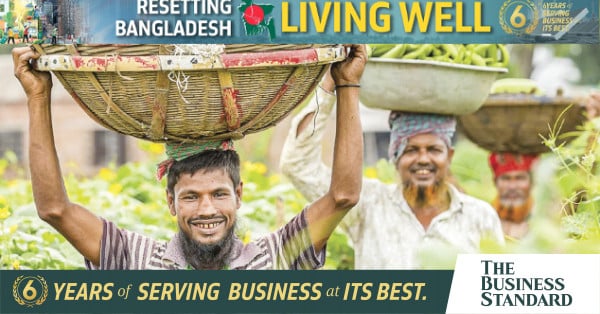
According to the latest Labour Force Survey, approximately 44 percent of Bangladesh’s workforce—nearly 50 million people—is engaged in agriculture. Based on my involvement with the Ministry of Labour’s survey process, the figure may be even higher. Yet a large portion of this population remains poor. Unfair pricing, weak market management, and limited value addition keep farm incomes below basic living standards, trapping millions in poverty.
One major barrier to progress is the absence of a clear, long-term industrial vision. Agriculture is often discussed as a social sector, not treated as a productive industry. Excessive bureaucratic complexity, outdated colonial-era laws, and inconsistent policies discourage innovation and long-term investment.
The government’s role is not to run businesses or act as an importer. Its responsibility is to create clear industrial and investment policies that prioritise domestic production and exports. Unless hundreds of outdated laws are reformed, meaningful transformation will remain elusive. Even after 54 years of independence, Bangladesh exports only half of what it imports—a position no nation should accept indefinitely.
Rising production costs are largely driven by import dependency. To ensure economic freedom for rural communities, agricultural inputs must be localised. Domestic production of fertilisers, pesticides, and seeds would reduce import dependence, lower costs, create rural employment, and strengthen industrial capacity.
At the same time, industries must be built around farmers’ produce. The imbalance created by shifting toward garments without strengthening agriculture must be corrected. Agriculture is not an obstacle to industrialisation—it is its foundation.
The future, however, remains full of opportunity. With the right priorities, Bangladesh can achieve more progress in the next five years than in the past five decades. With policy clarity, research-driven development, and coordinated investment, agriculture can once again become the engine of inclusive growth.
The aspiration of the agriculture industry is simple but powerful: a Bangladesh where farmers are not merely producers at the bottom of the value chain, but empowered participants in a self-sufficient, resilient, and prosperous nation.
Sketch: TBS
“>

Sketch: TBS
KSM Mostafizur Rahman, President, Bangladesh Agrochemicals Manufacturers Association