
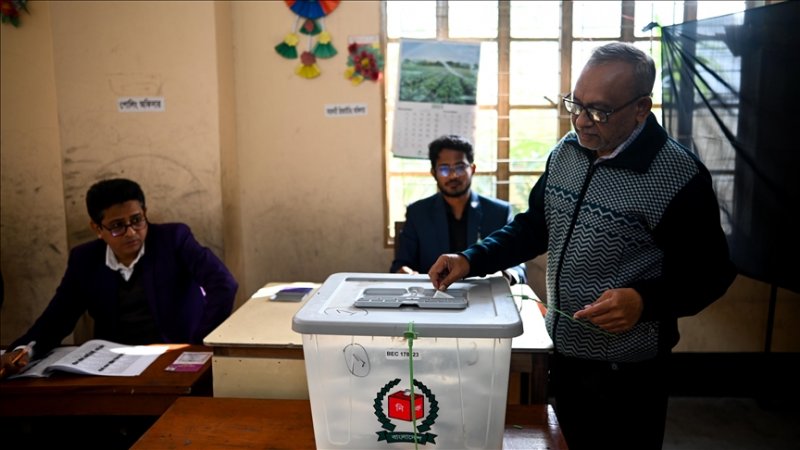
Bangladesh is preparing for a nationwide vote scheduled for February 12, an event that carries significant political, economic, and social weight for the country.
The election comes at a time of heightened public attention, economic pressure, and intense debate over governance and political participation. As preparations accelerate, the vote is widely seen as a defining moment that will shape Bangladesh’s domestic trajectory and its standing in the wider South Asian region, News.Az reports.
This FAQ explainer examines why the February 12 election is important, how the country is preparing for the vote, what issues dominate public debate, and what the outcome could mean for Bangladesh’s future.
What is happening in Bangladesh ahead of February 12
Bangladesh is entering the final phase of preparation for parliamentary elections scheduled for February 12. Election authorities are focused on logistical readiness, security arrangements, and administrative coordination to ensure polling can take place across the country.
Political parties are intensifying campaign activity, mobilizing supporters, and communicating their messages to voters. Media coverage has increased, public discussion has become more animated, and the election has moved to the center of national attention.
Unlike snap elections triggered by sudden political developments, this vote follows a planned timeline. However, the broader context in which it is taking place makes it especially significant for the country’s political environment.
Why the February 12 election is so important for Bangladesh
Elections in Bangladesh have implications that extend beyond the selection of parliamentary representatives. They influence political legitimacy, governance stability, and public trust in institutions.
This particular vote is seen as a test of several critical factors. One is the ability of the political system to manage competition peacefully and credibly. Another is whether governance structures can respond to economic pressures affecting ordinary citizens. A third is how the country positions itself internationally at a time when political stability is closely linked to economic confidence.
For many voters, the election represents an opportunity to assess not only political leadership but also the broader direction of national development.
How Bangladesh’s political system shapes the election
Bangladesh operates under a parliamentary system in which voters elect representatives to the national legislature. The outcome determines the formation of government and sets the policy agenda for the coming years.
Political competition in Bangladesh is traditionally intense, with strong party loyalties and deeply rooted political identities. As a result, elections often generate high levels of public engagement as well as scrutiny of electoral procedures.
The February 12 vote will be shaped by this political culture, with parties seeking to demonstrate both popular support and organizational strength across urban and rural areas.
How election preparations are being carried out
Preparation for a nationwide election in Bangladesh is a complex process involving multiple institutions. Election authorities are responsible for voter lists, polling station arrangements, ballot materials, and vote counting procedures.
Security agencies play a key role in maintaining order and ensuring that voters can participate without intimidation. Local administrations are tasked with coordinating logistics and supporting the electoral process at the grassroots level.
Public communication is also a central part of preparation. Authorities and civil society groups are encouraging voter participation and awareness, emphasizing the importance of peaceful engagement in the democratic process.
What role political parties play in shaping the campaign
Political parties are the primary drivers of election dynamics. In the run up to February 12, parties are outlining their visions for governance, economic management, and social policy.
Campaign messaging reflects both continuity and change. Incumbent forces often emphasize development achievements, infrastructure projects, and economic growth. Opposition voices focus on accountability, governance standards, and the need for political reform.
This contest of narratives is unfolding through rallies, media appearances, and grassroots outreach, shaping how voters perceive the stakes of the election.
Why economic issues dominate voter concerns
Economic pressure is one of the most influential factors shaping voter sentiment ahead of the election. Bangladesh has experienced strong growth over the past decade, transforming sectors such as manufacturing, construction, and services.
At the same time, global economic challenges have introduced new strains. Rising prices for food and fuel, currency fluctuations, and external financing pressures have affected household budgets.
Voters are increasingly focused on whether economic progress has translated into improved living standards and whether future policies can protect them from global volatility.
How inflation affects everyday life in Bangladesh
Inflation has a direct impact on daily life in Bangladesh, particularly for lower and middle income households. Rising food prices are a major concern, as a significant portion of household income is spent on basic necessities.
Fuel costs influence transportation expenses and the price of goods, while currency pressures can make imported items more expensive. These factors combine to create a sense of financial insecurity for many families.
As a result, economic management has become a central theme in election debates, with voters evaluating which political forces they trust to stabilize prices and protect purchasing power.
Why employment and wages matter in the election
Employment opportunities and wage growth are closely linked to voter expectations. Bangladesh has a young population, and job creation is essential to sustaining social stability and economic momentum.
Many voters are asking whether the economy can generate enough quality jobs, particularly for young people entering the labor market. Wage levels, job security, and working conditions are part of this discussion.
Political parties are presenting plans to support industrial growth, attract investment, and expand skills training, all aimed at addressing employment concerns.
How governance and accountability influence voter attitudes
Beyond economics, governance and accountability play a major role in shaping voter attitudes. Citizens are increasingly attentive to how institutions function, how decisions are made, and how public resources are managed.
Trust in governance affects willingness to participate in the political process. For some voters, the election is an opportunity to express confidence in current leadership. For others, it is a chance to demand greater transparency and responsiveness.
These dynamics make the conduct of the election itself a critical factor in shaping public perception of legitimacy.
What role civil society and media play in the election
Civil society organizations and media outlets contribute significantly to the election environment. They help inform voters, monitor the process, and provide platforms for public debate.
Media coverage shapes narratives about campaign issues, party positions, and election preparations. Civil society groups often focus on voter education, election observation, and advocacy for peaceful participation.
Together, these actors influence how the election is perceived both domestically and internationally.
How international observers view the February 12 vote
International attention to Bangladesh’s election reflects the country’s growing economic and strategic importance. As a major manufacturing hub and a key player in South Asia, Bangladesh’s political stability is closely watched by external partners.
Observers are interested in the credibility of the electoral process, the level of participation, and the implications for governance continuity. The election outcome will influence diplomatic engagement, investment decisions, and regional cooperation.
While the vote is primarily a domestic event, its repercussions extend beyond national borders.
How the election could affect Bangladesh’s economy
The political outcome of the February 12 vote will shape economic policy direction. A clear mandate could provide the government with confidence to pursue reforms, manage fiscal pressures, and engage with international partners.
Uncertainty or political tension, on the other hand, could affect investor sentiment and economic planning. Stability is therefore a key concern for businesses and financial institutions.
Voters are aware that political decisions have direct consequences for economic prospects, adding to the weight of the election.
What challenges election authorities face
Organizing a nationwide vote in Bangladesh presents logistical and administrative challenges. Ensuring accurate voter lists, managing large numbers of polling stations, and coordinating security require careful planning.
Authorities must also address public concerns about fairness and transparency. Clear communication and effective management are essential to maintaining confidence in the process.
How these challenges are handled will influence perceptions of the election’s credibility.
How public participation shapes the legitimacy of the vote
Voter turnout and engagement are critical indicators of legitimacy. High participation suggests public confidence in the process, while low turnout can raise questions about representation.
Efforts to encourage participation include public awareness campaigns and assurances of safety and accessibility. For many citizens, voting is both a civic duty and a way to express their views on national direction.
The level of engagement on February 12 will be closely analyzed as a measure of political health.
What happens after the votes are cast
After polling concludes, attention will turn to vote counting, result announcements, and the formation of government. The post election period is often as important as the campaign itself.
Public reaction to the results, responses from political parties, and the behavior of institutions will shape the immediate political climate. A smooth transition can reinforce stability, while disputes can create uncertainty.
Observers will watch how the process unfolds and how outcomes are accepted by all sides.
How the election fits into Bangladesh’s longer term trajectory
The February 12 vote is part of a broader political and economic journey for Bangladesh. Over recent decades, the country has made significant strides in development, poverty reduction, and global integration.
The election offers a moment to reflect on that progress and consider future priorities. Issues such as sustainable growth, social inclusion, and institutional strength are likely to remain central regardless of the outcome.
In this sense, the election is not only about immediate political power but about shaping the next phase of national development.
Why this election matters now
Bangladesh’s preparation for the February 12 vote comes at a time of global uncertainty and domestic expectation. Economic pressures, governance debates, and demographic change have converged to make the election particularly consequential.
Voters are being asked to decide who they trust to guide the country through these challenges. The choices made at the ballot box will influence policy direction, political stability, and public confidence for years to come.
As Bangladesh moves toward election day, the focus is not only on the mechanics of voting but on the broader question of how the country defines its future in a rapidly changing world.
News.Az
By Faig Mahmudov