
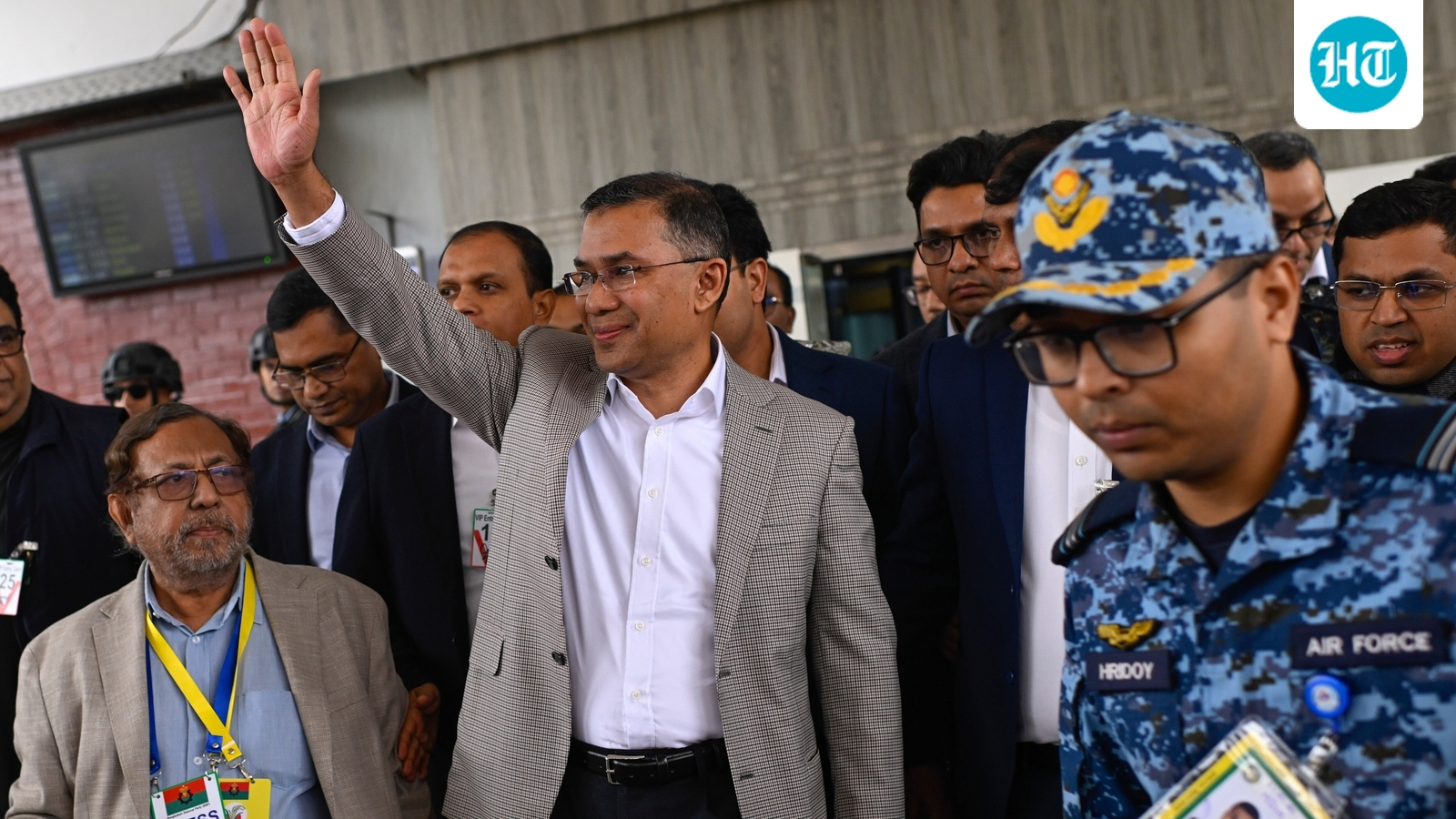
Bangladesh Nationalist Party acting chairman and former chairman Tarique Rahman returned to the country on Thursday after nearly 17 years in exile.

The return, hastened by personal urgency owing this mother and former prime minister Khaleda Zia’s health, is also seen as a boost for the BNP party workers ahead of the February 12 parliamentary elections in the country.
Rahman’s homecoming comes even as Bangladesh is witnessing widespread unrest and political instability after the killing of prominent youth leader Sharif Osman Hadi.
Rahman, who was accompanied by his wife Zubaida and daughter Zaima, was received at the Hazrat Shahjalal International airport in Dhaka, PTI news agency reported.
A massive crowd of supporters occupied an area of about 2 kilometres from the airport to the reception venue to witness his return, the Associated Press reported. Many of them had stayed at the reception venue overnight.
Rahman’s return crucial to Bangladesh politics
• 60-year-old Rahman, who had moved to London in 2008 for medical treatment with permission, is being seen as a frontrunner to become Bangladesh’s next leader in the February 12 elections next year.
• Rahman’s return comes at a time of political vacuum, after Sheikh Hasina was forced to resign and flee to India after student-led protests in July last year. He was convicted in absentia on charges including money laundering and another linked to an alleged plot to assassinate Sheikh Hasina. However, these rulings were overturned after Hasina’s ouster last year.
• Rahman is the acting chairman of BNP, a party which is witnessing an ascent after the ouster of Sheikh Hasina. He has been the de-facto leader for the party and regularly joined meetings and rallies online from London, and faced no open challenge by any party insider during his absence.
• A survey conducted this month by the United States-based International Republican Institute has suggested that the BNP might gain big, and is likely to win the largest number of parliamentary seats in the elections next year, Reuters reported.
• Global human rights groups including Human Rights Watch and the Amnesty International have accused the interim government led by Muhammad Yunus of eroding democratic rights, the Associated Press reported. While Rahman supported Yunus initially, the relationship has since turned shaky.
• Rahman’s mother, Zia, is one of the two key figures in Bangladesh politics, alongside Sheikh Hasina. However, given that Hasina and her party, the Awami League, has lost popularity and public trust following the July uprising last year, the BNP can bridge the political gap in the country.