
- In a recent move, the government has canceled allocation of more than 4,000 hectares (10,000 acres) of forest land planned for different development activities.
- This encompasses more than 3,830 hectares (9,467 acres) of biodiversity-rich Sonadia Island and about 293 hectares (725 acres) of coastal hill forest in Cox’s Bazar district.
- The move raised hope for the conservationists who criticized earlier decisions taken by the previous government, which neglected the importance of protecting forest lands as well as biodiversity.
In the last year, Bangladesh has seen an about-turn from occupying forest land in the name of development activities such as constructing ecotourism parks, football academies, residential and training facilities for government officials.
The recently canceled sum of about 3,830 hectares (9,467 acres) of land in biodiversity-rich Sonadia Island is one of the largest chunks that the earlier government had allocated for an ecotourism project.
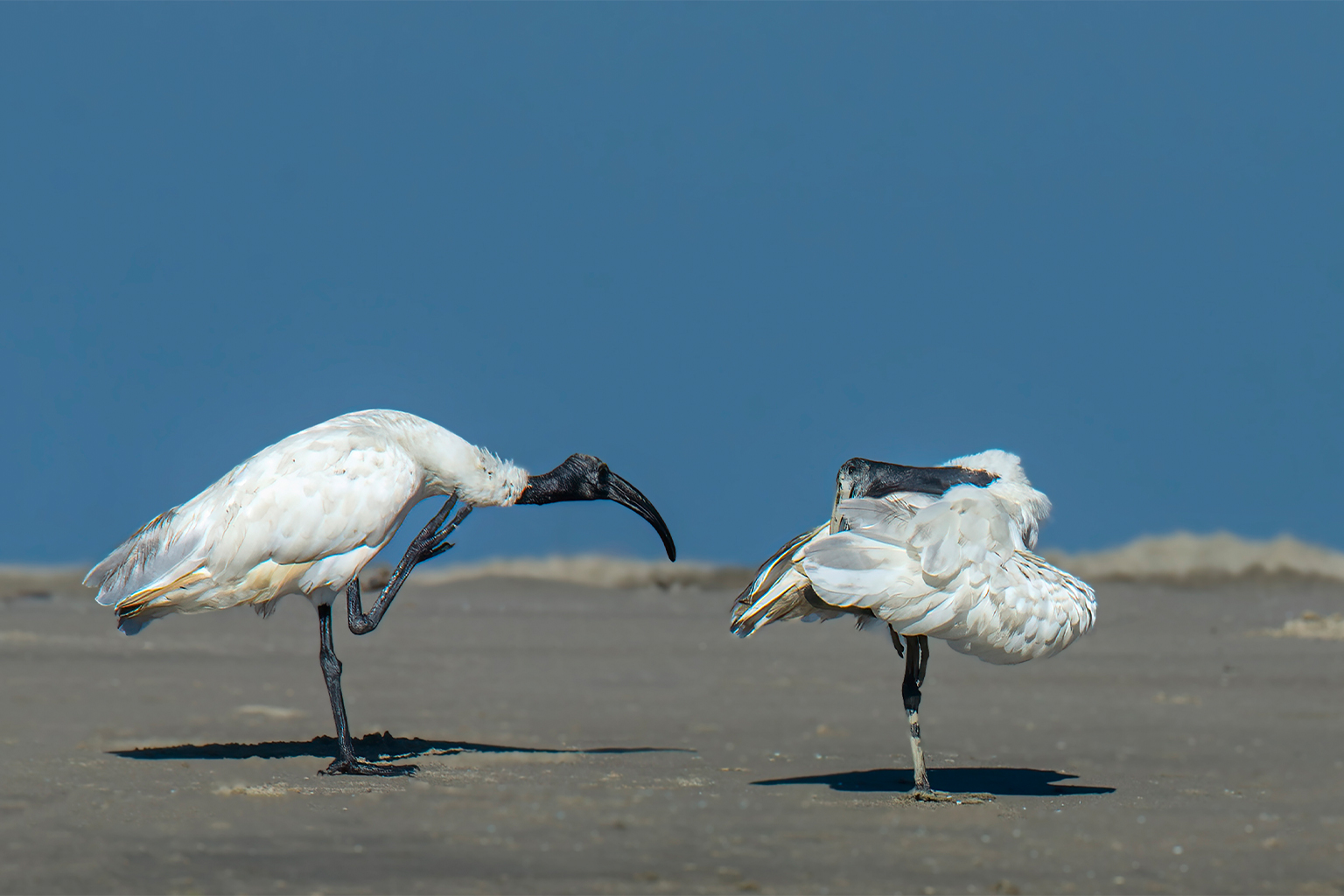
The decision helps the island regain its status as a breeding ground for marine turtles and refuge to migratory birds, dolphins and other wild species.
Additionally, the government canceled two such projects spanning about 293 hectares (725 acres) of forest land that had planned for a football training academy and a residential training institute for bureaucrats.
“The earlier governments have transferred the forest land into different purposes, which was totally against the law, and absolute play of power. We are canceling such allocation and returning those for afforestation,” said Syeda Rizwana Hasan, adviser to the Ministry of Environment, Forest and Climate Change.
“Besides these, we are working on recovering other chunks of forest which are encroached by different quarters and canceling some unnecessary projects taken by the forest department in forest land,” she added.
The cancellation of constructing a safari park in Moulvibazar district is one of them, considering the negative impacts on forest ecology as well as biodiversity.
According to the data, Bangladesh is home to about 2.5 million hectares (6.2 million acres) of tropical forest, which is almost 10% of its landmass. Moreover, for the last few decades, the country has been facing significant deforestation for different anthropogenic reasons.
According to the Department of Forest, of total forest land, 56,095 hectares (138,613 acres) are currently encroached upon by different quarters, including public and private entities.
Regarding the use of recovered forest land, Md. Rakibul Hasan Mukul, deputy chief conservator of forests, told Mongabay, “We are planning what kind of plantation would be better for the recovered land to ensure sustainable forest coverage.”
With an aim to protect the forests and their biodiversity, Bangladesh has already declared 56 protected areas, including national parks and sanctuaries, which are playing an important role in forest and wildlife conservation.


Examples of unplanned development and their impacts
In 2023, Bangladesh planned to develop a safari park in Lathitila forest in Moulvibazar district located in the northeast. According to a study, the forest is home to 26 globally threatened species, including elongated tortoise (Indotestudo elongata), king cobra (Ophiophagus hannah), Burmese python (Python bivittatus), white-rumped vulture (Gyps bengalensis), Indian spotted eagle (Clanga hastata), Phayre’s leaf monkey (Trachypithecus phayrei), Bengal slow loris (Nycticebus bengalensis), northern pig-tailed macaque (Macaca leonina), capped langur (Trachypithecus pileatus), stump-tailed macaque (Macaca arctoides) and hoolock gibbon (Hoolock hoolock).
A report titled Linear Infrastructure Safeguards in Asia (LISA), focusing on the impacts of large infrastructure development in Asian forests, shows that the wildlife, especially the Asian elephants in southeastern Bangladesh, have experienced threats to their movements as well as life. Wildlife in the country’s northeastern forest have been facing almost similar types of issues.
The rail track between Chittagong and Cox’s Bazar is one of the remarkable government-run development projects that directly affected the Asian elephant population in Bangladesh.
As an example, in 2017, during the mass influx of Rohingya refugees from neighboring Myanmar, the government temporarily settled their shelters in the forest of Cox’s Bazar and Bandarban district of Chittagong Hill Tracts; many of them are along the regular route of wild elephants.
Another study indicates the new influx of Rohingya refugees has led to roughly a 9.6% decrease in forest area in the Cox’s Bazar district, resulting from efforts to make their settlements and gather fuelwood.
Regarding the practice of using forest land for government purposes, Farid Uddin Ahmed, former executive director of Arannayk Foundation told Mongabay, “In most cases, the government believes that they can use forest land in any purpose, which is a complete wrong idea and violation of existing forest acts.
“If we really want to protect the forest and its biodiversity, we have to keep the forest undisturbed,” added Farid Uddin Ahmed, who authored the LISA report.
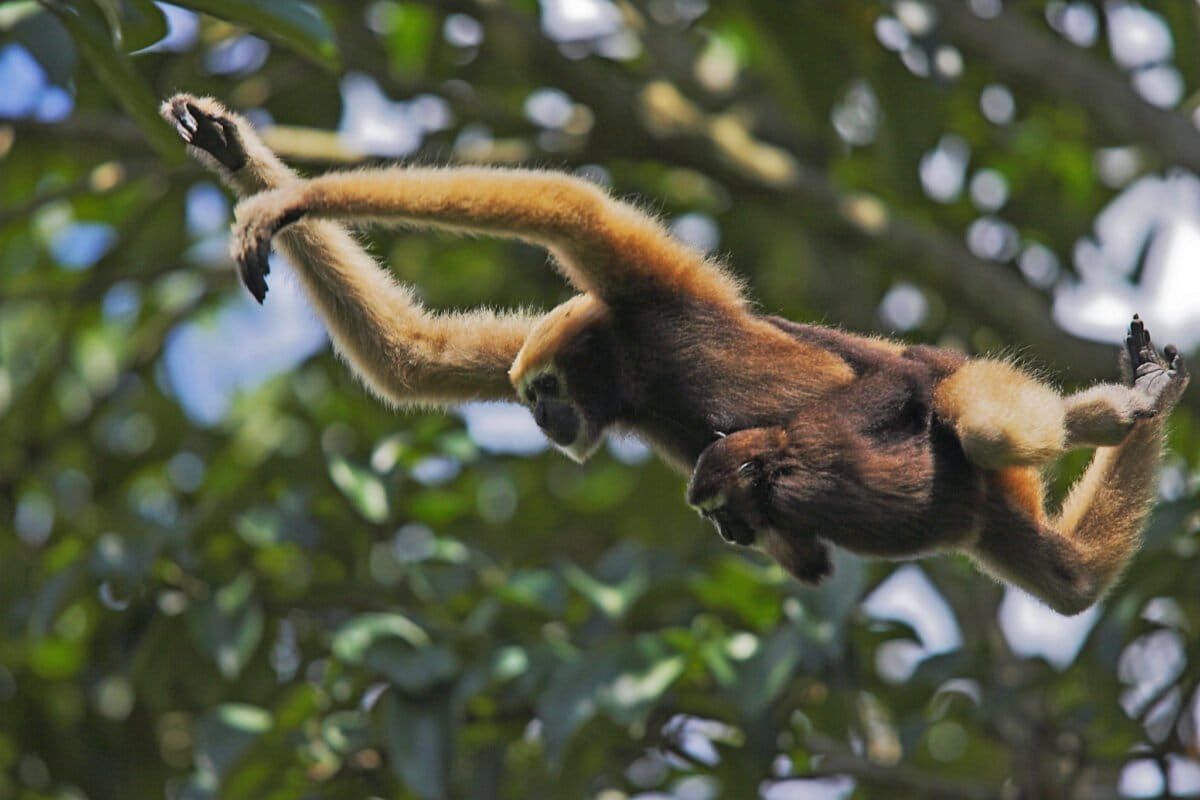
Banner image: Hoolock gibbons in Bangladesh. Image by USAID Bangladesh via Flickr (CC BY-NC 2.0).
Citations:
Ahsan, M. F., Nath, S. K. & Barua, A. (2024). Conservation of sea turtles on the beach areas from Sonadia Island to Saint Martin’s Island in the Bay of Bengal in Bangladesh. Journal of Threatened Taxa. doi:10.11609/jott.9194.16.12.26213-26224
Chakma, M., Hayat, U., Meng, J., & Hassan, M. A. (2023). An Assessment of Landscape and Land Use/Cover Change and Its Implications for Sustainable Landscape Management in the Chittagong Hill Tracts, Bangladesh. Land, 12(8), 1610. doi:10.3390/land12081610
Khan, M. A. R., Haque, E. U., Khan, M. M. H., Ahmed, I., Chakma, S., Naher, H., Chowdhury, M. A. W., Mukul, S. A., Chowd1hury, S. U., Rahman, S. C., Kabir, M. T., Rahman, H. A., Akash, M., Mukutmoni, M., Ghose, A., Al-Razi, H., & Muzaffar, S. B. (2022). A Proposed Safari Park in a Subtropical Forest in Northeastern Bangladesh Will Be Detrimental to Native Biodiversity. Conservation, 2(2), 286-296. doi:10.3390/conservation2020020
Sarkar, S. K., Saroar, M., & Chakraborty, T. (2023). Navigating nature’s toll: Assessing the ecological impact of the refugee crisis in Cox’s Bazar, Bangladesh. Heliyon, 9(7), e18255. doi:10.1016/j.heliyon.2023.e18255
