
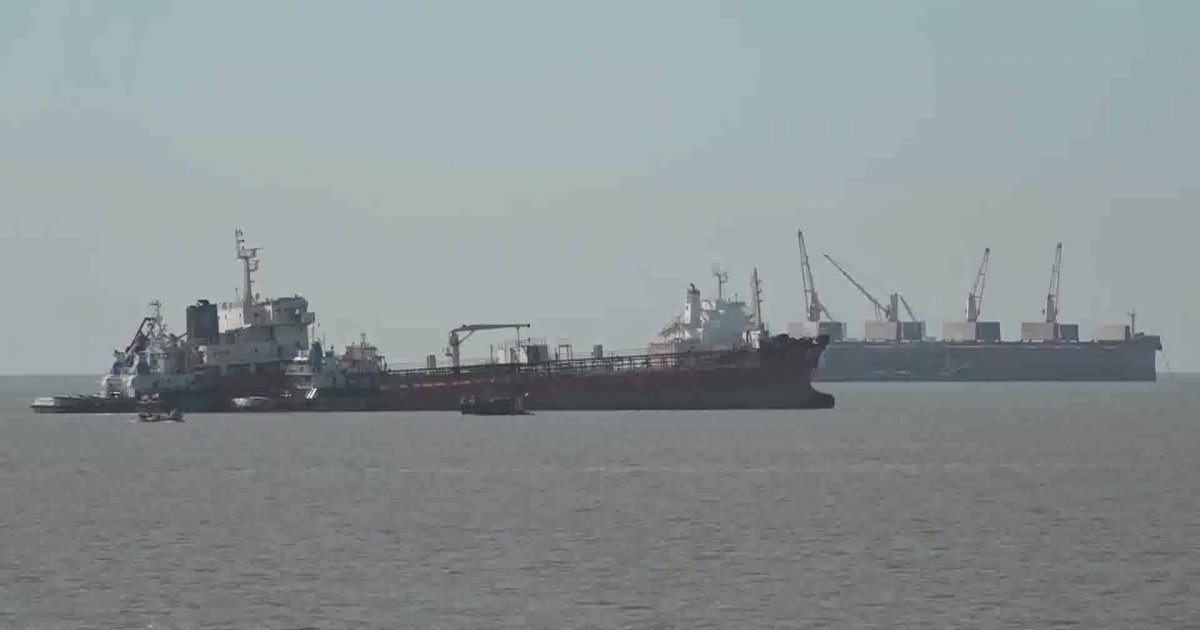
Pollution levels in the Bay of Bengal are rising due to a variety of sources, including waste from vessels at sea, rivers, canals, wetlands, microplastics from hotels and motels in tourist towns, industrial effluents, and human-generated waste.
Experts warn that if this pollution is not controlled immediately, it could threaten the country’s potential marine economy, and in the near future, pollution could reach critical levels. Marine scientists have therefore advised that swift and effective measures be taken.
The Bay of Bengal covers a larger area than Bangladesh’s landmass, and nearly half of the country’s population depends on it.
However, the waters of this once-clear blue sea are being contaminated by waste from ships and vessels, rivers and canals, dried fish settlements, industrial units, and microplastics and human waste from tourist towns like Cox’s Bazar.
Marine scientists have advised rapid and effective measures to prevent further contamination.
Abu Sharif Md Mahbub-E-Kibria, senior scientific officer of the Marine Environment and Climate Department at the Bangladesh Oceanographic Research Institute, explained that the nature of pollution varies with each season.
“From Cox’s Bazar to Teknaf, the concentration of pollutants is highest. During storms, tidal surges, and heavy rains, these pollutants mix with seawater and contaminate it further,” he said.
Kibria added that microplastic pollution is particularly high from St Martin’s Island to the Sundarbans, while larger plastic waste is most prevalent in Cox’s Bazar, largely generated by tourists visiting the area.
Commodore Md Minarul Hoque, director general of the Bangladesh Oceanographic Research Institute, said that pollution levels differ across regions.
“For example, there is a significant difference between the Cox’s Bazar tourist area and the Chittagong Bhatiari region. Data is continuously being collected and presented to the relevant government authorities to monitor how pollutants enter the sea,” he explained.
He also emphasized the need for proper management of waste from ships and vessels, saying that it should be collected systematically and disposed of at designated sites instead of being dumped indiscriminately into the sea.
According to the Bangladesh Environment Conservation Act 1995, hazardous waste is defined as any waste capable of causing environmental damage due to its physical or chemical properties or through interaction with other substances, including effects such as toxicity, infection, combustion, explosion, radiation, corrosion, or other harmful processes.
Polythene, plastics, and plastic-based materials fall under this category. Section 6(c) of the Act prohibits the production, import, storage, labelling, and transportation of such hazardous waste, and violations are punishable by law.
The government may also regulate the generation, processing, storage, supply, transport, import, export, or dumping of hazardous waste through relevant rules under the Act.
In addition, the Department of Environment has enacted several laws to protect the environment and prevent pollution, including the Environment Conservation Rules 1997, Ozone Depleting Substances (Control) Regulations 2004, Environment Court Act 2010, Bangladesh Biosafety Rules 2012, Bangladesh Biodiversity Act 2017, National Environment Policy 2018, E Waste Management Rules 2021, and Solid Waste Management Rules 2021.
Local environmentalists stress that the authorities must play a strong role in preventing pollution in the Bay of Bengal, and public awareness in Cox’s Bazar and other areas of the country is urgently needed.