
– Advertisement –
– Advertisement –
– Advertisement –
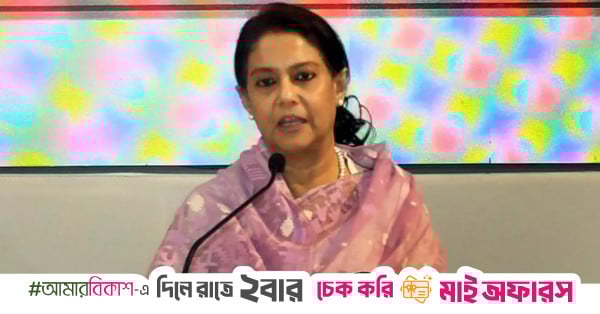
DHAKA, Oct 22 (BSS/APP) : Environment, Forest and Climate Change Adviser Syeda Rizwana Hasan said that all government agencies must transition to renewable energy within the next two to three years to set an example for the nation.
“Mitigation is not just about how much we produce — it is also about how responsibly we consume,” she said, calling for sustainable practices to be adopted across all sectors.
Rizwana, also the adviser to the ministry of Water Resources, was speaking as the Chief Guest at the opening plenary session of an international conference titled “Road to COP30: How Can National Interests Be Aligned with Global Climate Goals?” held today at BRAC Centre Inn here.
The theme of the conference is-“A World Beyond Crisis: Climate Solutions That Work”, according to a press release issued by the ministry.
Highlighting the country’s progress in environmental governance, she said the Department of Environment (DoE), with support from the World Bank, is constructing green office complexes in various regions and developing a model for eco-friendly buildings in collaboration with architects and engineers to promote energy efficiency.
Rizwana Hasan warned that double counting of climate finance and weak global governance have undermined trust and slowed the flow of genuine support for climate adaptation.
“If emissions from major economies continue to rise, technology transfer alone will not solve the problem,” she said, adding that Bangladesh must remain proactive in protecting its national interests, economic activities, and livelihoods.
Referring to the government’s updated Nationally Determined Contribution (NDC), She said that it reflects broad national ownership and participation from all relevant ministries and agencies.
She instructed the DoE to prepare a comprehensive work plan with sector-specific emission reduction strategies for transport, agriculture, and industry, supported by clear timelines and measurable actions.
Regarding the newly established Bangladesh Climate Development Partnership (BCDP), the adviser said that four working groups have been formed and directed that civil society organizations and academia be included to provide technical guidance and policy insights.
Addressing environmental degradation caused by traditional brick kilns, she called for a shift toward alternative building materials to curb carbon emissions, safeguard farmland, and prevent hill cutting.
She proposed using dredged river sediment in brick production as a sustainable alternative to fertile topsoil.
Emphasizing adaptation priorities, she underscored the importance of coastal afforestation, rainwater harvesting, and low-cost desalination technologies to strengthen resilience in climate-vulnerable coastal regions.
The adviser urged development partners to extend both financial and technological assistance to help Bangladesh implement local solutions.
The session was also addressed by Dr. Ainun Nishat, Advisor, Centre for Climate Change and Environmental Research (C3ER), BRAC University; Dr. Shah Abdul Saadi, Deputy Secretary, Economic Relations Division (ERD); Md. Ziaul Haque, Director, Department of Environment; Ulrich Kleppmann, Head of Development Cooperation, German Development Cooperation, Embassy of Germany; Mohammed Sohel, Director, BGMEA; Shirin Sultana Lira, Programme Manager, Embassy of Switzerland and Mousumi Perven, Senior Climate Change Officer, ADB.
Adviser of the Centre for Climate Change and Environmental Research (C3ER), BRAC University Dr. Ainun Nishat, Economic Relations Division (ERD) Deputy Secretary Dr. Shah Abdul Saadi; DoE Director Md. Ziaul Haque, Head of Development Cooperation, German Development Cooperation, Embassy of Germany Ulrich Kleppmann, BGMEA Director Mohammed Sohel, Programme Manager of Embassy of Switzerland Shirin Sultana Lira and Senior Climate Change Officer, ADB Mousumi Perven also spoke on the occasion. Khushi Kabir, Member of the CPD Board of Trustees, presided over the event.