
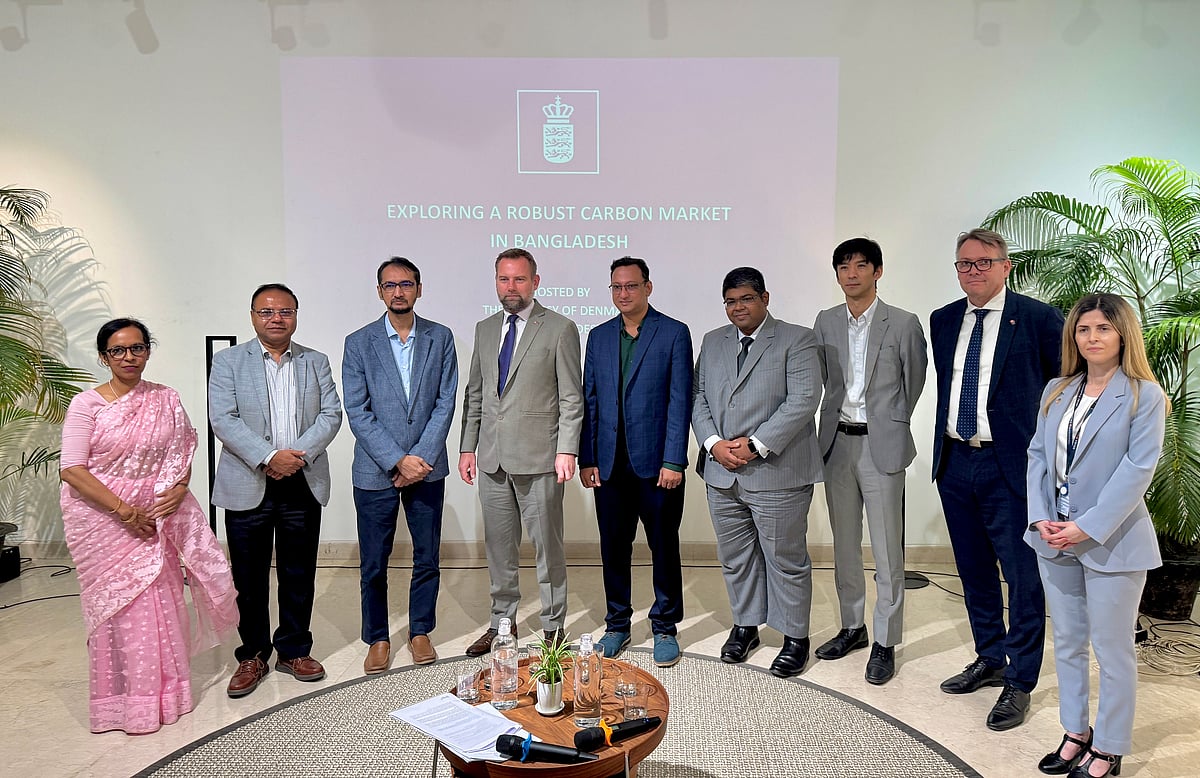
The event featured a keynote presentation by Shaymal Barman, Consultant and Carbon Market Specialist, who discussed the global relevance of carbon markets. “Carbon trading is not only a mechanism for reducing emissions but also a powerful tool to mobilise investment for sustainable development. For countries like Bangladesh, establishing a credible carbon market can create pathways for economic growth while meeting climate goals such as Nationally Determined Contribution,” Shaymal Barman stated.
Followed by a panel discussion, representatives from government, academia, and the private sector explored policy frameworks, institutional readiness, private sector engagement, and strategies to ensure transparency and credibility in the carbon market. Participants discussed how carbon trading can drive low-carbon development, enhance corporate sustainability, and support Bangladesh’s Nationally Determined Contributions under the Paris Agreement.
Mirza Shawkat Ali, Director of Climate Change and International Convention at the Department of Environment, emphasised Bangladesh’s critical role in global climate action. “Bangladesh has the opportunity to position itself as the forerunner in climate solutions among the developing countries. Bangladesh is currently developing a Carbon Market Framework and we hope we can attract investment, promote innovation, and ensure that climate initiatives promote low carbon development and benefits the local communities and the economy,” he said.