
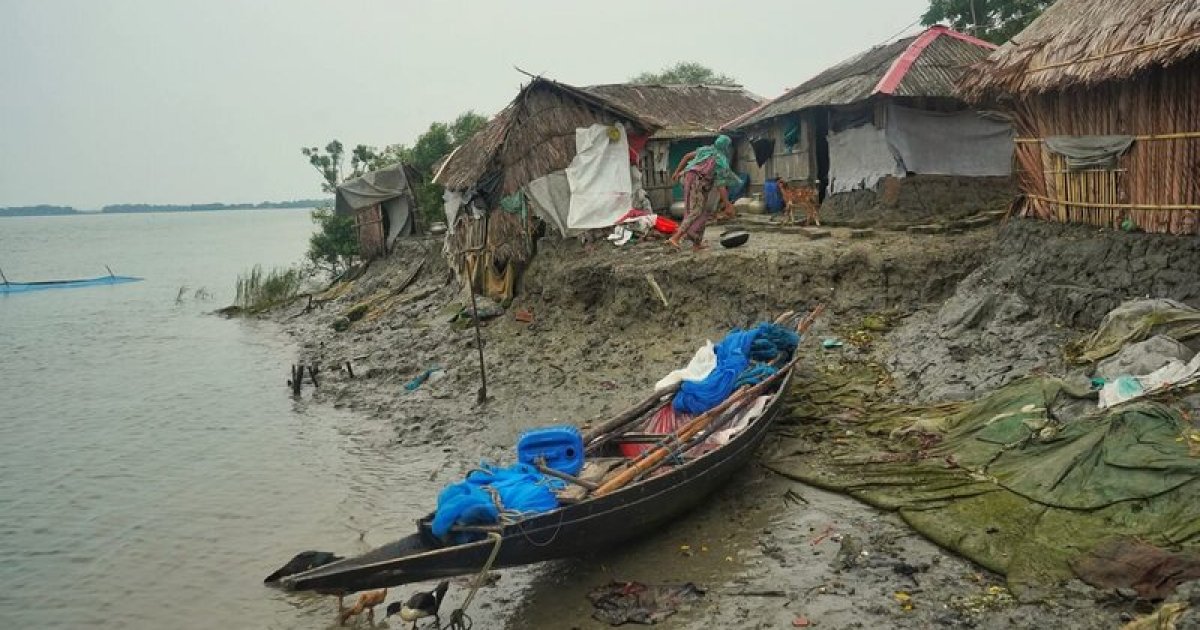
The people of the southwestern districts of the country including Khulna, Bagerhat, and Satkhira have been struggling to survive against salinity and natural calamities for years. Now, climate change has intensified their hardship, affecting both health and livelihoods. Agriculture and the collection of forest resources from the Sundarbans, their main sources of income, are being disrupted.
Frequent cyclones, tidal surges, and rising salinity in groundwater have caused a year-round shortage of safe drinking water. In areas such as Koyra, Dakop, Paikgacha, Shyamnagar, Mongla, Rampal, and Sharankhola, people mainly depend on fishing and forest resources. But heavy rainfall and increased salt levels in rivers and soil have reduced fish production.
Contaminated water has led to a rise in waterborne diseases. Many displaced by floods and storms are forced to move to urban slums, where they face poor sanitation, unsafe food, and unhealthy living conditions. Residents say the heat from the sun now feels unbearable, almost burning the skin. The high salt content in the air is not only harming health but also damaging the local economy.
River erosion is a constant threat during the monsoon. Every year, thousands lose their homes and farmland, pushing unemployment and poverty higher. Since Cyclone Aila struck in 2009, many residents of Shyamnagar’s Gabura and Padmapukur unions have lost everything and were forced to migrate to cities, where they lived in extreme hardship.
Despite years of destruction, there has been little visible progress in river protection. Areas in Dakop, Koyra, and Shyamnagar remain vulnerable, with damaged embankments yet to be repaired. Locals say food is not their biggest concern anymore — repairing embankments is.
In Dakshin Bedkashi union of Koyra, 60-year-old Abu Musa Gazi said, “We are surrounded by water, but none of it is fit to drink. We are forced to use salty water.” Children like Monayem and Naim said their skin burns when they swim or play in the river, as all the local water bodies are saline.
According to public health engineers, safe water should contain less than 1,000 milligrams of salt per litre, but in coastal areas it ranges between 1,000 and 10,000 milligrams. Though official data suggests 25% of Koyra residents face a drinking water crisis, the real figure is much higher.
Climate and environmental activists say that rising salinity and water scarcity are worsening health risks and damaging fertile land, reducing crop yields and fish farming. Many families are losing their means of survival.
Dr Rezaul Karim, Health and Family Planning Officer of Koyra, said cases of reproductive health problems among women and skin diseases among children have increased significantly, largely due to saline water.
Koyra Upazila Nirbahi Officer Abdullah Al Baki said climate change has made it difficult to maintain environmental balance in coastal regions. “We cannot stop climate change,” he said, “but through joint efforts and awareness, we can reduce the damage and make the coast more resilient to disasters.”