
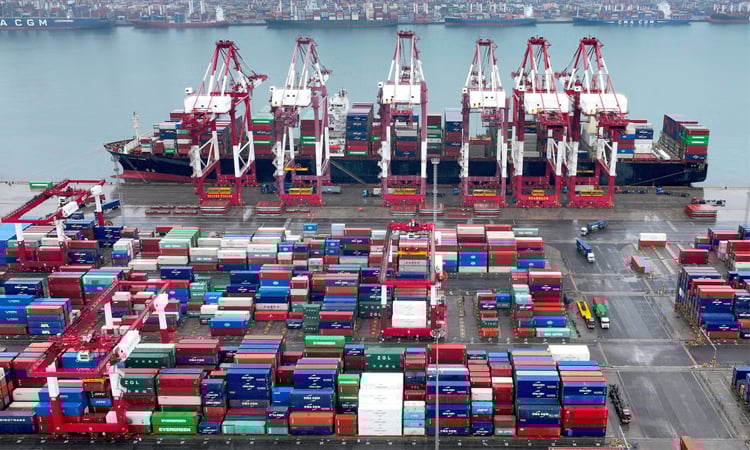
‘Bangladesh to emerge global export hub leveraging Chinese investment’
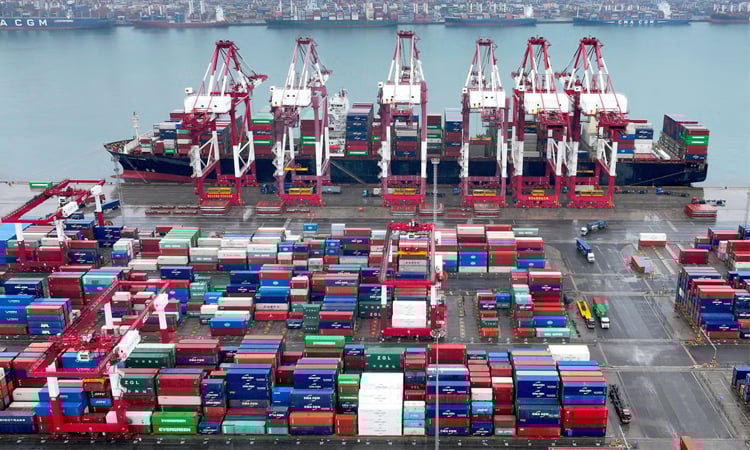
Representational Image.
DHAKA, Nov 15, 2025 (BSS) – Bangladesh has huge potential to emerge as a global export hub by leveraging Chinese investment, technology and industrial capacity — especially in infrastructure, power generation, ready-made garments (RMG) and manufacturing sectors.
In an exclusive interview with BSS, President of the Chinese Enterprises Association in Bangladesh (CEAB) Han Kun has said Chinese firms have been contributing significantly to Bangladesh’s economic and social development over the years, especially through major infrastructure and power projects.
“In the power sector alone, private investment in Bangladesh has increased by around 8,000 megawatts in recent years, and about 54 per cent of that comes from Chinese enterprises,” he said.
“Chinese firms have played a major role in developing Bangladesh’s power generation and transmission capacity, now totaling around 27-28 GW,” he added.
Han said that despite this major contribution, Chinese companies often keep a low profile. “Many people may not realise how substantially Chinese investment has helped reduce Bangladesh’s development cost and accelerate infrastructure growth,” he said.
He pointed to large-scale projects such as the Padma Multipurpose Bridge, whose construction involved Chinese expertise.
Highlighting Bangladesh’s attractiveness to Chinese manufacturers, Han said: “Bangladesh is no longer just a domestic market — it can become an export-driven industrial hub.”
He pointed to Bangladesh’s competitive labour cost, improving infrastructure and its strategic location near key regional markets. According to broader studies, Bangladesh’s geopolitical significance is enhanced by its access to the Bay of Bengal and its low-cost labour force.
He urged that the proposed FTA with China is key to this shift. Once the tariff, regulatory and investment frameworks are aligned, Bangladesh could become a site for Chinese companies to shift manufacturing from China and export globally.
“China already has about 30 per cent of global manufacturing capacity. By locating some of their production here in Bangladesh, Chinese firms can leverage low-cost inputs and export from Bangladesh to global markets,” he said.
Nevertheless, he cautioned that policy stability and credibility remain vital. “Investors become wary when such sudden policy changes occur,” he said.
Among the concerns, he said bidding preparation, technical studies and approvals involve large costs, which may be lost overnight if a project is scrapped.
Han said that with enhanced access to Chinese inputs, equipment and technology under an FTA, Bangladesh can improve its competitiveness and supply-chain integration — thus enabling its RMG and manufacturing sectors to upscale for global export markets.
He stressed that for Bangladesh to become an export hub, several enabling elements must be in place.
These are access to low-cost raw materials, semi-finished goods and capital equipment (which China can supply); Stable and predictable policy framework and investment environment; Infrastructure and logistics that can support higher export volume and global connectivity; A regulatory framework including supportive trade, investment and tariff regimes — hence the urgency for FTA.
Han remarked: “Chinese companies are ready to bring manufacturing capacities, technology transfers and jointly set up export-oriented facilities in Bangladesh. If policies and frameworks are aligned, the potential is enormous,”
He further said that Chinese business community in Bangladesh — now about 250 firms through CEAB, half in infrastructure and 30 per cent in RMG/textile — can play the role of bridge between the two economies.
These firms already employ large numbers of Bangladeshis, and have contributed to job creation, technology upgrading, and export-oriented supply-chain formation.
For instance, some Chinese investment has aided in power generation and transmission — enabling stable electricity supply, which in turn supports industrial growth.
Looking forward, Han expressed optimism about expanded cooperation in sectors beyond infrastructure and power, including new-energy, digital economy, logistics and manufacturing.
He said: “With the right policy support, Bangladesh has the ingredients to become one of Asia’s key export and industrial centres.”
Bangladesh imports large volumes of machinery, equipment and semi-finished goods from China, while its exports to China remain relatively modest.
Despite preferential duty-free and quota-free (DFQF) arrangements, Bangladesh has under-performed in exploiting these benefits, largely due to narrow product base and weak export diversification.
The CEAB, established in 2004 and now duly registered with dedicated staff and an office since about 2009, serves as a platform for Chinese enterprises in Bangladesh to engage with local stakeholders, government agencies and the wider business community.
It has grown to about 250 members, with a strong representation in infrastructure, RMG/textile, trading, logistics and airlines. It counts around 20 Fortune Global 500 Chinese companies operating in the Bangladesh market through subsidiaries or branch offices.