
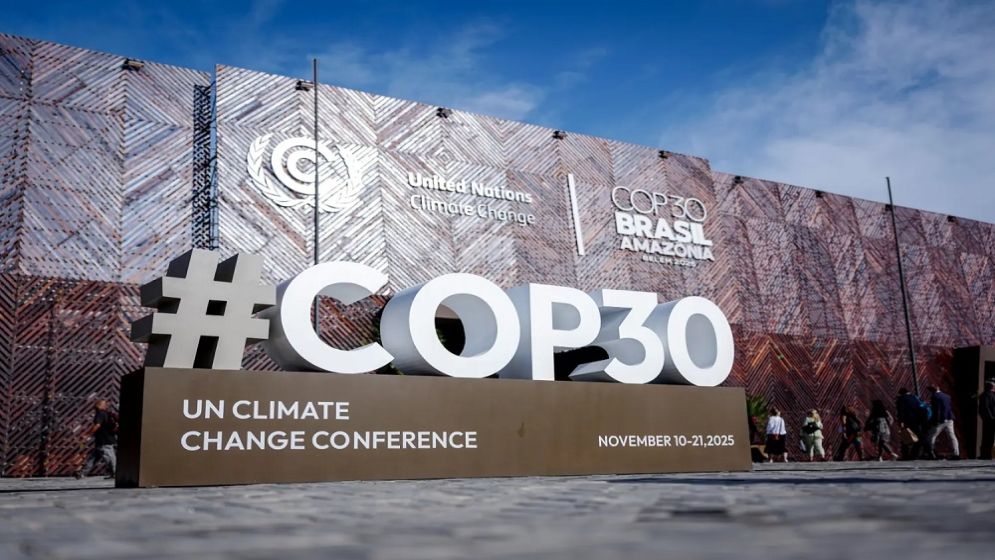
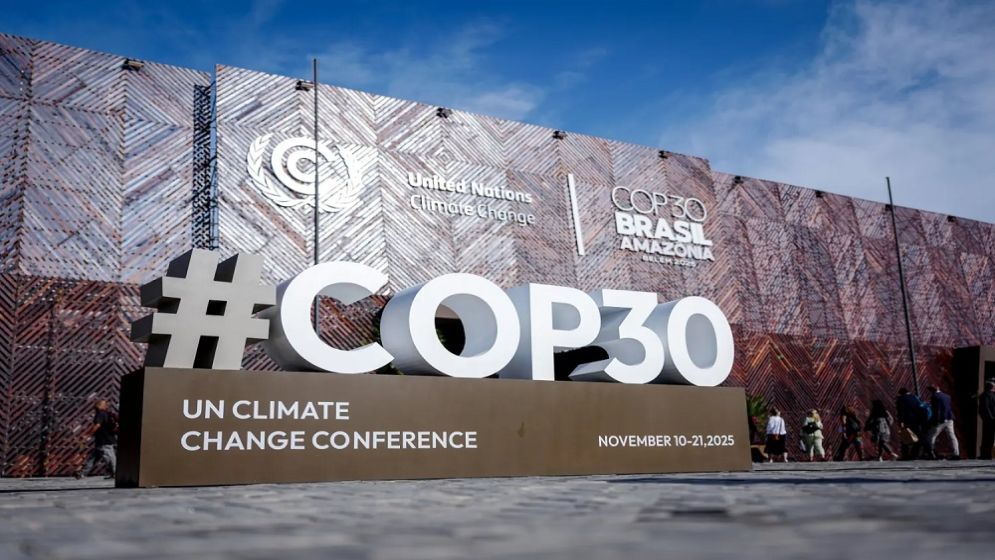
Bangladesh has urged world leaders to deliver urgent, equitable, and accountable climate action as the COP30 entered its high-level segment on Wednesday.
Delivering the country’s national statement in Belém, Brazil, Mohammad Navid Safiullah, deputy head of the delegation and additional secretary of the environment ministry, warned that climate change is already pushing millions of Bangladeshis to the brink.
“Climate change is not a future scenario – it is a daily reality,” he said, describing extreme heat, erratic rainfall, floods, intensifying cyclones, sea-level rise, and salinity intrusion that are “displacing millions, damaging harvests, and pushing vulnerable families to the edge.”
Despite contributing less than 0.5% to global emissions, Bangladesh is “choosing leadership, responsibility and hope,” Safiullah said.
He outlined several national initiatives: first of all, the NDC 3.0 aligned with the Global Stock take, including a target of 20% renewable electricity and 25% by 2035—a fourfold increase from current levels. Secondly, significant methane reduction efforts across agriculture and waste. Thirdly implementation of the National Adaptation Plan with 113 priority actions focusing on locally led adaptation, early warning systems, and community resilience. Fourthly, initiation of a long-term low-emission development strategy.
Referring to the Paris Agreement’s equity principles, Navid Safiullah stressed that developed nations must take the lead through “urgent, deep emission cuts” and scaled-up climate support.
He called for stronger public finance commitments from developed countries, tripling adaptation finance to $120 billion annually and prioritizing financial flows that support resilience, adaptation, and loss and damage.
Reaffirming the importance of Article 2.1(c), which requires aligning global financial flows with climate-resilient pathways, he emphasized that such alignment must support sustainable development in vulnerable countries—not hinder it.
Citing the findings of the Global Stocktake, Navid Safiullah reiterated that limiting warming to 1.5°C must remain “at the center of global efforts.” He also referenced the 2025 International Court of Justice Advisory Opinion, which clarified nations’ binding obligations to mitigate climate change, prevent harm, cooperate, and support vulnerable states—reinforcing Bangladesh’s long-standing call for equity and accountability.
Navid Shafiullah said, Bangladesh arrives at COP30 with “hope and determination,” urging world leaders to ensure that this summit becomes a turning point where “commitments become action” and “ambition is matched with equity.”
“For countries like Bangladesh, this is not diplomacy – this is survival,” Safiullah told delegates, calling for collective courage to protect future generations.
The high-level segment of COP30 continues this week as negotiations intensify over finance, mitigation pathways, adaptation targets, and operationalization of the Loss and Damage Fund.
Unauthorized use or reproduction of The Finance Today content for commercial purposes is strictly prohibited.