

By Vidya Bhushan Rawat*
Mob lynching has increasingly acquired social legitimacy across large parts of South Asia. Minorities in many countries are made to feel unwanted, as a wave of majoritarian hatred sweeps through the subcontinent. This is happening at a time when political leaderships should have been focused on addressing pressing issues such as hunger, poverty, and discrimination. Instead of investing adequately in education, schools, hospitals, and housing for all, governance priorities appear skewed.
The blame game is pervasive. Ironically, some of the most vocal participants in this self-righteous discourse are those who target minorities and marginalised communities within their own countries. Everyone claims moral superiority, offering lessons in history and political science while avoiding accountability at home.
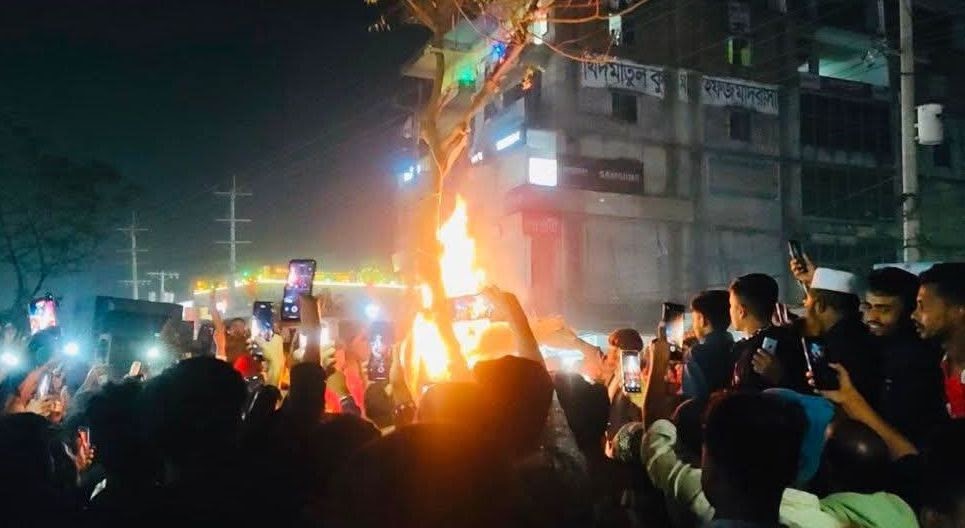
The brutal killing of Deep Chand Das in Bangladesh reflects a disturbing rise in intolerance towards Hindus and other minorities. The so-called revolution that preceded this phase has failed to deliver stability. History shows that not all revolutions produce solutions; many instead result in chaos, anarchy, and prolonged lawlessness. Bangladesh is currently facing a serious political and social crisis with potentially long-term repercussions for South Asia.
There is also a need to reassess the tendency to romanticise the creation of Bangladesh as an uncomplicated victory of secular and liberal values. From the beginning, Bangladeshi politics was shaped by competing ideological currents—one represented by the Awami League and the other by Jamaat-e-Islami. The ideological contest was never conclusively resolved; electoral success became the overriding objective. While Sheikh Hasina exercised firm control over the state, her close relationship with India was deeply resented by Islamist groups, particularly in the context of the rise of Hindutva politics in India under the Narendra Modi-led government. Across South Asia, majoritarian forces often feed off one another. Muslim extremists in Pakistan and Bangladesh mobilise hostility against Hindus, while Hindu nationalists target Muslims, each appealing to their respective domestic constituencies.
The Awami League’s political legacy has consistently acknowledged India’s contribution to the creation of Bangladesh, including the role of the Indian Army and Prime Minister Indira Gandhi. At the same time, it is essential not to diminish the significance of the Bangladeshi people’s resistance against the Pakistani state and military. While India commemorates the 1971 war as a military victory over Pakistan, it has often failed to adequately recognise the courage and sacrifice of the Bangladeshi population that endured immense atrocities. Today, the distortion runs in the opposite direction. Sections of Bangladesh’s political and religious leadership refuse to acknowledge India’s role in 1971, framing their politics around opposition to perceived Indian or Hindu hegemony. This deliberate erasure is pushing Bangladesh onto a dangerous path, fuelled by anti-India sentiment actively encouraged by radical groups that lack confidence in winning free and fair elections.
The decision by an unelected regime to bar the Awami League from contesting elections is deeply troubling. The party continues to enjoy substantial public support, and many radical groups understand that they would fare poorly in an impartial electoral process. Bangladesh has effectively functioned as a two-party system dominated by the Awami League and the Bangladesh Nationalist Party. Even after Sheikh Hasina’s removal, it is widely believed that the Awami League would still command enough seats to influence governance in Dhaka. This reality lies at the heart of the current crisis. Excluding the party entirely makes the formation of a stable and representative government virtually impossible.
Attacks on two of Bangladesh’s most respected and liberal newspapers, The Daily Star and Prothom Alo, appear to be part of a calculated attempt to intimidate and silence independent journalism. Islamist groups accuse these publications of promoting Indian propaganda. While Chief Executive Muhammad Yunus has condemned these incidents, his administration allowed the situation to deteriorate to this extent.
There is debate over whether Yunus ever intended to hold elections or whether he would relinquish power voluntarily. What is clear, however, is that the upheaval in Dhaka has not resolved Bangladesh’s political crisis. Instead, it has intensified instability, driven by radical agendas and sustained anti-India rhetoric.
India must approach Bangladesh with sensitivity and caution. A stable, democratic Bangladesh is in India’s long-term interest. Improving bilateral relations and strengthening people-to-people contacts are essential. Citizens in both countries must also remain vigilant against hate-mongering on social media, much of which is amplified by actors operating beyond national borders. Several forces stand to benefit from strained India–Bangladesh relations, but shared history and collective will can isolate those who thrive on division and hostility.
We must continue to stand for peaceful coexistence and better relations between the two countries.
—
*Human rights defender