
Close Menu
  • Home
  • Editorial
  • Politics
  • Economic
  • Sports
  • Religion
  • Contact us
  • About Us
Donate
Hand picked for you
  • Ethiopia, Bangladesh Commit to Deepening Ties Through Expanded Economic Cooperation – ENA English
  • Verma sees Bangladesh-India key to regional economic integration
  • Verma lauds IBCCI role in boosting India-Bangladesh economic ties | Business | FT
  • Bangladesh Economic Inequality and Oligarchs | The oligarch’s playbook: A warning for post-revolution Bangladesh
  • How BNP handles competing pressures to shape Bangladesh’s future: Crisis Group

Subscribe to Updates

Get the latest news from raznitee.

Reach out to us
  • Facebook
  • Twitter
  • Pinterest
  • Instagram
  • YouTube
  • WhatsApp
Facebook X (Twitter) Instagram
raznitee
Contact us
  • Home
  • Editorial
  • Politics
  • Economic
  • Sports
  • Religion
  • Contact us
  • About Us
raznitee
Facebook X (Twitter) Instagram
Contact us
Home»Environment»UN Report Warns of Global Water Bankruptcy
Environment

UN Report Warns of Global Water Bankruptcy

January 23, 2026No Comments1 Min Read
Facebook Twitter Pinterest LinkedIn Tumblr Email
Afghanistan water crisis.jpg
Share
Facebook Twitter LinkedIn Pinterest Email

Nearly three-quarters of the global population live in countries classified as “water insecure” or “critically water insecure”, and 4 billion people face severe water scarcity at least one month per year

Reuters

21 January, 2026, 09:35 am

Last modified: 21 January, 2026, 04:43 pm

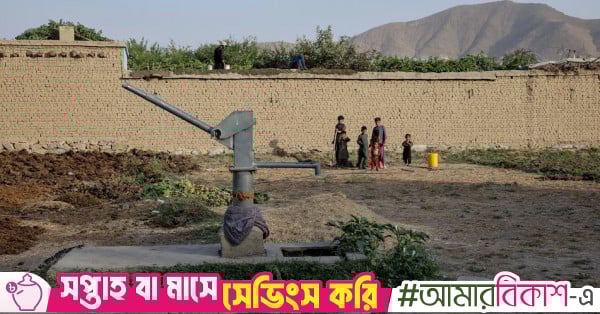
Children stand nearby a dried-up hand-pump, amid serious water crisis in Kabul, Afghanistan, August 29, 2025. Photo: REUTERS/Sayed Hassib

“>
Children stand nearby a dried-up hand-pump, amid serious water crisis in Kabul, Afghanistan, August 29, 2025. Photo: REUTERS/Sayed Hassib

Children stand nearby a dried-up hand-pump, amid serious water crisis in Kabul, Afghanistan, August 29, 2025. Photo: REUTERS/Sayed Hassib

The world is facing irreversible water “bankruptcy”, with billions of people struggling to cope with the consequences of decades of overuse as well as shrinking supplies from lakes, rivers, glaciers and wetlands, UN researchers said on Tuesday.

Nearly three-quarters of the global population live in countries classified as “water insecure” or “critically water insecure”, and 4 billion people face severe water scarcity at least one month per year, the United Nations University Institute for Water, Environment and Health warned in a report.

“Many regions are living beyond their hydrological means, and many critical water systems are already bankrupt,” said Kaveh Madani, lead author and director of the institute.


The Business Standard Google News
Keep updated, follow The Business Standard’s Google news channel

“By acknowledging the reality of water bankruptcy, we can finally make the hard choices that will protect people, economies and ecosystems,” he said.

The report said water supplies are “already in a post-crisis state of failure” after decades of unsustainable extraction rates that have drawn down water “savings” contained in aquifers, glaciers, soils, wetlands and river ecosystems, with supplies also degraded by pollution.

More than 170 million hectares of irrigated cropland – an area larger than Iran – are under “high” or “very high” water stress, and economic damage from land degradation, groundwater depletion and climate change amounts to more than $300 billion a year worldwide, the report said.

Three billion people and more than half of global food production are concentrated in areas already facing unstable or declining water storage levels, while salinisation has also degraded more than 100 million hectares of cropland, it said.

The researchers wrote that the current approach to solving water problems was no longer fit for purpose, and the priority was not “returning to normal” but a new “global water agenda” designed to minimise damage.

However, Jonathan Paul, geoscience professor at Royal Holloway, University of London, said the report did not address one major factor behind the crisis.

“The elephant in the room, which is mentioned explicitly only once, is the role of massive and uneven population growth in driving so many of the manifestations of water bankruptcy,” he said.

Share. Facebook Twitter Pinterest LinkedIn Tumblr Email

Related Posts

Climate-resilient housing models slow to gain ground in disaster-prone Bangladesh

April 6, 2026

ADB country director meets Mintoo to boost climate finance cooperation

April 6, 2026

Zero tolerance for corruption in water development board: State minister

April 6, 2026

India’s Role Seen As Vital To Bolster Bangladesh-Nepal Economic Ties

April 6, 2026
Add A Comment
Leave A Reply Cancel Reply

Subscribe to Updates

Get the latest news from raznitee.

We are social
  • Facebook
  • Twitter
  • Pinterest
  • Instagram
  • YouTube
  • WhatsApp
Latest Posts

Ethiopia, Bangladesh Commit to Deepening Ties Through Expanded Economic Cooperation – ENA English

April 23, 2026

Verma sees Bangladesh-India key to regional economic integration

April 23, 2026

Verma lauds IBCCI role in boosting India-Bangladesh economic ties | Business | FT

April 23, 2026
Follow us on social media
  • Facebook
  • Twitter
  • Pinterest
  • Instagram
  • YouTube
  • WhatsApp
Categories
  • Corruption (411)
  • Culture & Society (114)
  • Economic (1,916)
  • Environment (1,320)
  • Foreign Relations (359)
  • Health & Education (70)
  • Human Rights (5)
  • Politics (2,176)
  • Uncategorized (2)
Facebook X (Twitter) Instagram Pinterest Vimeo YouTube
  • About Us
  • Contact us
  • Disclaimer
  • Privacy policy
© 2026 Designed by raznitee.com

Type above and press Enter to search. Press Esc to cancel.