
As voters prepare to cast their ballots in the 13th national parliamentary election and referendum on 12 February, political debate has largely centred on jobs, healthcare, education, foreign policy and governance. Yet another issue is quietly moving to the forefront of campaign pledges — the environment.
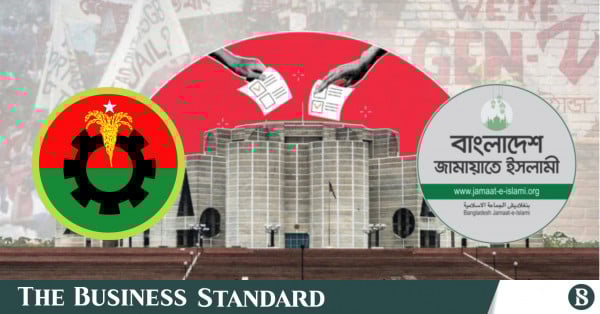
From tree plantation drives and renewable energy expansion to waste recycling and flood protection, the two major political parties — BNP and Bangladesh Jamaat-e-Islami — have outlined plans to address pollution, climate change and environmental degradation.
BNP’s 51-point manifesto, unveiled on 6 February, identifies environmental conservation and sustainable development as a key policy area. Jamaat, which announced its programme two days earlier, similarly frames environmental recovery as essential for national development, proposing what it calls a “three-zero vision” by 2030 — zero environmental degradation, zero waste and zero flood risk.

Tree plantation and forest protection
One of BNP’s headline pledges is planting and maintaining 250 million trees nationwide over five years. The party says the programme could create more than 350,000 green jobs, alongside another 250,000 jobs through new nursery enterprises.
BNP also proposes science-based afforestation using GIS-driven land mapping to identify suitable plantation areas and region-specific species, alongside a digital “Tree Monitoring App” to track survival and maintenance.
While the BNP manifesto outlines implementation strategies in detail, including the use of technology and monitoring tools, Jamaat’s manifesto presents broader commitments without extensive specifics.
Jamaat, however, promises stronger forest protection, including halting deforestation, expanding plantations using native species and ensuring greenery is incorporated into urban construction planning.
Energy transition, carbon market
Energy transition is an area where both parties show convergence. BNP targets generating at least 20% of electricity from renewable sources by 2030, including solar, wind, hydropower and waste-based energy.
Jamaat similarly pledges rapid expansion of solar power through large solar parks, rooftop incentives and expanded net metering.
Both parties also promise to expand nuclear power. BNP says it would review the Rooppur Nuclear Power Plant project and investigate alleged irregularities, while Jamaat says it supports nuclear energy development in line with international safety standards.
BNP links climate policy with potential economic gains, citing World Bank estimates that Bangladesh could earn up to $1 billion annually through carbon credit markets by reducing emissions. The party proposes establishing a Measurement, Reporting and Verification (MRV) system to support a domestic carbon trading market covering energy, agriculture, waste and reforestation sectors.
Jamaat, meanwhile, says it will carry out international lobbying to pressure the highest carbon-emitting countries to increase their allocations to Bangladesh, citing the country’s vulnerability to climate change.
Waste management approaches
Waste management, a growing concern in rapidly urbanising Bangladesh, also features prominently in both manifestos, though with differing levels of detail.
Jamaat’s programme highlights a goal of zero waste, proposing deposit-return schemes for plastic bottles, urban composting zones and the replacement of polythene bags with eco-friendly alternatives. The party also pledges to ensure effluent treatment plants in factories and prioritise the clean-up of polluted rivers such as the Buriganga, Turag and Karnaphuli.
BNP, on the other hand, outlines a more elaborate waste management framework under what it calls a “Circular Future Model”, where waste is treated as an economic resource. The party promises to establish regional material recovery centres and set up e-waste recycling facilities in each division, aiming to formally integrate around 200,000 informal waste workers into structured systems.
The manifesto also announces plans to implement the Reduce, Reuse and Recycle principle nationwide, targeting a 30% reduction in plastic waste within five years. BNP further proposes waste-to-energy projects to support urban power supply, along with expanded production of organic fertiliser and plastic recycling initiatives.
Floods, agriculture and climate adaptation
Climate adaptation measures also receive attention. Jamaat proposes adopting international flood management approaches such as the Dutch Delta Model, expanding mangrove buffers, digitising early warning systems and promoting rainwater harvesting to ease pressure on groundwater.
BNP, meanwhile, says it would raise Bangladesh’s water challenges internationally by signing the 1997 UN Water Convention. The party also pledges implementation of the Teesta Mega Project and the Padma Barrage, alongside building elevated roads, shelters, culverts and modern early warning systems in flood-prone areas.
Jamaat says steps will be taken to protect agricultural land, maintain soil fertility and address climate change impacts on agriculture.
BNP highlights climate-smart agriculture, pledging to introduce water-saving irrigation technology in 30–50% of paddy fields by 2035. The party says this could significantly reduce irrigation water use and methane emissions while improving farmers’ income.
Beyond land-based resources, BNP also places emphasis on developing the blue economy through sustainable marine resource use, deep-sea fishing, eco-tourism and coastal industries, which it says could create up to one million jobs.
As voters head to the polls, climate and environmental commitments have emerged as a visible part of competing development narratives. The key question after the election will be how far these manifesto pledges translate into concrete policies and actions on the ground.