
Study says it could have critical implications for water resources, agricultural practices

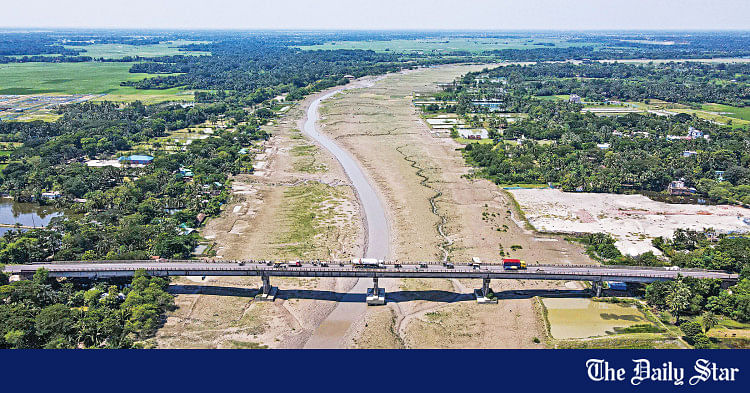
A RIVER ON ITS DEATHBED…The once mighty Shoilmari river in Khulna’s Batiaghata upazila is now a mere shadow of its former self. The dire state of the river is attributed to factors like lack of upstream flow and poor silt management. At least 100 villages in its basin have not only lost their main natural source of water, but, ironically, also are frequently flooded. Photo: Habibur Rahman/Star
“>
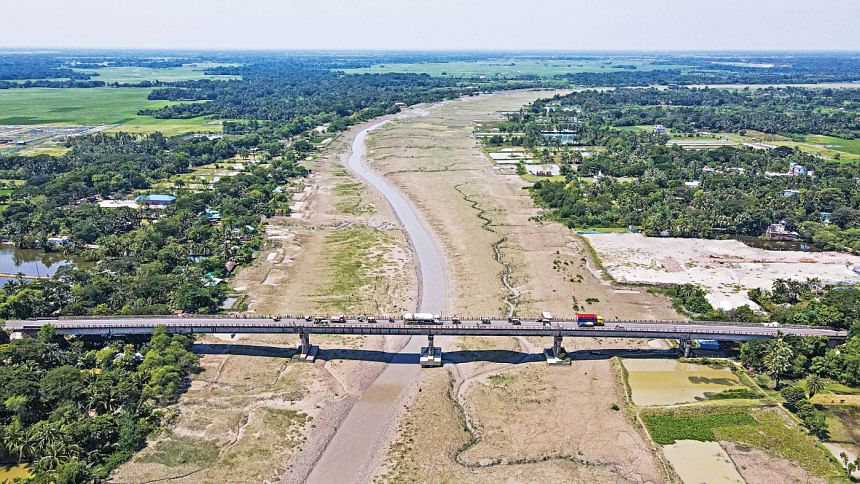
A RIVER ON ITS DEATHBED…The once mighty Shoilmari river in Khulna’s Batiaghata upazila is now a mere shadow of its former self. The dire state of the river is attributed to factors like lack of upstream flow and poor silt management. At least 100 villages in its basin have not only lost their main natural source of water, but, ironically, also are frequently flooded. Photo: Habibur Rahman/Star
Between 1981 and 2020, the average annual rainfall in Khulna city exhibited a decreasing trend, with an average annual reduction in rainfall of approximately 0.0018 mm, suggesting a shift toward drier conditions, according to a study.
This reduction of rainfall could have critical implications for water resources and agricultural practices in the area, which rely heavily on consistent rainfall patterns, said the study.
 For all latest news, follow The Daily Star’s Google News channel.
 On the other hand, the study also found that daytime temperatures have risen by an average of 0.023 degrees Celsius each year and nighttime temperatures by 0.03 degrees Celsius on average each year.
It also indicated that the increase in nighttime temperatures may suggest an enhanced urban heat island effect, which could exacerbate public health risks and energy consumption in Khulna.
Moreover, for the years 1981-2020, the yearly change in average humidity for Khulna is -0.0366. Indicating that the overall humidity in Khulna has a decreasing trend and on average each year it is decreasing by 0.0366.
The research paper titled, “Assessing the dynamics of climate change in Khulna city: A comprehensive analysis of temperature, rainfall and humidity trends” recently published in International Journal of Science and Engineering revealed all of this information.
A group of Bangladeshi researchers studying in the US conducted the research.
Experts said the changes in rainfall, temperature, and humidity in Khulna city are primarily driven by global climate change, which resulted from increased greenhouse gas emissions.
This leads to global warming, altering weather patterns, and increased frequency and intensity of extreme weather events.
Md Mazharul Islam, one of the authors of the paper, said, “Regional factors such as urbanisation, deforestation, and changes in land use contribute to local climate variations. These factors together disrupt the natural climate balance, leading to observed changes in local climate metrics.”
“Increased temperatures and humidity can lead to heat-related illnesses and exacerbate respiratory problems. Unpredictable rainfall affects crop yields, leading to food insecurity and economic strain for farmers. Variations in rainfall can also cause water shortages or flooding, affecting daily life and sanitation,” he added.
Extreme weather events can damage homes, roads, and other infrastructure, leading to displacement and costly repairs.
“This detailed local data can serve as a case study for similar regions facing climate challenges. This research can inform policymakers, aid in climate resilience planning, and raise awareness about the local effects of global climate change,” said Md Mazharul.
He emphasised the need to involve local communities in climate resilience planning and data collection. He also stressed the importance of raising public awareness through education and media campaigns based on the study’s findings.