
- DoE will monitor compliance for this month without imposing fines
- Full enforcement of the ban is scheduled for 1 Dec
- Mixed reactions, with some sceptical about govt’s ability to enforce the ban
- Limited availability, higher costs of alternatives like jute, cloth bags
- Govt aims to reduce polythene usage to zero, revive jute industry
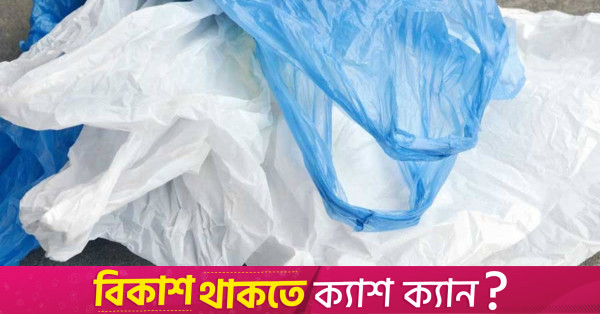
The use of polythene bags has officially been banned in all kitchen markets across Bangladesh starting today, following a similar prohibition in supermarkets.
The Department of Environment will monitor these markets for this month, but no fines or legal actions will be taken against vendors during this time. Instead, the focus will be on operations against polythene manufacturers and suppliers. Full enforcement of the ban is set to begin on 1 December.
Despite the government’s bold initiative, environmental experts express concerns over the implementation due to the limited availability of alternatives.

They recommend that the government provide incentives to lower the production and sale costs of environmentally friendly bags, such as jute bags, while also promoting public awareness to discourage polythene usage.
In anticipation of the ban, wholesalers in Karwan Bazar cleared their stocks yesterday. Md Shanto, a polythene bag wholesaler, said, “After hearing about the ban, we have already cleared our stock. All the wholesalers in Karwan Bazar did the same to avoid any action or fines from the government.”
Other sellers confirmed that only a few polythene bags remained in retail shops, which were expected to be removed by the end of the day.
Public sentiment regarding the ban is mixed. Many users remain sceptical about the government’s ability to enforce it, citing past failures.
Moniruzzaman, a fruit seller, reflected on previous bans, saying, “The government banned polythene in 2006, but it was not effective. Within a few days, polythene bags became common in the market again. People eventually forgot about the ban and continued to use them. Because of this, we are doubtful about the new implementation.”
He added that alternatives like net or cloth bags are significantly more expensive, often costing 2-3 times as much as polythene.
Currently, the price of polythene ranges from Tk180 to Tk210 per kg, while net bags are priced between Tk350 and Tk500 for 100 pieces, and cloth bags range from Tk180 to Tk340 for the same quantity. The prices vary based on the size of the bags.
Some shoppers expressed their dissatisfaction with the ban. Md Ashraf, a local shopper, commented, “Sometimes we come to the market to buy mere 100gm ginger or coriander leaves. It is not possible to buy a bag to carry this little thing. The government should not impose such a whimsical decision.”
However, others welcomed the ban. Vegetable seller Md Monsur Ali Khan said, “Every day, we spend at least Tk200 on polythene bags. If the ban is enforced, customers will bring their own bags. This will help us save money on polythene, which is harmful to the environment.”
Shopper Hasibur Rahman added, “From tomorrow, gradually we will be used to bringing bags while coming to the market or will buy bags if needed. The ban will make a big positive change in the environment.”
The ban aligns with the Bangladesh Environment Conservation Act, 1995 (Amendment 2002), which aims to protect the environment and public health.
Under this law, the minimum penalty for the production and marketing of polythene is a fine of Tk10,000, along with up to six months of rigorous imprisonment. Users of polythene bags face an immediate fine of Tk500.
For the first month, the Department of Environment plans to raise awareness among business owners and consumers without imposing fines. Volunteers will help promote this awareness in the markets. Starting 1 December, the ministry will enforce stricter measures.
Syeda Rizwana Hasan, advisor to the Ministry of Environment, Forest and Climate Change, said at a recent seminar, “The law outlines a gradual process for phasing out polythene. This process involves ongoing discussions with shopping centres and store owners.
“We are not enforcing strict measures yet. Our goal is to reduce the use of banned polythene to zero, not to punish anyone. We also aim to revive the jute industry.”
Current state of polythene usage
The scenario regarding polythene use in Bangladesh remains alarming. Since the ban on polythene in 2002, its usage increased dramatically, especially after the change of government in 2007.
A 2022 study by the Environment and Social Development Organization (ESDO) showed that approximately eight crore polythene bags are used daily in Dhaka alone, most of which end up in waste and the environment.
According to World Bank data, nearly 3,000 factories in Bangladesh produce plastic and polythene. Together, they make about 1.4 crore bags every day, with the most factories located in Old Dhaka.
Shahriar Hossain, secretary general of ESDO, said, “If the government’s initiative is implemented, the country will be saved from significant pollution. Initially, there might be some issues, but once the general public gets used to it, there will be no problems.”
Helal Uddin, president of the Bangladesh Dokan Malik Samity (shop owners’ association), expressed support for the government’s measures, saying, “We fully support the effective measures the government is taking to ban the use of polythene, even if it is coming after such a long time.
“However, we will face some initial challenges. In this case, the government is giving shop owners time to get accustomed to alternatives to polythene.”