
After years of continuous negotiation and bargaining efforts last year, the COP28 summit in Dubai ended with a comprehensive agreement to operationalise the loss and damage fund for climate change-affected countries.
The World Bank is presumed to host the loss and damage fund in conformation to the agreement at COP29 and simultaneously a competent board shall shape policies, structures, and governance to operationalise the fund.
This fund is designed to support vulnerable countries dealing with the impacts of climate change that surpass human adaptability, such as loss of livelihood due to rising sea levels and salinity intrusion or loss of lives, homes, and other infrastructure due to extreme floods and cyclones.
It is essential to understand the nuances and dynamics of loss and damage at the micro level from the local community perspectives for successful implementation of the COP29 agenda.
Bangladesh is the poster child for climate change holding the seventh position on the Global Climate Risk Index 2021. The southern region of Bangladesh, which lies in the coastal belt, is highly susceptible to various rapid-onset hazards including cyclones, coastal erosion, and seasonal flooding, as declared by Mamun Hawladar from Sonnasi village, Khaulia Union, Morrelganj, Bagerhat.
Mamun informs that the area faces two to three cyclones annually and a minimum of one tidal inundation per month during monsoon.
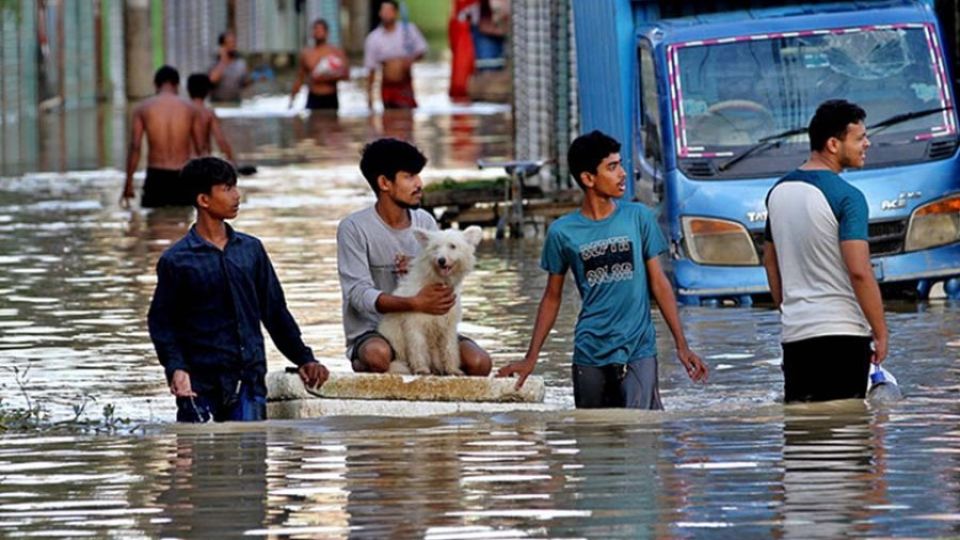
Frequent and intense cyclones and floods produce recurring losses and damages in the agriculture related sectors. He further stated that during June of this year, Cyclone Remal flooded and washed away the autumn rice crops. Mamun lost Tk 45,000 at that time and the recent seasonal floods destroyed his winter rice crops as well.
Besides rapid-onset hazards, slow-onset hazards like salinity intrusion, sea level rise, and global warming are extensively present in coastal Bangladesh. Particularly, due to climate change-induced sea level rise and frequent inundation, salinity has been intruding into the soil and water in coastal Bangladesh at a higher rate than earlier.
Abul Hossain, one of the salinity-affected farmers from the Khaulia Union, Morrelganj, stated that “In our community, salinity increases largely during mid-February to mid-June (Phalgun, Chaitra, Baisakh, and Jaishtha in Bengali calendar months).”
Hossain additionally recollects that “During my childhood, I saw my parents used to harvest two times a year, but now we cannot yield crops even once a year due to salinity intrusion. We encounter recurring losses and damages in crop production every year. Salinity intrusion damages paddy fields, seedbeds, and vegetable gardens. This year we could not yield any rice and vegetables.”
Likewise, aquaculture practices and livestock rearing are also under threat due to salinity intrusion. Hossain further divulged that due to salinity intrusion a significant decrease in the populace of fish in the ponds has been noted.
Livestock has also been suffering from more diseases. Unfortunately, losses and damages incurred by slow onset events as such are not well recognised in the current loss and damage discourses and frameworks. To recapitulate, rapid and slow onset climatic events both produce recurring loss and damage in the affected communities concurrently.
There are minimum existing adaptation initiatives and they fall short of adapting to current and imminent climate change impacts due to the increasing frequency and intensity of climatic events. Further, financial constraints due to shrinking funding, pose hurdles in the adaptation process.
Consequently, existing adaptation gaps leave unavoidable long-term loss and damage in affected communities, further affecting food security, health and nutrition of the affected communities. While some economic and financial damages are repairable to an extent, the shadows of certain loss and damages are irreparable and persist generationally.
This loss and damage cycle requires holistic, integrated, and continuous climate financing urgently from local, national, and international government and non-government actors.
Amid the COP29, most affected communities conclude to put forth their demands to world leaders. Affected communities urge all stakeholders to unify in efforts to build on the momentum and commit to a coherent and collective action plan to address loss and damages in vulnerable countries and regions.
First, leaders must come to COP29 prepared to scale up financial pledges to the fund to address climatic change induced loss and damage effectively and efficiently.
Second, concerned stakeholders must unify to formulate and strengthen policies, mechanisms, and governance to ensure compensation and reparation for current and past losses and damages, incurred by both rapid and slow onset climatic events.
Third, considering the principles of distributive justice, equity-based sectoral financing is urgent in the most affected sectors rather than single-sector financing.
Fourth, there must be strengthening of inter-sectoral coordination mechanisms at the regional and local levels for operationalising the loss and damage fund and governance.
Lastly, it is urgent to facilitate collaborative research, create data-driven evidence on loss and damage at the community and national level, and accordingly integrate advocacy efforts for viable environment, climate justice, and climate finance from various sources at various levels.