
40 power plants being constructed to generate electricity from renewable energy, said Energy Adviser Fouzul Kabir Khan
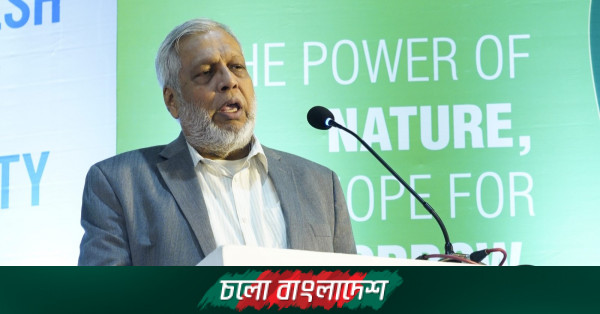
Power, Energy and Mineral Resources Adviser Muhammad Fouzul Kabir Khan speaks at the inaugural ceremony of Bangladesh Energy Prosperity 2050 conference in Dhaka on 11 December 2024. Photo: Courtesy
“>

Power, Energy and Mineral Resources Adviser Muhammad Fouzul Kabir Khan speaks at the inaugural ceremony of Bangladesh Energy Prosperity 2050 conference in Dhaka on 11 December 2024. Photo: Courtesy
The primary goal of the former government in the power and energy sector seemed to be enabling corruption rather than achieving sustainable development, said Muhammad Fouzul Kabir Khan, adviser to the Ministry of Power, Energy and Mineral Resources.
However, the current interim government is eliminating those practices that enable corruption and moving towards achieving a sustainable power policy and practice, a ministry press statement quoted him as saying at the Bangladesh Energy Prosperity 2050 conference as the chief guest in Dhaka today (11 December),
“We have restored the Energy Regulatory Commission’s power to fix electricity tariffs. We are also revising the Integrated Energy and Power Master Plan and reevaluating the renewable energy policy,” the adviser said after inaugurating the three-day event at the BIAM Foundation as its opening day chief guest.

“We are also moving away from independent power producers (IPPs) and implementing a more sustainable power policy,” he added.
Won’t be easy to cancel power contracts: Rizwana
Also speaking on the occasion, Environment, Forest and Climate Change Adviser Syeda Rizwana Hasan said cancelling power contracts signed during the Awami League regime will be a difficult task with many challenges.
Chairing the seminar’s inaugural session, she said, “Cancelling contracts is not easy. Bangladesh had to deal at the international level to cancel the Niko contract. But the interim government has taken up that challenge. The [power] deals are currently under review.”
“The government still has to bear the burden of loans for many of those projects even after implementation. We are having to pay even as those projects remain idle. At the same time, there is also a pressure on energy conversion. [We] are having to take responsibility for unequal contracts made at abnormal costs. The government is taking a lot of time to do damage control.”
Replying to questions at the conference, the environment adviser said there are solar panels on the roofs of residential buildings in Dhaka.
“No one is checking whether those are working or not.”
On land acquired for different projects, she said, “The law does not allow the land acquired for various projects to be returned to the original owners. However, the acquired unused land can be utilised by generating electricity from renewable energy or by afforestation.”
She also said Bangladesh faces significant challenges in achieving energy prosperity, compounded by unequal power deals and ongoing crises. Energy accessibility remains a pressing issue, with persistent gaps in quality, affordability, and transparency.
“Meeting the 40% renewable energy target by 2041 requires clear policies, strong private-sector engagement, and a shift from energy production to conservation. Ensuring reliable power for industries, adopting subsidised renewable energy for energy-intensive sectors, and repurposing power plant land for solar or other renewable projects could accelerate the transition,” she added.
The Bangladesh Energy Prosperity 2050 conference is uniting over 300 national and international representatives, including policymakers, energy experts, development partners, private sector investors and financiers, civil society organisations and youth for an impactful three-day event.
The inaugural session also featured special guests, including Mohammad Tamim, professor, Department of Petroleum and Mineral Resources Engineering, BUET, and Munawar Misbah Moin, managing director, Rahimafrooz Renewable Energy Limited (RREL).
Cynan Houghton, deputy regional programme director of Tara Climate Foundation, said, “We must work together to drive a renewable energy transition that reshapes the political landscape and strengthens the interim government’s policies to unlock Bangladesh’s renewable energy potential. Countries like Vietnam, South Africa, Pakistan, and China have achieved extraordinary progress in the energy sector, even under challenging circumstances—transformations that took months, not years. These successes show what is possible with collective effort and commitment.
Lidy Nacpil, coordinator of Asian Peoples Movement for Debt and Development (APMDD) mentioned that the greater challenge lies in transforming the fossil fuel-based economic system. “We all share a common struggle to transform the energy system.”