
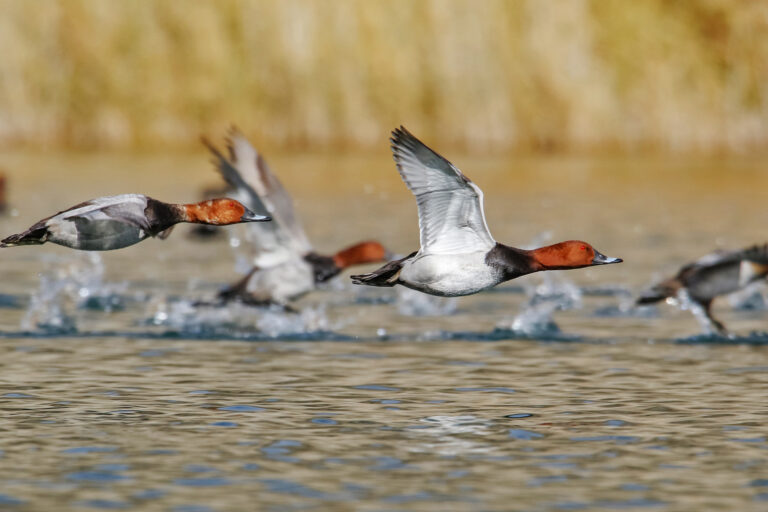
- Recent studies indicate a steady decline in the number of migratory water birds in Bangladesh over the last few years.
- Researchers said the key threats to migratory birds include habitat loss, cattle grazing in bird habitats, domestic duck farming and conservation mismanagement.
- They underscore the need for a coordinated effort among livestock, agriculture and environment ministries.
Bangladesh transforms into a mesmerizing haven of migratory birds every winter, particularly in its haors (swampy wetlands) and coastal areas. These birds undertake incredible journeys from northern Mongolia, parts of Tibet and China, and Russia and Siberia’s tundra, seeking respite from harsh winters, flying towards the abundant food and favorable climates in South Asia.
The birds enter Bangladesh via two routes, the East Asian-Australasian Flyway and the Central Asian Flyway, which was recognized by the East Asian-Australasian Flyway Partnership (EAAFP) in 2010.
The birds arrive at six predominant wetland habitat sites during the winter months: three haor regions — Hakaluki Haor, Tanguar Haor and Hail Haor — and three coastal areas — Nijhum Dwip National Park, Sonadia Island and Ganguirar Char. These areas host thousands of migratory birds every year, creating picturesque landscapes and becoming popular among birdwatchers.
However, their numbers have declined significantly over the past few decades due to rapid habitat loss caused by several unfavorable government policies, raising concerns among conservationists and researchers.

Declining numbers and causes
A recent study in Tanguar Haor analyzed 69 bird species, of which 41 are migratory, and found a declining trend in bird species.
Tanguar Haor, which covers 9,500 hectares (23,475 acres) in Sunamganj district, is one of the primary winter refuges for migratory birds, hosting around 43% of the country’s total migratory birds annually.
The study, which analyzed bird counts between 2008 and 2021, found declining trends in around 59% of assessed species, including the critically endangered Baer’s pochard (Aythya baeri) and the vulnerable common pochard (Aythya ferina).
Another important habitat is Nijhum Dwip, located in Noakhali district’s Hatiya region along the Meghna River in the Bay of Bengal. Here, another study analyzed data from 2009-11 and 2018-20 and recorded 58 waterfowl species, 13 of which are considered threatened or near threatened under to the IUCN Red List.
Though the study found an increase in total bird count in the area, it identified several threats such as habitat destruction by livestock rearing and land use change as a result of mangrove plantations. The study suggested the government take management action to ensure safe and suitable habitats for migratory bird species.
The researchers identified different causes for avian population decrease at both wetland and coastal island locations.
Haors, swampy wetlands found in northeastern Bangladesh, remain under water for at least six months every year. The local communities’ livelihood options here are limited mostly to fisheries and one season of rice cultivation (boro). The Bangladeshi government, with support from development partners, has been promoting alternative livelihoods in the haor regions, including duck and cattle rearing, for a couple of decades now to promote livelihood options.
A. B. M. Sarowar Alam, a wildlife researcher and project manager of IUCN Bangladesh, said that increased cattle and domestic duck rearing during winters is one of the major causes of migratory birds’ habitat degradation in wetlands like Tanguar, Hakaluki and Hail. The presence of a large number of cattle and ducks in the same area means the migratory birds face a shortage of food and damaged mudflats, he said.


The factors in coastal regions are different, including habitat loss due to the government’s coastal afforestation programs.
According to the country’s Forest Department, Bangladesh has planted about 1,96,000 hectares (4,84,300 acres) of mangroves since 1965 on the newly formed deltaic lands along the estuaries at the Bay of Bengal.
Alam said these mangrove plantations have negative impacts on the coastal ecosystem since the afforestation takes place on the mudflats. Once the trees take root and grow, the land becomes hard, which is unsuitable for water birds.
“[These] birds mainly remain on the mudflats for long periods of time in search of food. With the high volume of coastal mangrove plantations, the suitable habitat for migratory birds might be drastically hampered in the long run,” Alam said.
About the identified threats, M. Monirul H. Khan, a professor of zoology at Jahangirnagar University, said that the government’s poor coordination among the different offices.
For instance, in the wetland region, the Ministry of Environment, Forest and Climate Change (MoEFCC) is responsible for wildlife conservation, while the Ministry of Fisheries and Livestock has its own target of increasing fish and livestock production. Consequently, each government body works with its own agenda in a single land area, he said.
Syeda Rizwana Hasan, an advisor at MoEFCC, acknowledged the loopholes in both wetland and coastal belts and told Mongabay, “We will raise the issue in our inter-ministerial meeting soon so that we can find out how to solve the crisis.”

Banner image: Common pochard (Aythya ferina) photographed in Pakistan. Image by Birds of Gilgit-Baltistan via Flickr (CC BY-SA 2.0).
Fewer migratory birds stopping at key Bangladesh wetland amid human disturbances
Citations:
Alam, A. B. M. S, Ahmed, S., Azmiri, K. Z., Amin, R., van Toor, M. L., Datta, A. K., Waldenström, J., Haque, E. U. and Chowdhury, S. U. (2023). Population trends and effects of local environmental factors on waterbirds at Tanguar Haor freshwater wetland complex in northeast Bangladesh. Avian Conservation and Ecology, 18(1):18. doi:10.5751/ACE-02405-180118
Chowdhury, S. U., Foysal, M., Shahadat, O., Prince, N. U., Mohsanin, S. and Islam, M. T. (2020). Globally threatened shorebirds of Nijhum Dwip National Park and management implications. Wader Study, 127(3): 244–251. doi:10.18194/ws.00202
