
Unscrupulous businesses and political elites have siphoned off billions of dollars worth of money each year from the impoverished Bangladesh during the past regime under Sheikh Hasina, further weakening the country’s economic base, according to a 400-page white paper prepared by the interim government.
“Systemic tax evasion, misuse of exemptions, and poorly managed public finances have deprived the state of critical resources, stalling development,” the paper said.
It said: “Between 2009 and 2023, illicit financial outflows averaged $16 billion annually — more than double the combined value of net foreign aid and FDI inflows.”
The committee identified a number of channels of corruption that ravaged the country’s economy over the last 15 years. It listed a host of items including: banking loan scams; bank takeovers; illicit financial outflows; politically motivated unviable projects; inflated project costs; project cost escalation post-approval; non-competitive tender processes; unnecessary or poorly designed projects; nepotism in appointments; illegal land and asset acquisitions; and awarding overpriced contracts as a medium of corruption.
Other corruption practices in the past are alleged to include bribery; misallocation of public funds; tax exemptions for elites; distorted supply chains; sharing insider information; extortion-based corruption; corruption by inaction; commission-sharing corruption; corruption for political favour; and legislative manipulation corruption.
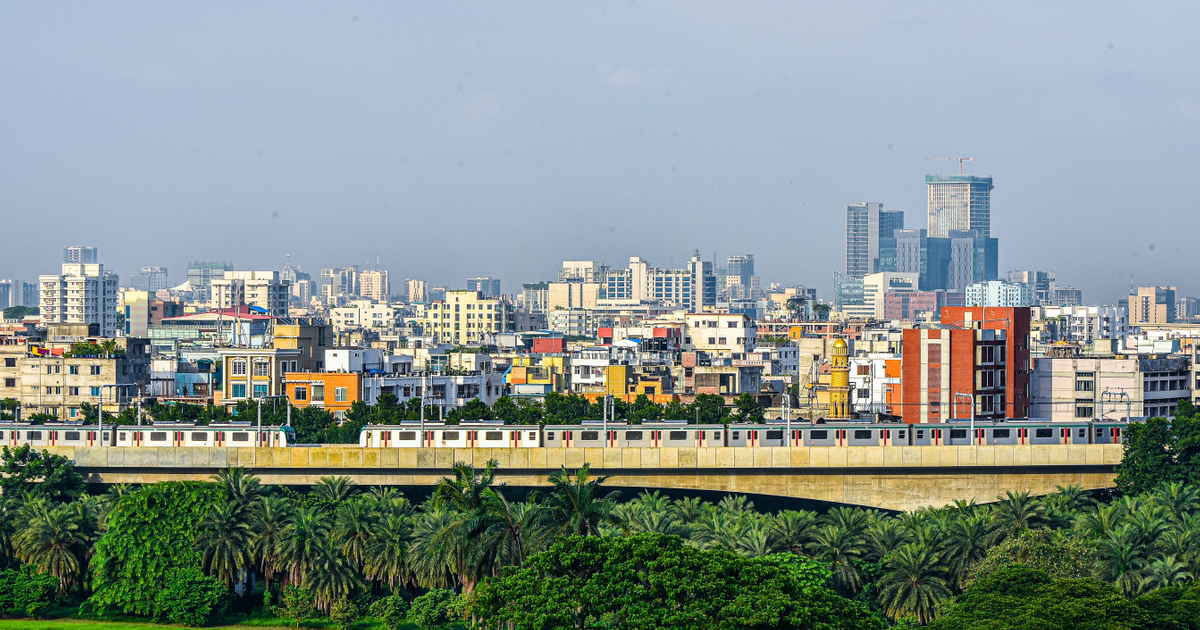
The white paper committee said the banking sector was the most corrupt sector. It said politically influenced lending practices deepened the banking sector crisis, with distressed assets (as of June 2024) equivalent to the cost of constructing 14 Dhaka Metro systems or 24 Padma Bridges.
“Persistent loan defaults and high-profile scams have eroded financial stability and diverted capital away from productive sectors,” it said.
While describing the magnitude of corruption, the white paper mentioned that corruption in large-scale public projects has caused an average cost escalation of 70% and delays of over five years. Of the $60 billion invested in Annual Development Program and development projects over the past 15 years, some $14-24 billion has been lost to political extortion, bribery, and inflated budgets.
The white paper said: “Manipulated domestic production figures and understated demand for key commodities, such as rice, edible oil, and wheat, have destabilised markets. Erratic and politically influenced procurement policies have benefited powerful business groups while exacerbating consumer hardships.”
Corruption also engulfed labour migration over the last decade, it said. Tk1.34 trillion has been funnelled by transactions through illegal channels by recruiting agencies for visa purchases. “Syndicates and exploitative recruitment practices have deprived migrant workers of equitable access to employment and diminished remittance contributions to the economy”.
Also, the misallocations within social protection programs have left millions of people vulnerable. As of 2022, some 73% of social safety net beneficiaries were classified as non-poor, a significant increase from 66% in 2016. Over 20 million individuals remain just two days of lost work away from falling into poverty, highlighting the systemic inequities exacerbated by corruption.
The white paper found corruption within climate adaptation funding has exacerbated environmental degradation in Bangladesh. “Politically patronised mismanagement of climate resources has derailed sustainability initiatives, threatening long-term resilience against climate-induced risks.”
Growth figures
In addition, there was also severe data distortion by the government to show higher growth, production, employment and low inflation, poverty, and unemployment, according to the report.
“There was growth for sure, but not nearly as much as made out in the ‘Unnoyon (development)’ narrative of the previous regime, the paper mentioned. Contrary to belief popular in this camp, growth has been slowing well before the pandemic.
“The middle-income growth trap is not lurking anymore, it is here in Bangladesh,” said the committee and added the “fastest” growing variant is a statistical artifact in case of Bangladesh.
The paper also mentioned that the overdose of “Unnoyon” to glorify the few “rights” (the Padma bridge and Dhaka Metro) and justify the many blatant “wrongs” (corruption) at best struggles and, in most cases, fails to pass some very basic fact checks.
“The pace of growth was far slower, and the slope of the growth path in the past decade was the opposite of that portrayed in official data. This is not to say the economy didn’t grow; it did. The quality of 4-5% annual GDP growth the economy did achieve was severely diluted by rising inequalities in income, wealth and opportunities,” added the paper.
Foreign exchange reserve reporting became controversial with the publication of discrepancies in an IMF report in 2020.
The data on financial sector balance sheets became increasingly problematic with departures from standard accounting practices, as revealed in the recent Financial Stability reports of the Bangladesh Bank.
The data on tax revenues typically comes with over-estimation by the National Board of Revenue (NBR), allegedly at times deliberately by the top, and inevitably long and variable lags from the office of the Comptroller and the Auditor General, it added.
The extent of financial distress, already growing large before the pandemic, has multiplied. Recognised non-performing loans alone have increased nearly ten times since 2010 at end-June 2024.
Depleted foreign exchange reserves
The white paper also found that foreign exchange reserves declined to levels too low for comfort no matter how the adequacy of reserves is judged. Both central bank and the domestic commercial banking system lost reserves.
The Bangladesh Bank’s mood swings on exchange rate policy turned lethal when a multiple fixed exchange system was put in place in September 2022. It discouraged the repatriation of export proceeds and remittance through formal channels and incentivised capital flight.
The public debt-to-GDP ratio increased to 41.3% of GDP, from 35.6% just two years back, totaling $166.7 billion. The external debt is catching up which was 17.7% of GDP in FY 2023, compared to 15.1% in FY 2021.
Capital markets lack depth
After the Awami League government assumed power in 2009, the stock market surged within a year and a half before crashing suddenly in January 2011.
The main Dhaka index fell by about half from its December 2010 all-time high, and the loss as of October 2012 was equivalent to 22% of GDP. It wiped out $27 billion in market capitalisation triggering a wave of social discontent; some investors even committed suicide.
The white paper found that trillions of takas were embezzled from the stock market through fraud, manipulation, placement shares, and deceit in the IPO process. The government held back market development and constrained responsible institutions from carrying out their mandates.
¬ Haymarket Media Limited. All rights reserved.