
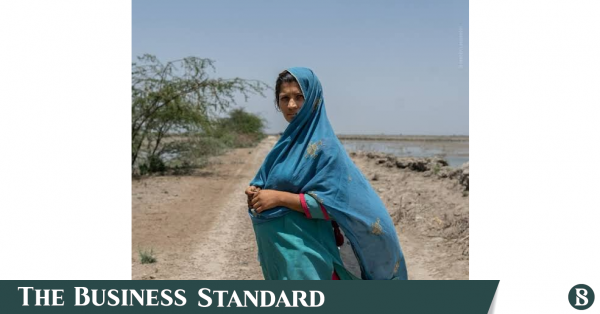
Pregnant women in Bangladesh are increasingly at risk due to intensifying heat waves driven by climate change, according to a new report published on Wednesday (14 May) by the US-based think tank Climate Central.
The report highlights a significant rise in the number of days with dangerously high temperatures associated with childbirth complications, particularly in the southern port city of Chattogram.
Between 2020 and 2024, Bangladesh experienced an average of 34 days per year categorised as “pregnancy heat-risk days”. These are days when temperatures exceed the 95th percentile of historical averages — conditions that can markedly increase the risk of pregnancy-related health issues, including preterm birth and other complications.

The report identifies Chattogram, the country’s second-largest city, as the most heat-vulnerable urban area, registering an average of 30 additional heat-risk days annually during this period. This accounts for 61% of all such days nationwide, leading to its designation as a major “temperature hotspot”. Dhaka, the capital, accounts for a further 8% of the country’s pregnancy heat-risk days.
“This alarming trend is largely driven by fossil fuel emissions from sources such as coal, oil, and gas,” said Dr Kristina Dahl, Vice President of Science at Climate Central. “Even a single day of extreme heat can trigger pregnancy complications. In Bangladesh, where access to healthcare remains limited for many, this adds an extra layer of danger for expectant mothers.”
The report also notes that although temperatures have steadily risen since the 1950s, regional disparities persist. In some areas, local weather patterns, environmental variation, or gaps in data may have masked even more severe outcomes — a warning that conditions could worsen without urgent climate intervention.
Climate Central emphasised that Bangladesh’s challenges are part of a broader global crisis. According to the report, 90% of the 247 countries and territories analysed have seen the number of pregnancy heat-risk days double over the past five years. In nearly one-third of these nations, pregnant women are exposed to at least a full month of high-risk temperatures annually.
The most severely affected regions include South Asia, sub-Saharan Africa, and Southeast Asia — areas with the smallest contribution to global carbon emissions.
“This is not merely an environmental issue — it is a matter of global equity,” said Dr Bruce Bekker, an expert in women’s health and climate policy. “Countries most responsible for global warming must take accountability. It is the most vulnerable — including pregnant women and children in developing countries like Bangladesh — who are bearing the brunt,” he added.
Public health experts are calling for immediate and targeted measures to protect maternal health in the face of a warming climate. Key recommendations include establishing heat-resilient healthcare facilities, delivering specialised medical services during periods of extreme heat, and launching public awareness campaigns to prepare communities for the associated risks.
“Bangladesh has made significant progress in maternal health over the past decade,” said Dr Farhana Akter, a public health specialist. “But climate change now threatens to reverse those gains. We urgently need a climate-adaptive health policy that protects those most at risk.”
The Climate Central report warns that without immediate national and international action to curb greenhouse gas emissions and enhance climate resilience, pregnant women in Bangladesh — and across many parts of the world — will face escalating and long-term health threats.