
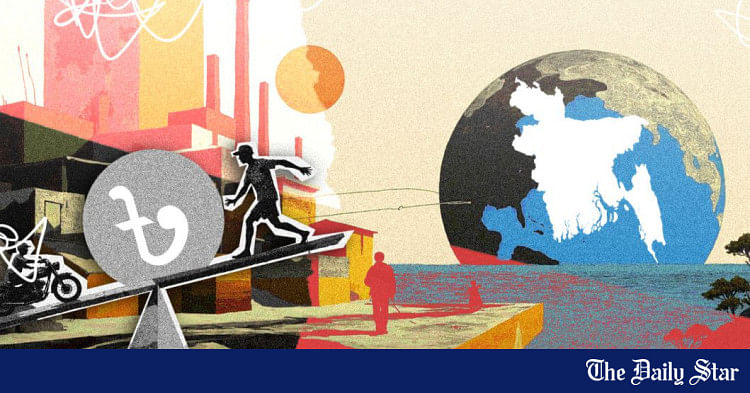
The post-WWII recoveries of Germany and Japan remain iconic examples of national rebirth and rapid reconstruction after complete devastation. Within a decade, both nations had not only rebuilt their economies to the zenith but also quickly emerged as the two leading industrial and technological powers. The Japanese concept of Kōdo keizai seichō and the German Wirtschaftswunder, both meaning “economic miracle,” encapsulate their astonishing post-war economic advancements that still awe the world.
These miracles, however, were not reactive or mere flukes; they were well-designed, deliberate, and proactive. Patriotism, ethos, national vision, diligence, ethical leadership, good strategies and planning, proper reforms, conducive political culture and relentless pursuit of excellence were their keys to success. Despite contextual differences, their experiences offer replicable vital lessons for the transformation of our mindset and culture, from street agitations and uprisings to innovation and productivity.
 For all latest news, follow The Daily Star’s Google News channel.
 West Germany’s Wirtschaftswunder was underpinned by the Marshall Plan, Cold War geopolitics, and an already skilled industrial workforce. Japan’s post-war recovery similarly blended domestic reforms with external support, complemented by national longing and resolve.
Bangladesh secured independence in 1971 after many sacrifices, but its pace of recovery and rebuilding remained slow, betraying the nation’s dream even though it has made progress in poverty alleviation, women’s education, health outcomes and other social indicators, albeit at a snail’s pace and exorbitant prices. Looking forward, the critical question is whether Bangladesh can accelerate its trajectory and attain a high-income, sustainable status soon.
Still struggling after five decades, Bangladesh has turned into a development paradox. On one hand, it has achieved consistent GDP growth, built a globally competitive garments sector, and improved some human development indices. On the other hand, it remains heavily dependent on external support, remittances, and low-value manufacturing, instead of a shift towards a knowledge-based, advanced economy. It lacks functional democracy, good governance, policy consistency, and stable law and order. Corruption is rampant, and so is labour unrest. It inherited fragile state institutions, poor infrastructure, and limited geopolitical leverage with trivial scope for value addition, research, innovation and use of technology.
However, Bangladesh can offset its inherent deficiencies by reforming pernicious political culture, consolidating democracy, infusing a development-oriented psyche, institution building and modernisation. It must improve public sector performance, digitise and upgrade overall service delivery, increase regulatory oversight, maintain policy consistency and uphold the rule of law. Ethical leadership, transparency, accountability, institutional independence and integrity are not development luxuries—they are the bedrock of sustainable progress.
Investing in human capital is indispensable. Bangladesh’s youthful demography offers a powerful advantage, though boons may turn into banes unless developed and utilised well. The education system must be reoriented towards the Fourth Industrial Revolution—digital literacy, artificial intelligence, problem-solving, and creativity.
For Bangladesh, economic diversification is imperative. Reliance on ready-made garments exposes the economy to global volatility and hinders value creation. A robust industrial strategy must prioritise high-value sectors—pharmaceuticals, IT, electronics, and agro-processing—alongside stronger intellectual property regimes and industrial clustering.
Strategic industrialisation and digital infrastructure must be scaled up. The resilience of a modern economy hinges on its capacity to produce essential goods domestically while diversifying exports. Bangladesh must develop core essential industries—steel, chemicals, machines and parts, electrical and electronic goods, household essentials, ICT items and precision tools—while strengthening supply chain linkages.
Initiatives such as a “Digital Sovereignty Fund” for local tech ventures and the establishment of tech valleys focused on AI, robotics, and quantum computing can secure Bangladesh’s position in the digital economy. Developing digital universities and vocational centres in every economic zone, and fostering knowledge exchange with countries like Japan, China, Singapore, and the West, will build the foundation of a tech-savvy workforce.
Urbanisation will also be a significant factor, as it was in Japan. Dhaka’s unplanned sprawl is likely to make it unliveable and unsustainable. Drawing on models of Vietnam and Japan, Bangladesh can implement green urban policies, climate-resilient infrastructure, and decentralised development through vibrant secondary cities.
Bangladesh, being one of the most climate-vulnerable nations, must embed climate resilience in all development strategies. Promotion of renewable energy, introduction of green financing tools, and implementation of carbon pricing mechanisms are necessary steps. Local governments should be empowered to undertake grassroots climate action, ensuring inclusive and effective adaptation and mitigation.
Bangladesh should skillfully leverage its geostrategic position to play a meaningful role in regional and global trade. Upgrading ports, streamlining customs, and joining booming trade blocs can open up vistas of opportunities, new export markets, and investment flows. Economic diplomacy and reaching out to ASEAN, BRICS, SCO, the Middle East, North America and Africa should be the major focus of the Ministry of Foreign Affairs.
A digital corridor with regional fibre-optic networks, smart logistics, and digital port systems would connect Bangladesh with global supply chains. Strategic alignment with Indo-Pacific frameworks can provide access to critical infrastructure and defence technologies, as long as the country maintains a balanced non-aligned diplomatic posture.
Sustainable development requires more than economic growth. Besides infrastructure and wealth, it should focus on quality of life, civic issues, eliminating corruption, curbing discrimination and injustices for holistic, inclusive development. It needs to bolster the civil service for digital governance, revamp education to produce responsible citizens, critical thinkers, ethical leaders, and construct creative ecosystems that align government, academia, and industry.
Bangladesh, following the July uprising, is now at a crossroads. The time seems propitious, as the nation has resurged, reunited, and realigned, simmering with spirit and yearning for advancement. The defining difference between Japan-Germany and Bangladesh’s cases is the patriotism, honesty, national unity and will.
Maj Gen (retd) Abul Kalam Mohammad Humayun Kabir is a former diplomat of the Bangladesh government.
Mohammad Rashedul Islam is a lecturer and PhD candidate at the International Islamic University Malaysia (IIUM).
Views expressed in this article are the author’s own.
Follow The Daily Star Opinion on Facebook for the latest opinions, commentaries and analyses by experts and professionals. To contribute your article or letter to The Daily Star Opinion, see our guidelines for submission.