
“We do not inherit the Earth from our parents; we borrow it from our children.”
— Native American Proverb.
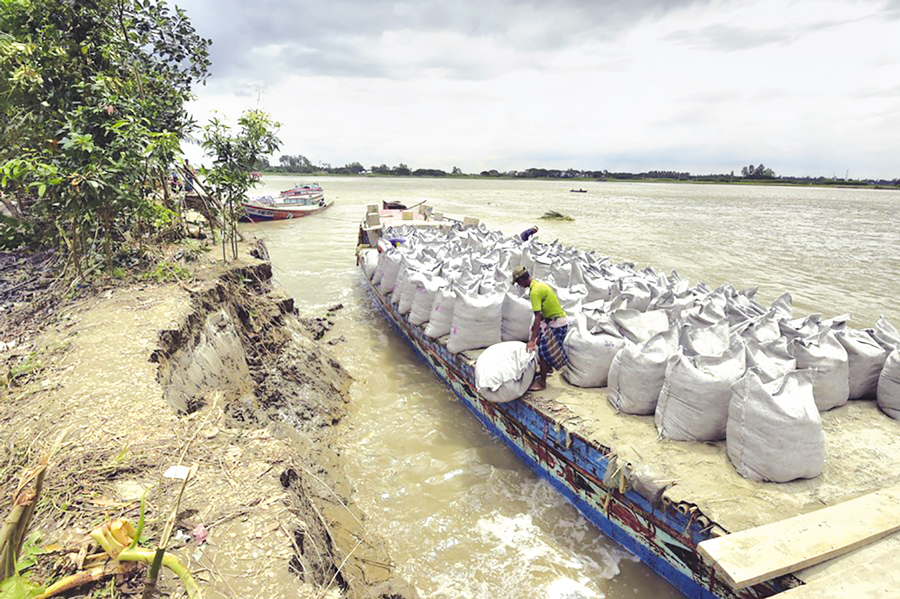
Few nations are as exposed to the wrath of climate change as Bangladesh. Divided by over 700 rivers, populated by over 170 million people, and marked by its deltaic low-lying terrain, Bangladesh is battered day and night by floods, cyclones, salinity intrusion, and sea-level rise, and does so with a stoicism bred out of desperation. But the conditions of its vulnerability demand more than stoicism—they demand transformation.
Against this backdrop came COP28, the 28th United Nations Climate Change Conference from November 30 to December 12, 2023, in Dubai. World leaders came together there to look at progress under the Paris Agreement, talk of the future of fossil fuels, and—most significantly for Bangladesh—establish new ground on climate finance. For a nation suspended by the thread of economic desire and environmental vulnerability, COP28 was not just another conference but an act of accountability, an existential moment.
COP28 and the Global Climate Finance Framework: COP28 was a turning point for international climate finance infrastructure. Most notably, it saw the creation of the Loss and Damage Fund, a mechanism years in development to compensate countries for the irreversible effects of climate change. Although over $700 million in pledges are still below the level poor nations needed this year, at $400 billion, industrialised countries reiterated their 2009 pledge to deliver $100 billion a year in climate finance. The pledge remains only half done, though, and makes one wonder about future climate fund delivery.
All these global happenings present Bangladesh, at the same time, with an opportunity and a warning. As global sea levels rise and threaten 17 per cent of its territory by 2050 and millions are pushed off their lands by climate change, climate finance is no luxury but a lifeline. The proposed Yunus government’s priority on climate justice as a foundation stone of foreign policy has already been echoed in international diplomacy. Positioning the cause of Bangladesh as a matter of global justice and not charity, the administration has cited the country’s empirical vulnerability as well as its history of sustainable development as reasons for priority access to adaptation finance.
In addition, Bangladesh is actively engaging with global institutions, such as the Green Climate Fund (GCF) and the Adaptation Fund, as well as new blended finance instruments, to establish open project implementation pipelines. All these interactions will increase donor confidence and enhance Bangladesh’s absorptive capacity through data-driven accountability.
In practice, COP28 provided Bangladesh with a new stage to mobilise resources not just to recover but to reboot a climate-resilient future. Diplomatically and through moral activism, Bangladesh can seize the opportunity to convert moral imperatives into tangible assistance—and vulnerability into visionary stewardship.
Funding Bangladesh’s Climate-Smart Transition: Adaptation is not something Bangladesh can afford anymore—it is a necessity for development. Sea-level rise, unpredictable rainfall, saltwater intrusion, erosion of riverbanks, and amplified cyclones now threaten nearly 30 million along the coast and floodplains. Bangladesh’s agricultural sector—serving over 40 per cent of the nation’s workforce—now increasingly languishes at the mercy of climate uncertainty as its cities flood, endure heat stress, and have inadequate drainage.
To this end, the Yunus government has devised a visionary National Adaptation Investment Framework (NAIF) to mobilise, harmonise, and leverage adaptation finance along with the Sustainable Development Goals (SDGs). NAIF is a roadmap towards mainstreaming climate resilience in high-priority development areas like infrastructure, agriculture, health, and urban planning. Priority investment areas are:
• Climate-resilient infrastructure. Constructing sea-level rise-resilient buildings, cyclone shelters, embankments, and advanced flood defences along coastlines.
• Disaster preparedness. Implementing large-scale early warning systems, local weather forecasts, and networks of community-based risk reduction, particularly in disaster-prone districts like Satkhira, Bhola, and Kurigram.
• Climate-smart agriculture. Promoting saline- and drought-resistant crops, large-scale drip irrigation, and introducing farmers to sustainable land management practices.
• Livelihood diversification. Providing vocational training, green job access, and micro-enterprise development support to the climate-displaced.
These are being encouraged through partnerships with development agencies, international donors, and the private sector. Specifically, the government is making investments in climate co-financing arrangements, under which public or concessional capital de-risks private capital, enabling scalable investment in green infrastructure.
Additionally, the Yunus administration has committed to mainstreaming people-cantered, inclusive, culture-based, gender-sensitive, and locally appropriate solutions in all adaptation programs.
In terms of openness and pro-activeness, Bangladesh is not only becoming resilient but also setting an example that other at-risk countries can replicate. The intention is unmistakable: adaptation must be transformational and not reactive—and empowering the people most vulnerable to shape their future.
India’s Barrages and Bangladesh’s Water Security: In addition to climate change, Bangladesh is also subject to worsening water security as a result of regional geopolitics. Two of the most exemplary Indian infrastructure projects, the Farakka Barrage and the Teesta Barrage, have proceeded to weaken further Bangladesh’s ecological equilibrium, food security, and diplomatic power.
• Farakka Barrage. Completed in 1975 to provide a water supply from the Ganges River to Kolkata, the Farakka Barrage significantly shortened the downstream course into southwestern Bangladesh. Diversion led to the drying up of distributaries, widespread riverbank erosion at Rajshahi and Kushtia, salinisation of soils, and pollution of freshwater aquifers, resulting in ecologic devastation of the Sundarbans—the largest mangrove forest in the world and a UNESCO World Heritage Site.
• Teesta Barrage. After years of suffering negotiations, a fair and binding water-sharing agreement on Teesta remains elusive to us. Unilateral extractions by India severely curtail the water supply during Bangladesh’s dry season (December-April), impacting irrigation for all but about 14 per cent of the country’s arable lands in the northern districts of Rangpur and Lalmonirhat. Agricultural production is threatened by this seasonal water shortage, which once again leads to rural poverty and social tensions.
The Yunus government has taken a value-based but pragmatic approach to such trans-boundary water disputes. The diplomatic initiative is being renewed through a multi-level approach: (i) Placing water-sharing on the agenda of climate resilience under international conventions; (ii) Harnessing multilateral platforms such as the South Asian Association for Regional Cooperation (SAARC) and BIMSTEC to exert pressure for equitable water management; and (iii) Providing third-party mediation, possibly under UN auspices, to resolve the Teesta impasse.
Alongside that, the government is investing in water-saving technology, reclaiming rivers within its borders, and signing data-sharing agreements with neighbouring countries to promote hydro-political transparency.
As Kofi Annan stated, “Access to safe water is a fundamental human need and, therefore, a basic human right.” Bangladesh’s struggle is not merely for survival but sovereignty—of its rivers, its natural resources, and its democratic right to water justice.
Diplomatic Recalibration: Breaking from the aggressive policies of earlier governments, the interim government of Dr Muhammad Yunus has pursued a diplomacy-oriented policy grounded on refined diplomacy, multilateral diplomacy, and science-based dialogue. Terming regional cooperation a necessity for the achievement of long-term water security, Yunus has based a diplomacy model on the principles of equity, sustainability, and cooperative stewardship. The modalities of the approach are:
• Multilateral Interaction. Bangladesh intensified its efforts to resolve water-sharing disputes at multilateral and global levels, including BIMSTEC, UNESCAP, and the UN Water Conference, in an attempt to build an international alliance for fair trans-boundary water management.
• Science-Based Bargaining. The government is investing in hydrological surveys, satellite imagery, and joint data simulation with surrounding nations to develop transparent, evidence-based models for sharing water.
• Green Diplomacy. By framing water scarcity as a climate threat, regional in nature, the Yunus government is positioning its cause at the crossroads of international climate agendas. This link has generated new avenues for climate-associated conflict resolution and cross-border adaptation finance.
The chief adviser has also proposed the signing of the South Asian Water Peace Charter, which would commit member states to principles of no harm, fair and equitable utilization, and exchange of information. On signing such a charter, regional cooperation on water justice would be institutionalized.
This reasoned and attuned approach is of the most significant concern of India’s abiding concern for stability and cooperative development. Rather than precipitating confrontation, Yunus’s strategy aims at creating mutual trust based on transparency, innovation, and shared care for the welfare of over a billion people who inhabit the Ganges-Brahmaputra-Meghna basin.
As Nelson Mandela so astutely reminded us, “It is better to lead from behind and to put others in front, especially when you celebrate victory.” Yunus’s approach is one of those ideals—advancing water justice not by ultimatum but by coalition, vision, and diplomacy.
Toward Equitable Climate Finance: Adaptation in Bangladesh is an expensive and time-critical mission. Estimates by the Ministry of Finance indicate that $3 billion annually would be required by the country to implement the necessary adaptation measures. That is well beyond the government’s financial capability and underscores the need for an overhaul of the global climate finance regime.
The current system is besieged by convoluted bureaucracy, delayed disbursements, and over-reliance on middle-income nations for mitigation. As a corrective response to these structural flaws, the Yunus government has unveiled a multi-pronged policy to provide equity, efficiency, and inclusiveness in climate finance. The significant recommendations are:
• Simplified disbursement mechanism. To make it easy to apply, approve, and disburse foreign funds to respond quickly to adaptation needs.
• Debt-for-climate swaps. Providing external finance in the form of credit for local investment in green infrastructure, nature-based solutions, and resilience interventions against outstanding debt.
• Performance-based grants. Designing instruments of finance that reward demonstrable success on SDG-targeted indicators of reduced disaster risk, enhanced biodiversity, and improved public health.
To make this vision a reality, the government launched the Bangladesh Climate Resilience Bond, a pioneering sovereign vehicle for mobilizing diaspora, philanthropic foundation, and ESG-centric institutional investor capital. The bond will support adaptation initiatives in vulnerable areas with open tracking to achieve impact and transparency.
Besides, Bangladesh is advocating for a Global Adaptation Equity Index that will guide donor disbursement and emphasise exposure, sensitivity, and adaptive capacity—spending money where it is most needed.
With these bold steps, the Yunus government is not only transforming Bangladesh into a hub for climate finance but also a champion of its future. The vision is to shift from a donor-driven and fragmented strategy to one of justice, trust, and partnership.
As Kofi Annan has stated, “Our greatest challenge in the new century is to make an idea that seems abstract—sustainable development—concrete for all the world’s people.” For Bangladesh, fair climate finance is the most critical step to make that reality concrete.
Conclusion: Bangladesh stands at the crossroads of a moment of choice. The success of COP28 and the vision policy of the Yunus government have coalesced to provide an unprecedented opportunity for global attention, political will, and developmental imperatives to converge. For a nation so long defined by its climate risk, the moment presents an opportunity to redefine itself by visionary leadership.
This is not just policy. It’s a paradigm. By meeting challenges head-on and using them as catalysts, Bangladesh has begun to become what it means to lead by ethics in an era of global uncertainty.
Let the rivers that once carried despair carry now the promise of rebirth. Let the winds that once laid waste also have new beginnings. And let the courage of a vulnerable people ring as a call to the world: that even while tides rise, we can rise higher still—more and more together.
sibhuiyan@yahoo.com