
Close Menu
  • Home
  • Editorial
  • Politics
  • Economic
  • Sports
  • Religion
  • Contact us
  • About Us
Donate
Hand picked for you
  • Bangladesh’s political reset and the regional ripple effect
  • Jamaat chief flays Bangladesh president for interview, exposing political fault line again
  • Six seats, big goals: What’s next for Bangladesh’s student-led NCP party? | Bangladesh Election 2026 News
  • Is Bangladesh ready for environmental democracy?
  • Economic recovery still fragile: MCCI

Subscribe to Updates

Get the latest news from raznitee.

Reach out to us
  • Facebook
  • Twitter
  • Pinterest
  • Instagram
  • YouTube
  • WhatsApp
Facebook X (Twitter) Instagram
raznitee
Contact us
  • Home
  • Editorial
  • Politics
  • Economic
  • Sports
  • Religion
  • Contact us
  • About Us
raznitee
Facebook X (Twitter) Instagram
Contact us
Home»Environment»Climate vulnerability should be prioritised in dev programmes
Environment

Climate vulnerability should be prioritised in dev programmes

July 15, 2025No Comments2 Mins Read
Facebook Twitter Pinterest LinkedIn Tumblr Email
Prothomalo English2f2025 07 142f6xn94asc2fclimate.avif.webp
Share
Facebook Twitter LinkedIn Pinterest Email

Back in 2020, during the COVID-19 pandemic, I asked the state minister for disaster management and relief, Enamur Rahman, on a television talk show what criteria had been used to classify the districts. He was unable to provide a clear answer. I also asked him why there was such extreme disparity in rice allocations for the poor during the pandemic. Again, there was no satisfactory explanation.

In some districts, the number of poor people is around 60,000. In others, it’s over two million. Similarly, the number of individuals able to cope with climate impacts varies greatly from district to district. These disparities must be taken into account in allocation decisions. But during the pandemic, rice allocations were made without considering poverty levels.

As a result, it was found that poor people in Munshiganj and Narsingdi received nearly three maunds (about 120 kg) of rice per person, while in Kurigram and Dinajpur, they received only four to five kilograms. This happened because districts were classified solely based on population and area. The lack of disaster-related statistics meant the government treated all districts the same, leading to such inequities in allocation.

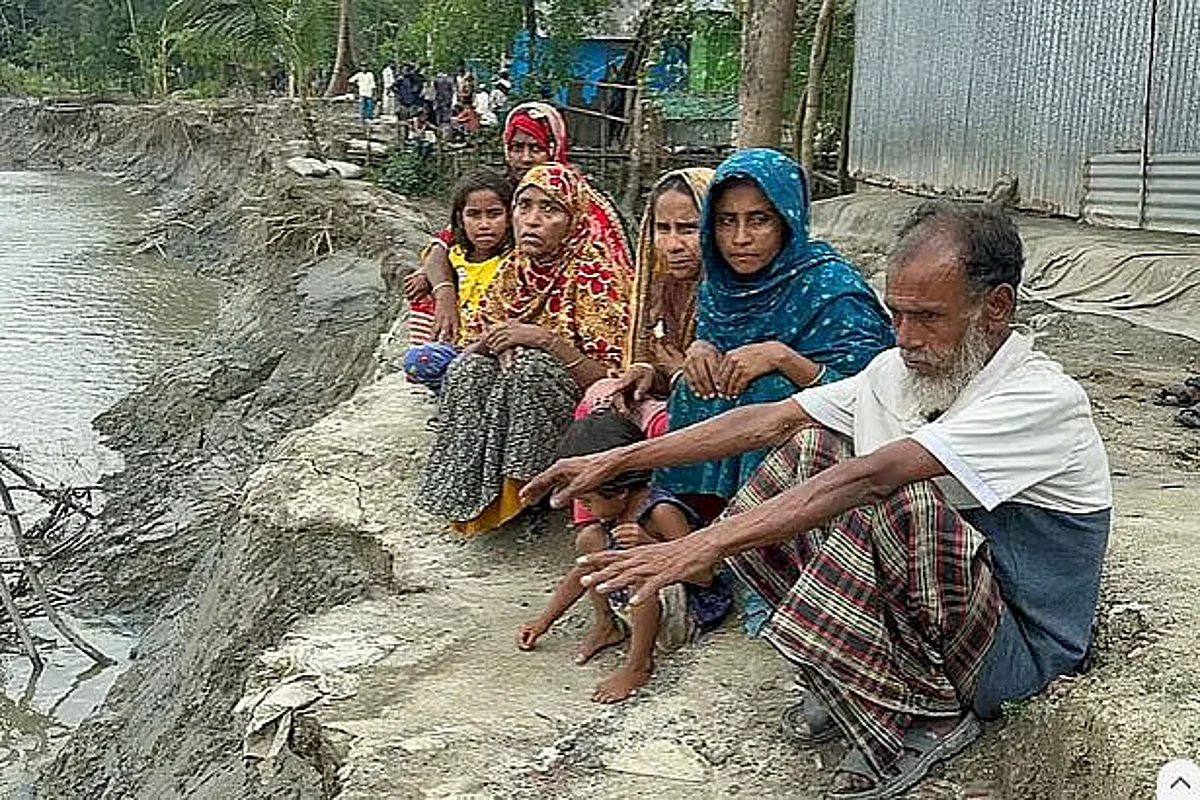
Many ministries are involved in addressing climate vulnerability, such as the ministry of water resources and the ministry of environment, forest and climate change. Policies like this need to be introduced for their work in this regard. In several districts of Rangpur division, there are no measures in place to prevent erosion along the Teesta River.

As a result, hundreds of thousands of people living on both banks of the river are becoming homeless. Due to the absence of a comparative policy based on urgency, the government has allocated funds for work on the Ghaghot River, which is relatively less damaging, rather than on the Teesta. Yet, had that money been spent on the Teesta, it would have benefited many more people.

Share. Facebook Twitter Pinterest LinkedIn Tumblr Email

Related Posts

Is Bangladesh ready for environmental democracy?

February 23, 2026

Low pressure over equatorial Indian Ocean, Southeast Bay: BMD

February 21, 2026

Signing of the Memorandum of Cooperation between the Ministry of the Environment of Japan and the Ministry of Environment, Forest and Climate Change of the Government of the People’s Republic of Bangladesh on Environment | Press Release

February 21, 2026

How thousands of Bangladeshis fight climate-fueled disease

February 20, 2026
Add A Comment
Leave A Reply Cancel Reply

Subscribe to Updates

Get the latest news from raznitee.

We are social
  • Facebook
  • Twitter
  • Pinterest
  • Instagram
  • YouTube
  • WhatsApp
Latest Posts

Bangladesh’s political reset and the regional ripple effect

February 27, 2026

Jamaat chief flays Bangladesh president for interview, exposing political fault line again

February 27, 2026

Six seats, big goals: What’s next for Bangladesh’s student-led NCP party? | Bangladesh Election 2026 News

February 27, 2026
Follow us on social media
  • Facebook
  • Twitter
  • Pinterest
  • Instagram
  • YouTube
  • WhatsApp
Categories
  • Corruption (409)
  • Culture & Society (114)
  • Economic (1,904)
  • Environment (1,314)
  • Foreign Relations (359)
  • Health & Education (70)
  • Human Rights (5)
  • Politics (2,176)
  • Uncategorized (2)
Facebook X (Twitter) Instagram Pinterest Vimeo YouTube
  • About Us
  • Contact us
  • Disclaimer
  • Privacy policy
© 2026 Designed by raznitee.com

Type above and press Enter to search. Press Esc to cancel.