
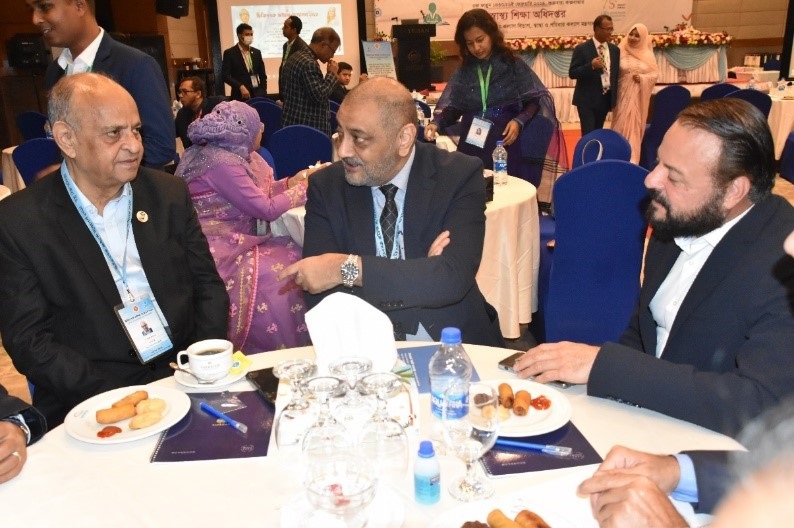
Bangladesh has set out an ambitious journey path to transform into a Smart-Bangladesh High-Income Country by 2041, as delineated in its Perspective Plan (2021-2041). To achieve this goal, the Ministry of Health and Family Welfare (MOHFW) is working to improve the quality and accessibility of health services and medical education systems, with a focus on developing a competent and motivated health workforce.
In partnership with the World Health Organization (WHO), the Ministry of Health and Family Welfare (MOHFW) has launched the creation of an extensive national medical education strategy, poised to steer the evolution of medical education within the nation. A pivotal moment in this endeavor was marked by the Medical College Principal’s conference convened on February 16th, 2024, in Cox’s Bazar, Bangladesh.
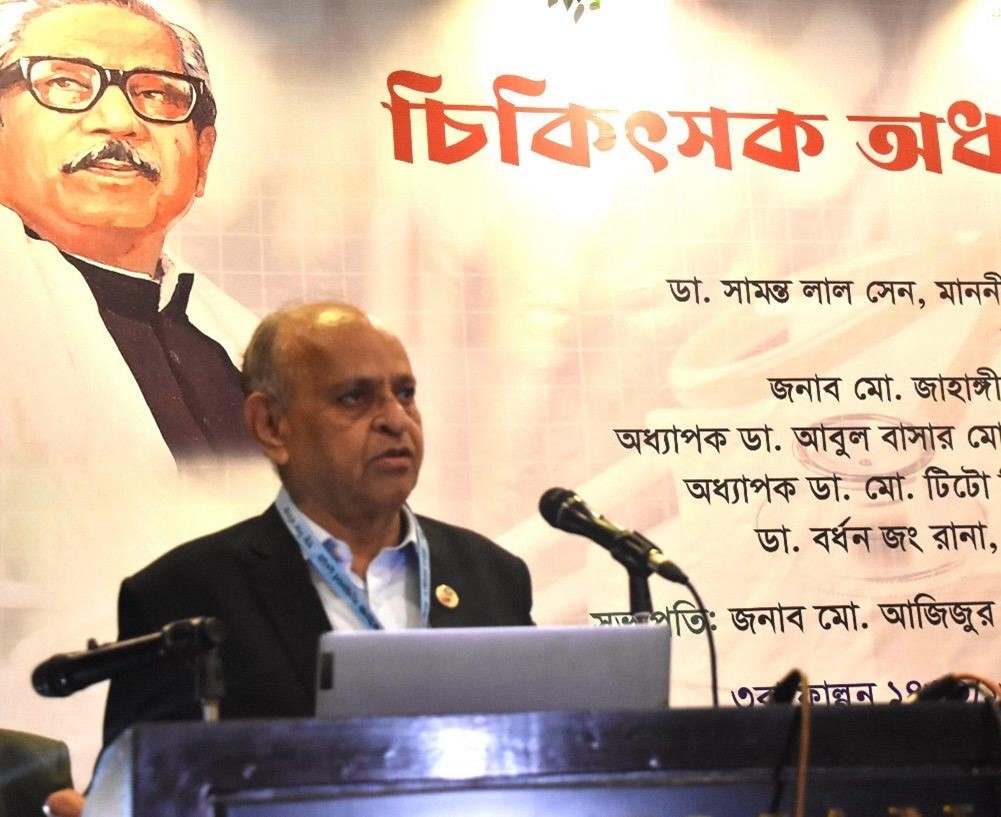
The Honourable Minister for Health, Dr. Samanta Lal Sen, delivered his valuable speech at the Medical College Principals’ Conference, emphasizing a pivotal shift in focus from quantity to quality.
Photo credit: WHO/Terence Ngwabe Che
“We have a good number of medical colleges in the country, which is commendable. But now, we need to shift our focus from quantity to quality. We need to ensure that our medical education system is aligned with global standards and best practices and that our medical graduates are competent and ethical. We need to improve our curriculum, accreditation, faculty development, and digital transformation,” says the Honourable Minister for Health, Dr Samanta Lal Sen
WHO Representative in Bangladesh delivers a keynote address at the Medical College Principals’ Conference, emphasizing the importance of crafting a national medical education strategy and highlighting WHO’s dedicated support in this crucial domain.
Photo credit: WHO/Terence Ngwabe Che

“Today’s conference provides an opportunity to discuss medical education challenges and identify priority actions for the next five years, leading to the development of Bangladesh’s first national education strategy,” says Dr Rana Bardang Jung, WHO Representative to Bangladesh.
According to the latest data, Bangladesh faces a severe shortage of trained healthcare workers, with only 13 doctors, nurses, and midwives per 10,000 population as of 2022, far below the global median of 49. Moreover, 31% of the existing health workforce lacks the required qualifications, affecting the quality of health services.
The conference participants deliberated on these issues and identified priority actions for enhancing medical education, that will result in the drafting of Bangladesh’s first national medical education strategy. The strategy aims to address the gaps and challenges in medical education, such as curriculum, accreditation, faculty development, and digital transformation. It also aligns with the global and regional frameworks for strengthening primary healthcare, universal health coverage, and health security.
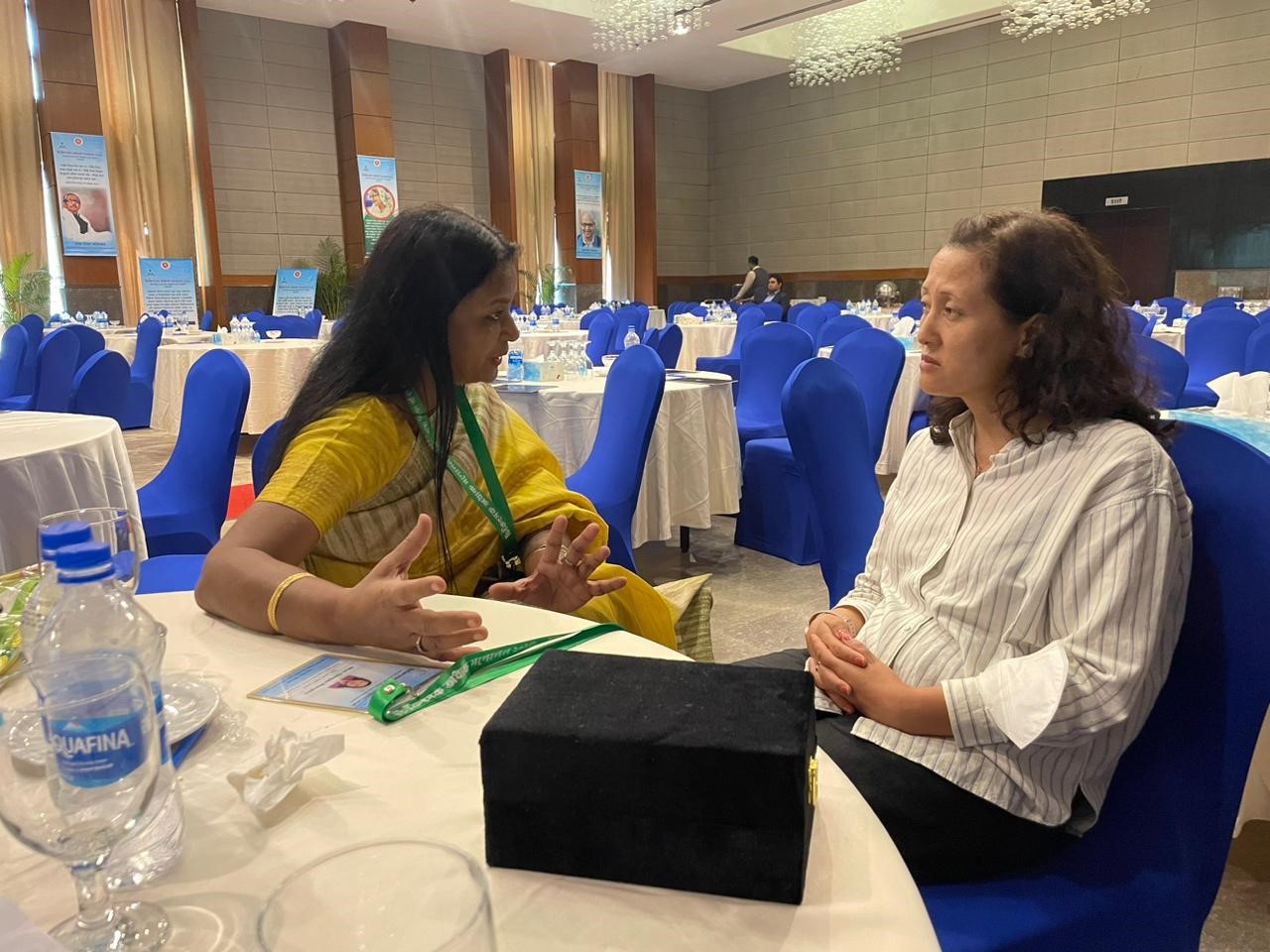
Professor Dr Rukshana Ahmed, Director of Research, Publication and Curriculum at DGME, and Ms Sangay Wangmo, TL of HS at WHO Bangladesh, exchange views on how to improve the quality and relevance of health education in the country.
Photo: WHO/Terence Ngwabe Che
WHO has been providing technical and financial support to the MOHFW throughout this initiative, by conducting health workforce-related studies, facilitating evidence-based policy dialogue, and mobilizing regional and global expertise. WHO’s Southeast Asia Regional Advisor for Digital Health, Dr Karthik, and Regional Advisor for HRH, Mr. Ibadat, connected virtually and shared Global and Regional Shifts in the Digital Transformation of Medical Education Systems demonstrating the interplay between Quality Medical Education and advancing Universal Health Coverage based on Primary Health Care approach at the conference, and offered guidance for the development of the medical education strategy.
WHO Bangladesh has also been instrumental in establishing a technical working group, led by the Directorate General of Medical Education (DGME), which comprises representatives from various relevant organizations and stakeholders. This group will oversee the finalization and implementation of the strategy. As part of this ongoing partnership, the Honourable Minister of Health also visited some of the healthcare facilities supported by WHO in the Cox’s Bazar district, where a large number of refugees and host communities reside. The Minister inspected the services provided at the Ukhiya Heath Complex, Coat Bazar Community Clinic, and Khunia Palong Union Health and Family Welfare Centre, and appreciated WHO’s support, especially in areas such as non-communicable disease management and laboratory strengthening. The Minister expressed his hope for sustaining and scaling up the achievements made in these facilities.
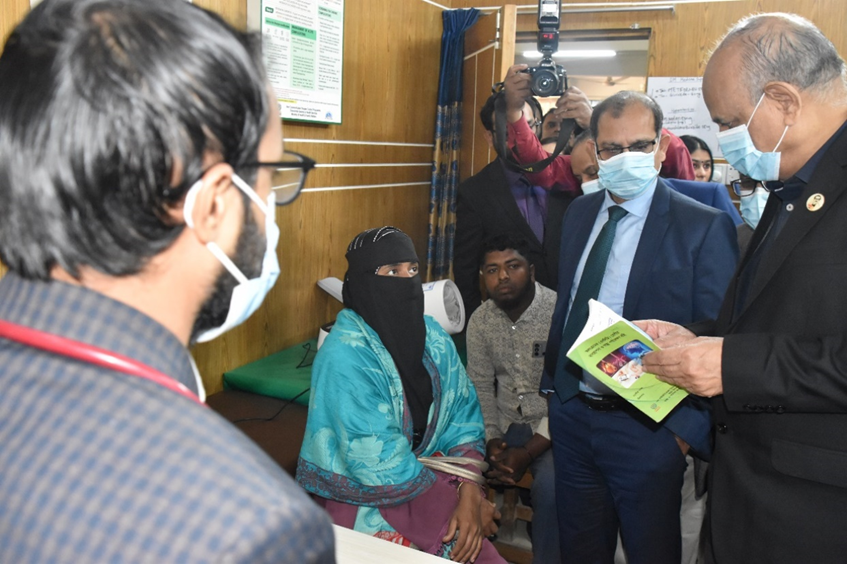
The health minister engages with a patient at the NCD corner of the Ukyia Health Centre, bolstered by WHO support, fostering dialogue and care for better health outcomes.
Photo: WHO/Terence Ngwabe Che
The collaboration between the Government of Bangladesh and WHO demonstrates a strong commitment to advancing medical education excellence in the country. By harnessing the collective knowledge and resources of both partners, this initiative seeks to create a positive impact on the health and well-being of the people of Bangladesh.
For more about this publication please get in touch with Terence Ngwabe Che External Communications Officer, WHO Bangladesh, Cox’s Bazar Sub Office at chet@who.int