
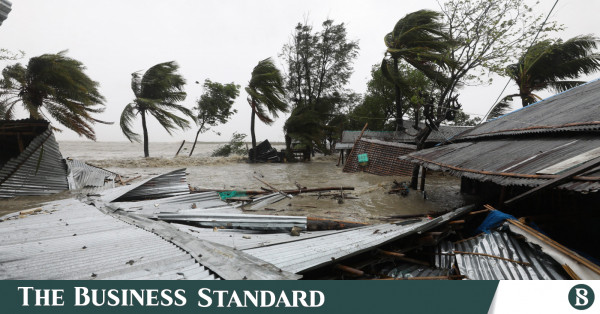
This surge in ocean warming has fuelled devastating storms, including Tropical Cyclone Mocha (2023) and Cyclone Remal (2024), which caused widespread destruction in Bangladesh
Representational image. File Photo: TBS
“>

Representational image. File Photo: TBS
Bangladesh is experiencing severe economic and environmental consequences due to the increasing intensity of marine heatwaves, with annual losses from cyclone-related damages exceeding $1 billion, according to a recent study by Nature Climate Change.
The report, released today (28 February), highlights how rising ocean temperatures — driven by climate change and El Niño — are worsening extreme weather events and threatening marine ecosystems, reads a press release.
The study reveals that the number of marine heatwave days during the summers of 2023 and 2024 was 3.5 times higher than any other recorded year. This surge in ocean warming has fuelled devastating storms, including Tropical Cyclone Mocha (2023) and Cyclone Remal (2024), which caused widespread destruction in Bangladesh.

Cyclone Remal alone resulted in property losses worth Tk6,880 crore, displacing millions and leaving a lasting impact on coastal communities.
Scientists warn that unless fossil fuel consumption and deforestation are curbed, marine heatwaves could become 20 to 50 times more frequent and 10 times more intense by the end of the century.
The report underscores the urgent need for a transition to renewable energy sources to mitigate these escalating climate threats.
The increasing frequency and intensity of marine heatwaves are severely impacting global marine ecosystems, fisheries, and coastal economies, causing widespread disruptions over the past two years.
These warming events have led to mass coral bleaching, resulting in habitat loss for marine species, the closure of fisheries and aquaculture, threatening food security and employment, and increased strandings of whales and dolphins, disrupting marine biodiversity. Additionally, they have intensified cyclones, making extreme weather events more frequent and destructive.
Scientists emphasise that oceans play a critical role in regulating global climate, supporting marine life, and sustaining the livelihoods of billions of people. However, with ongoing climate change, these vital functions are increasingly at risk.
The report also highlights proactive measures taken by some countries to reduce marine heatwave damage.
In Australia, a quarter of the endangered red hand fish population was temporarily relocated to aquariums before a heatwave, while in the USA, corals and conches were moved to cooler, deeper waters. In Peru, the government provided financial aid to fishers affected by anchovy fishery closures.
Despite these interventions, scientists stress that long-term solutions are necessary.
Dr Kathryn E Smith of the Marine Biological Association (UK) stated, “To prevent marine heatwaves and their worsening impacts, we need to reduce or stop our use of fossil fuels. While short-term interventions can help, they are not permanent solutions.”
Dr Karen Filbee-Dexter, senior lecturer at the University of Western Australia, warned, “Intensifying marine heatwaves are driving ocean temperatures to record-breaking levels, surpassing anything observed in modern history. These extreme warming events are disrupting marine ecosystems, threatening fisheries, and intensifying severe weather patterns. Urgent action is needed to reduce global emissions and prevent further extreme temperatures in our oceans.”