
Infographic: TBS
“>

Infographic: TBS
Highlights:
- 21.4% of single-use plastic bottles recycled annually
- 78.6% contribute to pollution of rivers, oceans, and landfills
- Risk awareness of single-use plastic bottles critically low
- 18.4% of urban, 5.5% of rural respondents recognise potential risks
- Experts stress cutting single-use plastic bottle use, improving recycling systems
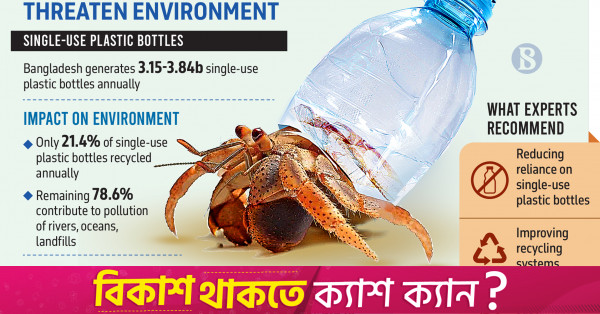
Bangladesh generates between 3.15 and 3.84 billion single-use plastic (SUP) bottles annually, with only 21.4% of these being recycled, according to a study conducted by the Environment and Social Development Organization (ESDO).
The remaining 78.6% contribute significantly to the pollution of rivers, oceans, and landfills.
The findings were presented today during an event titled “Environmental Footprint of Single-Use Plastic Bottles: The Pollution and Health Hazards Across the Full Lifecycle,” held at ESDO’s headquarters in the capital.

The study involved surveys of 3,416 consumers, 288 retailers, and 180 waste pickers from urban and rural areas across eight divisions in Bangladesh. Data collection took place between April and August 2024.
ESDO Secretary General Shahriar Hossain, highlighted the inclusiveness of the study, saying, “We surveyed from day labourers to high-income people, manufacturers, sellers, waste pickers, and all categories of people.”
He stressed the inadequacy of current waste management systems in coping with the overwhelming volume of plastic waste.
“Addressing this crisis requires collaboration among policymakers, businesses, and the public to promote sustainable alternatives and responsible consumption,” he said.
The research revealed that 83.6% of respondents nationwide use disposable plastic bottles. Urban consumers predominantly opt for water bottles, while rural consumers favour soft drinks.
However, awareness of the health and environmental risks associated with such bottles remains low. Only 18.4% of urban respondents and 5.5% of rural respondents recognised the potential health risks.
When it comes to disposal habits, 51% of urban consumers reported discarding their bottles after a single use, compared to 42% of rural consumers. The remaining respondents reused their bottles a few times before discarding them.
The role of waste pickers, crucial to plastic waste management, was also explored in the study. The majority of waste pickers lack access to education and resources, with only 3.4% being aware of the environmental impact of SUP bottles.
The study also raised concerns about the long-term persistence of SUP bottles in the environment.
Researchers noted that these bottles can remain in the environment for up to 450 years, releasing microplastics and toxic chemicals that contaminate ecosystems and the food chain. Alarmingly, awareness of these risks is critically low among consumers, retailers, and waste pickers.
ESDO Chairperson Syed Marghub Murshed underscored the urgency of tackling plastic pollution.
“Plastic pollution, particularly from single-use bottles, is a pressing challenge for our environment and public health. We must act collectively to reduce plastic waste, enhance recycling systems, and protect our ecosystems,” he said.
Md Abul Hashem, a senior technical advisor at ESDO and a professor in the Chemistry Department at Jahangirnagar University, drew attention to the health hazards posed by SUP bottles.
“The environmental and health hazards of single-use plastic bottles cannot be ignored. Chemicals like Bisphenol A (BPA) and microplastics are entering our food chain, posing risks to both human health and biodiversity,” he explained.
Siddika Sultana, executive director of ESDO, highlighted the importance of raising awareness to address the SUP bottle crisis.
“Through this report, we aim to inspire action at all levels to adopt eco-friendly solutions, support waste pickers, and enforce stricter policies to protect our environment and health,” she said.
The study underscores the urgent need for Bangladesh to reduce its reliance on single-use plastic bottles, improve recycling systems, and promote sustainable practices to safeguard both public health and the environment.