
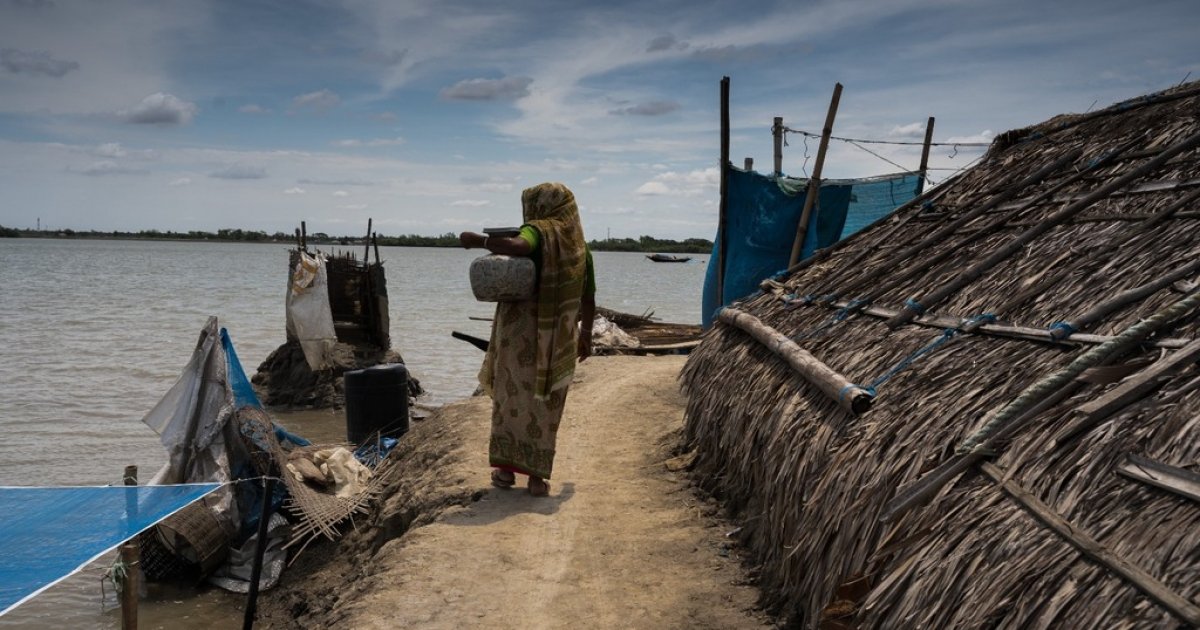
South Asia, with its dense population, high temperature and exposed geography, is one of the world’s most climate-vulnerable regions — and Bangladesh is among the most at risk.
By 2030, nearly 90% of the region’s population will be at risk of extreme heat and nearly a quarter at risk of severe flooding.
With increase in water and soil salinity in the coastal regions, climate crisis is severely impacting millions of lives in Bangladesh.
The report “From Risk to Resilience: Helping People and Firms Adapt in South Asia,” assessed that the burden of climate adaptation has fallen primarily on households and firms.
Awareness of climate risks is high as more than three-quarters of households and firms expect a weather shock in the next 10 years. 63% of firms and 80% of households have taken action.
However, most rely on basic, low-cost solutions rather than leveraging advanced technologies and public infrastructure.
A survey across 250 coastal villages in Bangladesh found that climate-resilient infrastructure is the most urgent unmet need for adapting to a changing climate. In the long term, 57% households cited inadequate disaster-protection infrastructure and 56% reported limited financial resources for adaptation as key challenges.
The impacts are not just environmental but deeply human, as poor and agricultural households are disproportionately affected.
Public investments such as embankments and cyclone shelters have saved lives and reduced damages.
Case studies from Bangladesh, India, and Pakistan show that well-targeted social assistance programs, combined with up-to-date information, can be rapidly scaled up to respond to shocks and provide support for the poor and vulnerable.
However, with governments having limited room to act due to fiscal constraints, private sector adaptation through a comprehensive policy package needs to be facilitated.
“Bangladesh’s resilience is being continually tested by evolving environmental challenges. While adaptation is widespread, with increasing climate risks, more needs to be done, said Jean Pesme, World Bank Division Director for Bangladesh and Bhutan. The country’s resilience will depend on scaling up early warning systems, social protection, climate-smart agriculture, and adaptation finance—including innovative risk finance solutions—alongside targeted urban interventions.”
The report calls for a comprehensive, multi-pronged approach to climate adaptation. Improving early warning systems, and access to formal credit and insurance is critical. About one-third of climate-related losses could be avoided if the private sector is able to move resources and investments where they are needed most in response to climate pressures. Even with tight budgets, governments in South Asia can help make this possible by expanding access to finance, improving transport and digital networks, and ensuring social support systems are targeted and flexible.
The government should also adopt adaptation strategies that involve new resilient technologies or public support in the form of core public goods such as roads and health systems that help access jobs and protect human capital.
“Bangladesh’s experience offers both lessons and a critical test case for climate adaptation in South Asia,” said Siddharth Sharma, World Bank Lead Economist and co-author of the report. “The country’s people and businesses are already adapting, but the scale and complexity of the climate crisis demand urgent, coordinated action from government and the private sector.”
Looking ahead, Bangladesh has a unique opportunity to build resilience for the future. Investments in early warning systems and cyclone shelters have helped reduce fatalities during major storms. This demonstrates how targeted investments, and effective institutions can help scale up local adaptation successfully.
By strengthening institutions and partnerships between government, the private sector, and communities, Bangladesh can accelerate the adoption of climate-smart solutions that not only reduce vulnerability but also drive sustainable development. Prioritizing these actions will empower households and firms and ensure that progress toward long-term prosperity is both resilient and inclusive.