
Close Menu
  • Home
  • Editorial
  • Politics
  • Economic
  • Sports
  • Religion
  • Contact us
  • About Us
Donate
Hand picked for you
  • Corruption Control in Bangladesh | Governance Reform: Anti-Corruption Strategies for the BNP
  • What does Bangladesh’s new government need to do to revitalize democracy?
  • Bangladesh Nationalist Party claims victory in country’s first election since 2024 uprising
  • BBCTwo protests, two elections: How Nepal's Gen Z succeeded where Bangladesh's stumbledBut nearly two years on, Bangladesh's youth movement has yet to gain any meaningful political power. In the country's first post-protest….3 weeks ago
  • Is Bangladesh killing reforms introduced after student-led protests? | Politics News

Subscribe to Updates

Get the latest news from raznitee.

Reach out to us
  • Facebook
  • Twitter
  • Pinterest
  • Instagram
  • YouTube
  • WhatsApp
Facebook X (Twitter) Instagram
raznitee
Contact us
  • Home
  • Editorial
  • Politics
  • Economic
  • Sports
  • Religion
  • Contact us
  • About Us
raznitee
Facebook X (Twitter) Instagram
Contact us
Home»Environment»Bangladesh rejects Global Plastics Treaty draft, demands stronger measures against pollution
Environment

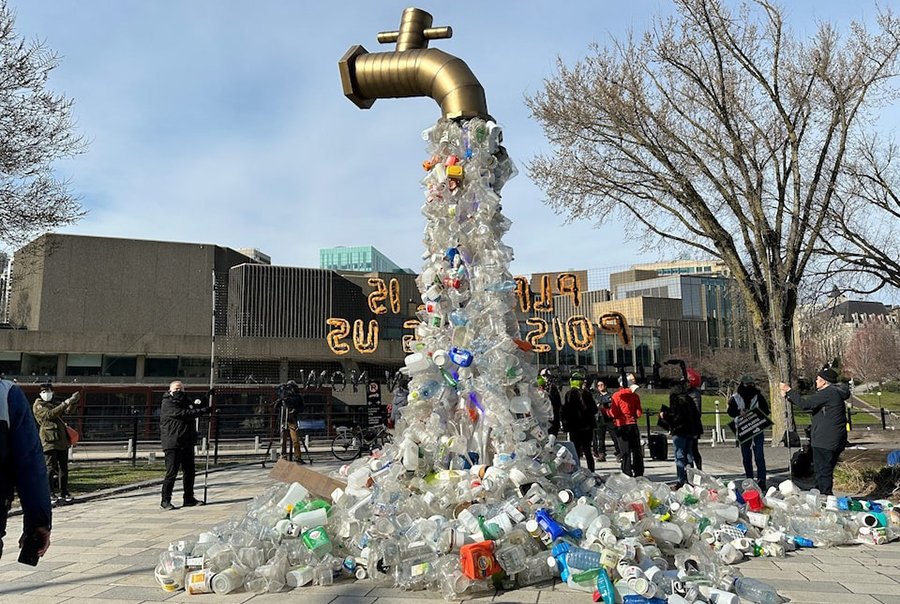
Bangladesh rejects Global Plastics Treaty draft, demands stronger measures against pollution

August 14, 2025No Comments2 Mins Read
Facebook Twitter Pinterest LinkedIn Tumblr Email
Glbplsttrty.jpg
Share
Facebook Twitter LinkedIn Pinterest Email

Bangladesh has categorically rejected the latest Chair’s Draft of the proposed Global Plastics Treaty, demanding stronger measures against plastic pollution, and stating that it falls far short of the mandate set by United Nations Environment Assembly (UNEA) Resolution 5/14 to establish an internationally legally binding instrument to end plastic pollution.

The rejection was announced during the second part of the fifth session of the Intergovernmental Negotiating Committee on Plastic Pollution (INC-5.2), held on August 13, 2025, at the Palais des Nations, Geneva, Switzerland.

According to the Ministry of Environment, Forest and Climate Change, the draft “represents a weak and inadequate outcome” that excludes supply-side measures and fails to address the full life cycle of plastics. The ministry noted that it does not address health impacts, chemicals of concern, or the waste hierarchy, and imposes no robust obligations to curb transboundary plastic pollution.

The draft also lacks provisions for reliable means of implementation, instead relying on a “convoluted and voluntary approach” that ignores the urgency of the global plastic crisis. Bangladesh underscored that the treaty’s core must confront harmful chemicals in plastics—where scientific evidence most strongly links to health risks—and address emissions and primary plastic production, given the harms plastics cause throughout their life cycle.

“This text does little to protect human health or the environment from plastic pollution. It reduces the treaty to a waste management framework, shirking responsibility for plastic producers and omitting binding measures to phase out the most harmful plastic products,” the ministry stated.

Bangladesh reaffirmed that it cannot support the draft without substantial and meaningful amendments and called on negotiators to significantly raise ambition in line with the UNEA mandate.

Earlier the same day, Syeda Rizwana Hasan, Adviser to the Ministries of Environment, Forest and Climate Change and Water Resources, called for stronger global partnerships and targeted resources to combat plastic pollution. Speaking at an Informal Ministerial Roundtable during INC-5.2 in Geneva, she highlighted Bangladesh’s vulnerability as a downstream country and urged a global framework to address transboundary pollution.

She stressed promoting circular economy models, plugging waste management leakages, fostering sustainable product design, and ensuring a just transition for waste workers. Emphasising the environmental and health dimensions, she urged ambitious, cooperative action to phase out harmful plastics through institutionalised global cooperation.

Share. Facebook Twitter Pinterest LinkedIn Tumblr Email

Related Posts

Climate-resilient housing models slow to gain ground in disaster-prone Bangladesh

April 6, 2026

ADB country director meets Mintoo to boost climate finance cooperation

April 6, 2026

Zero tolerance for corruption in water development board: State minister

April 6, 2026

India’s Role Seen As Vital To Bolster Bangladesh-Nepal Economic Ties

April 6, 2026
Add A Comment
Leave A Reply Cancel Reply

Subscribe to Updates

Get the latest news from raznitee.

We are social
  • Facebook
  • Twitter
  • Pinterest
  • Instagram
  • YouTube
  • WhatsApp
Latest Posts

Corruption Control in Bangladesh | Governance Reform: Anti-Corruption Strategies for the BNP

April 29, 2026

What does Bangladesh’s new government need to do to revitalize democracy?

April 29, 2026

Bangladesh Nationalist Party claims victory in country’s first election since 2024 uprising

April 26, 2026
Follow us on social media
  • Facebook
  • Twitter
  • Pinterest
  • Instagram
  • YouTube
  • WhatsApp
Categories
  • Corruption (413)
  • Culture & Society (114)
  • Economic (1,916)
  • Environment (1,320)
  • Foreign Relations (359)
  • Health & Education (70)
  • Human Rights (5)
  • Politics (2,179)
  • Uncategorized (2)
Facebook X (Twitter) Instagram Pinterest Vimeo YouTube
  • About Us
  • Contact us
  • Disclaimer
  • Privacy policy
© 2026 Designed by raznitee.com

Type above and press Enter to search. Press Esc to cancel.