
Close Menu
  • Home
  • Editorial
  • Politics
  • Economic
  • Sports
  • Religion
  • Contact us
  • About Us
Donate
Hand picked for you
  • Corruption Control in Bangladesh | Governance Reform: Anti-Corruption Strategies for the BNP
  • What does Bangladesh’s new government need to do to revitalize democracy?
  • Bangladesh Nationalist Party claims victory in country’s first election since 2024 uprising
  • BBCTwo protests, two elections: How Nepal's Gen Z succeeded where Bangladesh's stumbledBut nearly two years on, Bangladesh's youth movement has yet to gain any meaningful political power. In the country's first post-protest….3 weeks ago
  • Is Bangladesh killing reforms introduced after student-led protests? | Politics News

Subscribe to Updates

Get the latest news from raznitee.

Reach out to us
  • Facebook
  • Twitter
  • Pinterest
  • Instagram
  • YouTube
  • WhatsApp
Facebook X (Twitter) Instagram
raznitee
Contact us
  • Home
  • Editorial
  • Politics
  • Economic
  • Sports
  • Religion
  • Contact us
  • About Us
raznitee
Facebook X (Twitter) Instagram
Contact us
Home»Environment»‘Bangladesh struggles to tap international climate funds due to procedural barriers’
Environment

‘Bangladesh struggles to tap international climate funds due to procedural barriers’

January 11, 2025No Comments3 Mins Read
Facebook Twitter Pinterest LinkedIn Tumblr Email
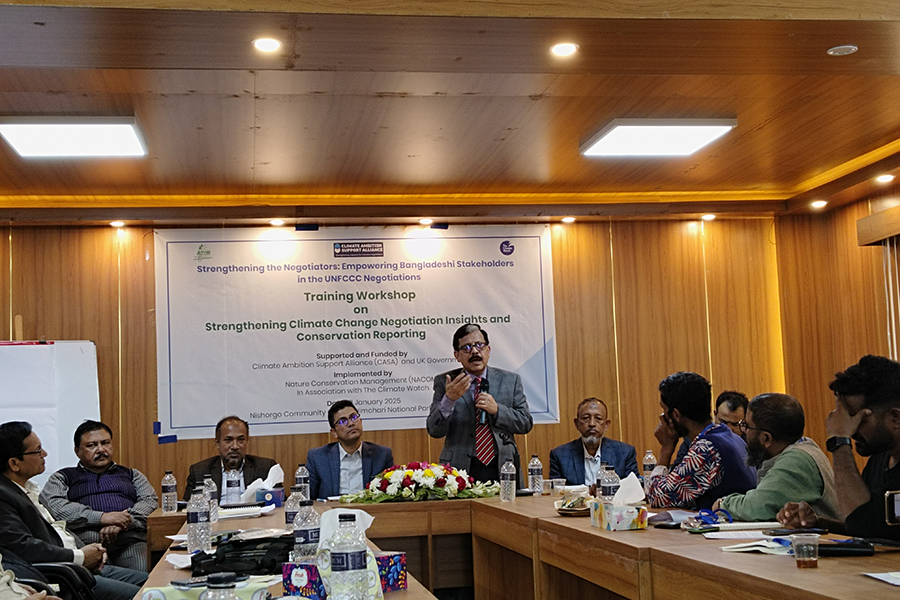
Img 20250111 120441.jpg
Share
Facebook Twitter LinkedIn Pinterest Email

Bangladesh is facing challenges in accessing international climate funds due to difficulties in completing the necessary procedures, while countries like China and India have successfully secured such funds through their expertise and skills.

SM Munjurul Hannan Khan, Executive Director of Nature Conservation Management (NACOM), highlighted this issue during a day-long training workshop on climate change reporting and negotiation strategies. The workshop took place on Saturday, January 11, at the Nishorgo Community Center in Himchari National Park, Cox’s Bazar.

Hannan Khan pointed out that developed nations, despite being primarily responsible for greenhouse gas emissions and climate change, are reluctant to fulfill their commitments to compensate for loss and damage. He emphasized that the complex procedures for accessing these funds pose significant challenges for countries like Bangladesh.

He also noted the lack of capacity among local media to identify and report climate change issues in alignment with international standards. This deficiency, he said, limits Bangladesh’s ability to secure climate funds. Moreover, while many Bangladeshi development organizations are implementing innovative climate change mitigation projects, their lack of exposure hampers their ability to attract funding.

Dr ASM Marjan Nur, Climate and Environment Adviser at the Foreign, Commonwealth, and Development Office (FCDO) of the British High Commission in Dhaka, attended the workshop as the chief guest. He emphasized the importance of enhancing journalists’ skills to create impactful climate stories and expressed satisfaction with the collaboration between the British High Commission and NACOM in training journalists. Dr Nur also assured continued support for such initiatives.

The workshop was organized as part of the project “Strengthening the Negotiators: Empowering Bangladeshi Stakeholders in the UNFCCC Negotiations,” implemented by NACOM and The Climate Watch, an online climate change news portal. It was supported by the Climate Ambition Support Alliance (CASA) and the UK Government’s Department for Energy Security and Net Zero (DESNZ).

The inaugural session was chaired by SM Munjurul Hannan Khan and featured speeches from Md Nurul Islam and Md Maruf Hossain, Divisional Forest Officers of Cox’s Bazar’s South and North divisions. Several experienced professionals conducted the sessions, including Shahnewaz Riton, journalist and lead researcher at The Climate Watch; Saleh Noman, executive editor of The Daily People’s View; Shamsuddin Illus, bureau chief of The Business Standard; and ASM Suza Uddin, an independent journalist and IVLP alumnus.

The workshop focused on empowering journalists and stakeholders to address climate change issues more effectively, with the aim of enabling Bangladesh to better secure international climate funds.

[email protected]

Share. Facebook Twitter Pinterest LinkedIn Tumblr Email

Related Posts

Climate-resilient housing models slow to gain ground in disaster-prone Bangladesh

April 6, 2026

ADB country director meets Mintoo to boost climate finance cooperation

April 6, 2026

Zero tolerance for corruption in water development board: State minister

April 6, 2026

India’s Role Seen As Vital To Bolster Bangladesh-Nepal Economic Ties

April 6, 2026
Add A Comment
Leave A Reply Cancel Reply

Subscribe to Updates

Get the latest news from raznitee.

We are social
  • Facebook
  • Twitter
  • Pinterest
  • Instagram
  • YouTube
  • WhatsApp
Latest Posts

Corruption Control in Bangladesh | Governance Reform: Anti-Corruption Strategies for the BNP

April 29, 2026

What does Bangladesh’s new government need to do to revitalize democracy?

April 29, 2026

Bangladesh Nationalist Party claims victory in country’s first election since 2024 uprising

April 26, 2026
Follow us on social media
  • Facebook
  • Twitter
  • Pinterest
  • Instagram
  • YouTube
  • WhatsApp
Categories
  • Corruption (413)
  • Culture & Society (114)
  • Economic (1,916)
  • Environment (1,320)
  • Foreign Relations (359)
  • Health & Education (70)
  • Human Rights (5)
  • Politics (2,179)
  • Uncategorized (2)
Facebook X (Twitter) Instagram Pinterest Vimeo YouTube
  • About Us
  • Contact us
  • Disclaimer
  • Privacy policy
© 2026 Designed by raznitee.com

Type above and press Enter to search. Press Esc to cancel.