
With per capita greenhouse gas (GHG) emission of 1.29 tonnes of carbon dioxide equivalent (CO2e) against the global average of 4.58tCO2e (2019 levels), Bangladesh’s contribution to climate change is low. Nonetheless, inefficient and traditional technologies often cause high levels of pollution, inflicting additional costs on the economy. In view of this, the introduction of a pollution tax for environmentally damaging sectors can help the government generate revenue. This revenue can be used to reduce pollution and meet sustainability goals.
While the government introduced an environmental surcharge for owners of more than one vehicle in the fiscal year (FY) 2023-24, it could consider a policy framework for pollution tax to ensure that different sectors make a sustainable transformation. Initially, the government can focus on implementing this for key polluting sectors and gradually bring other sectors under the ambit of the tax.
Clean environment can aid economic growth
In the last decade, Bangladesh registered impressive economic growth despite high price volatility of fuels in the international market and supply chain disruptions originating from the Covid-19 pandemic and the Ukraine-Russia crisis. The country’s gross domestic product (GDP) grew at over 5.75% in the past two fiscal years (based on data for FY2022-23 and estimated data for FY2023-24). With favourable policy measures, the country could cross the 7% growth trajectory again, like in the pre-Covid era. However, emissions generated by different sectors, such as brick kilns, power, households and industries, impede development in the country and take a toll on people’s health. The sheer magnitude of such costs, due to the loss of welfare and natural capital, ultimately negates GDP growth.
The Bangladesh Country Environmental Analysis, conducted by the World Bank in 2023, estimated that the country’s GDP shrank by 17.6% in 2019 due to high ambient and household air pollution, lead exposure, and poor water quality, sanitation and hygiene. In contrast, the country recorded GDP growth of 8.15% in FY2018-19.
Greening different sectors can help Bangladesh power sustainable economic growth.
Sectors that require immediate attention
According to the World Bank’s study, brick kilns, household cooking, improper waste management, power and untreated industrial effluents are some of the sectors that pose serious health risks and adversely affect Bangladesh’s economy.
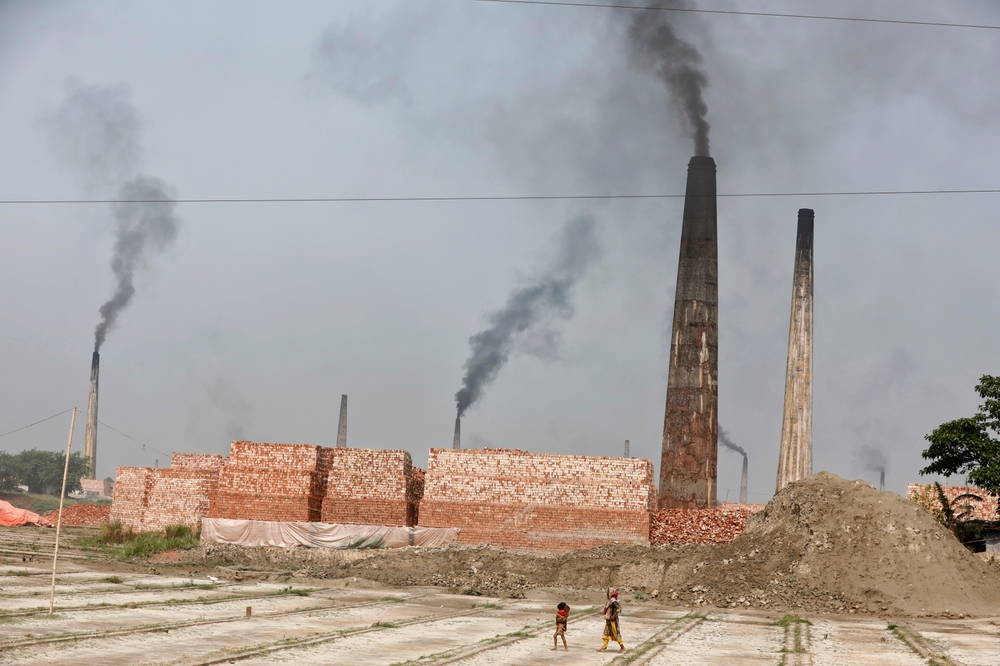
Bangladesh reportedly has more than 7,000 brick kilns, predominantly coal-fired and inefficient. Apart from contributing to air pollution, the sector’s business-as-usual GHG emissions are likely to reach 23.98 million tCO2e in 2030 (one of the largest sources of energy-related GHG emissions). Despite the government’s efforts since more than a decade to transform the sector through a mandate for cleaner technologies, the progress to date has been inadequate. The government must consider intervening in the brick kiln sector to power green development.
Solid fuels are predominantly used to cook food in rural areas, triggering indoor air pollution. The government has undertaken programmes to deploy improved cookstoves to reduce indoor air pollution in such areas. In recent years, rural people have gradually started adopting electric cooking appliances or gas burners contingent upon their financial capacity. Yet, solid fuels remain a concern as they cause indoor air pollution and add to health costs. The government’s support, in terms of policymaking and implementation, and financial aid, can help overhaul the household cooking sector.
The government needs to do away with improper waste disposal and open waste burning. It can consider designing and implementing waste management practices, and undertaking waste-to-energy projects wherever feasible.
The government should also protect water bodies from industrial pollution. Although industries producing liquid waste require effluent treatment plants (ETPs) to treat water before releasing it into waterbodies, many industries do not operate ETPs to avoid costs. However, with rapidly increasing water pollution, the country will need to pay a hefty price to treat water bodies.
Revenue from pollution tax can drive green transformation
A drastic step to ban polluting brick kilns is unlikely to be effective because a transition to cleaner alternatives could take many years. Instead, a pollution tax to increase the production cost of traditional bricks and recycle a portion of the accumulated revenue to incentivise green but expensive brick-making technologies may help.
In 2017, the estimated annual production of the sector was 23 billion bricks, which may have crossed 30 billion in 2024. As around 90% of bricks are produced using polluting technologies, levying an emission charge of Bangladeshi Taka (Tk) 0.5 per brick (US$0.0043/brick) will generate annual revenue worth Tk13.5 billion (US$114.84 million). By increasing the emission charge, the government can collect more revenue and use the money to decarbonise the brick and other sectors. The increasing cost of traditional bricks will motivate consumers to opt for cleaner bricks, which have a market share of around 10%.
In addition to putting pressure on polluting brick kilns, the government can use part of the revenue to help poor people purchase improved cookstoves and electric cooking systems to minimise the use of solid fuels, thereby improving indoor air quality.
Similarly, utilising some of the revenue to upscale clean energy, including waste-to-energy intervention, can help Bangladesh foster its clean energy transition, improve waste management practices and undertake waste-to-energy projects to reduce methane emissions amid the surging demand for finance.
On the other hand, regulating industries to address water pollution may require a mix of instruments. As ETPs are mandatory for industries that release effluents into water bodies, the Department of Environment should impose fines on those who are not compliant.
As the country pursues a mission for an economic transformation to become a developed nation by 2041, it must be ready to take strong measures to curb pollution, which eats into GDP growth. Using carbon pricing to generate revenue from the brick kiln sector and channelling that money to green different sectors could work as a good pilot.
This article was first published in The Financial Express.