
A new study by researchers at Stanford and other institutions demonstrates a pathway to environmental and public health gains in industries with little regulatory oversight or enforcement. The paper, published May 8 in Science, focuses on South Asia, where efforts to regulate brick kilns – among the region’s largest sources of air pollution and greenhouse gas emissions – have largely failed.
The randomized controlled trial tested an intervention involving simple, low-cost operational changes, such as continuous fuel feeding and more efficient brick stacking. The approach reduced coal use by 23% and carbon dioxide emissions by about 20%, while improving brick quality and reducing owner costs. The intervention’s success led initially skeptical Bangladesh government officials to encourage rolling out the intervention nationwide.
Below, study senior author Stephen Luby, the Lucy Becker Professor of Medicine in the Stanford School of Medicine, and study lead author Nina Brooks of the Boston University School of Public Health discuss what the research reveals about how to make environmental progress in settings with little regulation or weak governance. (Read more about Luby’s work on brick kilns)
What lessons can be drawn from this approach for other unregulated sectors?
Luby: Many countries have limited capacity to enforce environmental regulations, and political controversy is often associated with such regulations. If we are striving to solve complex environmental problems in the world, it is important that we consider multiple theories of change, not only the pathway of legally enforced environmental regulations.
Brooks: Many industries in low- and middle-income countries that are heavily polluting are also inefficient and have low productivity. This opens the possibility for energy efficiency to meaningfully reduce pollution, while also bringing economic gains to business owners. Aligning profit motives with environmental and health improvements offers a promising path for some industries in weak regulatory states.
What does your research suggest about effective pathways for scaling clean technologies in informal industries?
Luby: High-income country experts and donors are often most familiar with large centralized high-technology approaches, but 84% of the world’s population lives in low- and middle-income countries. When facing an issue in a new context, it is a mistake to begin by considering what works well in the U.S. or Europe, rather than engaging deeply with the local situation. Little scholarly or consulting attention has been directed to improving the processes in informal industries. This is a large oversight as 60% of all jobs globally are in the informal sector.

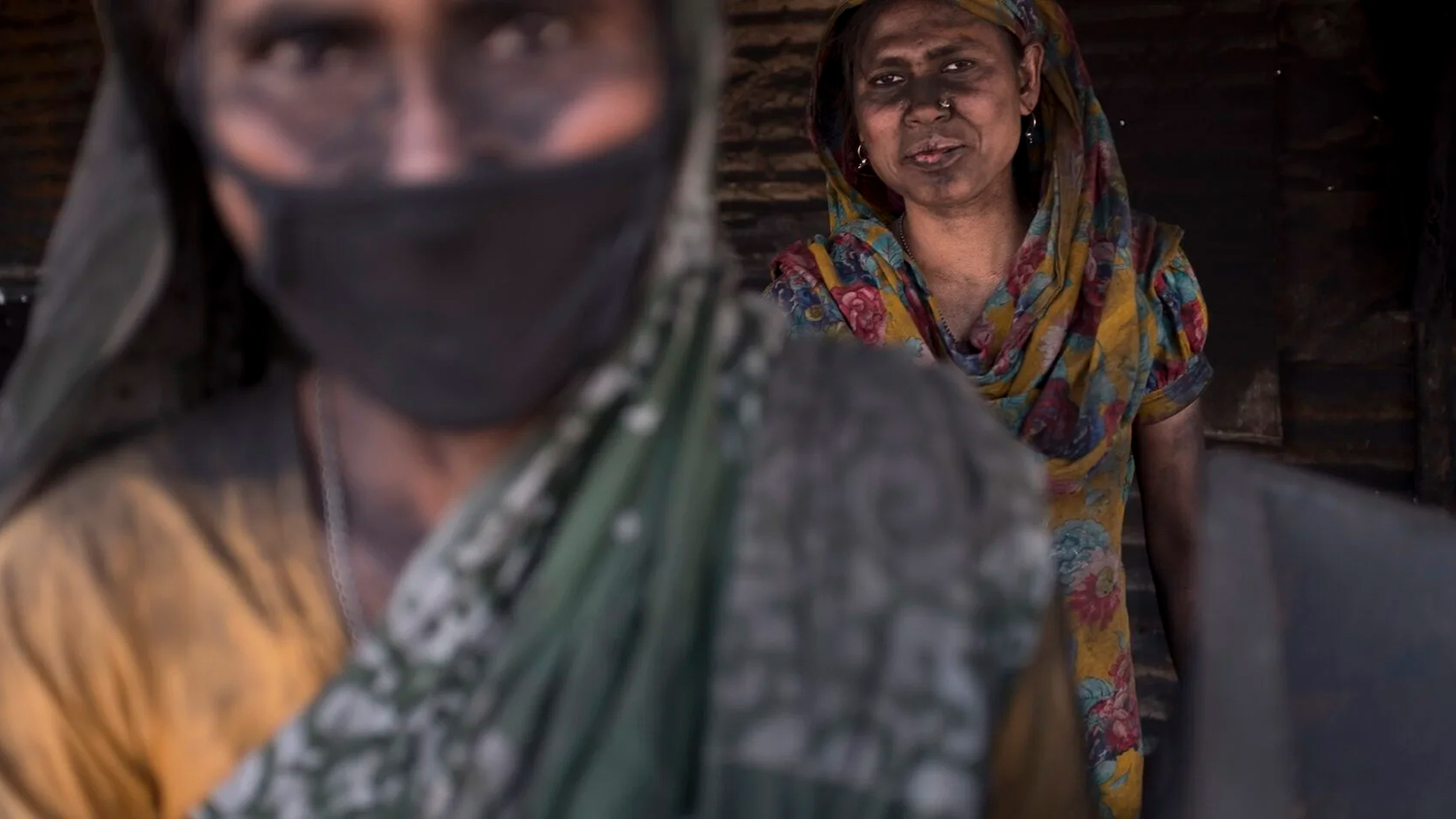
Laborers at a brick kiln near Dhaka, Bangladesh. | Navaism
What have you learned from this intervention about overcoming resistance to change?
Brooks: Many of the brick manufacturers we worked with in Bangladesh wanted to wait and see what the results looked like for other owners before changing their business practices. It was also important for trusted leaders in the local brick industry association to endorse the approach. Some of these leaders went to India with us to learn from kiln owners there who were already using more efficient practices. It’s key to have enthusiastic adopters of these practices act as ambassadors to share their experiences with others.
What does your research show about whether and how worker incentives may drive sustainability efforts?
Brooks: We were initially concerned that workers, who face extremely harsh and exploitative conditions, would be wary of changing their practices. Changes could negatively impact the wages of many who are paid per quantity of bricks. Because the technical intervention would only successfully reduce emissions if workers adopted the improved practices, we explained to owners the business case of incentivizing workers to adopt the intervention and provided examples of financial and non-financial benefits. Despite this framing, most owners did not use any incentives to motivate workers to adopt the practices and our conversations revealed they often did not recognize the value of doing so. Although our study found some small, suggestive reductions in the prevalence of child labor among kilns that received this messaging, improving labor conditions on brick kilns remains an important area for future research.