
Close Menu
  • Home
  • Editorial
  • Politics
  • Economic
  • Sports
  • Religion
  • Contact us
  • About Us
Donate
Hand picked for you
  • Ethiopia, Bangladesh Commit to Deepening Ties Through Expanded Economic Cooperation – ENA English
  • Verma sees Bangladesh-India key to regional economic integration
  • Verma lauds IBCCI role in boosting India-Bangladesh economic ties | Business | FT
  • Bangladesh Economic Inequality and Oligarchs | The oligarch’s playbook: A warning for post-revolution Bangladesh
  • How BNP handles competing pressures to shape Bangladesh’s future: Crisis Group

Subscribe to Updates

Get the latest news from raznitee.

Reach out to us
  • Facebook
  • Twitter
  • Pinterest
  • Instagram
  • YouTube
  • WhatsApp
Facebook X (Twitter) Instagram
raznitee
Contact us
  • Home
  • Editorial
  • Politics
  • Economic
  • Sports
  • Religion
  • Contact us
  • About Us
raznitee
Facebook X (Twitter) Instagram
Contact us
Home»Environment»Salinity in Khulna’s water may reach near-ocean levels in 50 years: Ainun Nishat
Environment

Salinity in Khulna’s water may reach near-ocean levels in 50 years: Ainun Nishat

January 26, 2026No Comments2 Mins Read
Facebook Twitter Pinterest LinkedIn Tumblr Email
Salinity khulna.jpg
Share
Facebook Twitter LinkedIn Pinterest Email

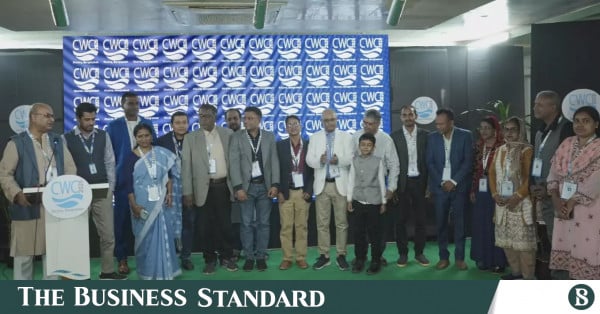
Rising salinity in Khulna’s water sources is posing a growing threat to local communities, agriculture, and the Sundarbans, experts warned at the three-day Third Coastal Water Conference held at the CSS Ava Centre in Khulna.

According to Professor Ainun Nishat, a water and climate expert, if the current trend continues, salinity levels in the city could reach near-ocean levels within the next 50 years, endangering the biodiversity of the Sundarbans and reducing crop production in Bangladesh’s southwestern region.

“If salinity continues to increase, the number of Sundari trees in the Sundarbans will decline, while Goran trees will become more dominant,” Nishat said. He also cautioned that rising salinity could bring salt-tolerant pests and reduce yields of conventional crops by nearly half. He called for urgent measures, including repairing coastal embankments and increasing reliance on surface water instead of groundwater, stressing, “If water sources cannot be protected, sustaining the people of this region in the future will become extremely difficult.”


The Business Standard Google News
Keep updated, follow The Business Standard’s Google news channel

The conference, titled ‘Water and Ecosystem Protection for Sustainable Development,’ addressed issues such as desalination, rainwater harvesting, water pollution, climate change impacts, tidal surge risks, urban water management, and the growing burden of water scarcity on women and marginalized communities.

Experts highlighted the humanitarian and public health risks from the ongoing safe water crisis, noting that many residents are forced to use saline water, which poses serious long-term health hazards. Speakers stressed that water justice is a fundamental human right, and that ensuring integrated water management is a responsibility of the state.

On the final day of the conference yesterday, participants adopted the Khulna Declaration, featuring 12-point recommendations to tackle water scarcity in vulnerable regions. Key proposals include formulating an independent water policy, halting unplanned shrimp farming, dredging rivers and canals, allocating a special budget for safe water supply, and protecting the livelihoods of coastal and wetland-dependent communities.

The declaration was prepared after reviewing outcomes from previous Coastal Water Conferences, district-level workshops, expert feedback, and national and international water policies. Organisers said it will be submitted to policymakers and shared with political parties, with the next Bangladesh Water Conference planned for late 2028.

More than 400 academicians, researchers, students, development workers, and journalists attended the conference, with Shamim Arefin, member secretary of the Water Conference Committee, reading out the declaration.


Share. Facebook Twitter Pinterest LinkedIn Tumblr Email

Related Posts

Climate-resilient housing models slow to gain ground in disaster-prone Bangladesh

April 6, 2026

ADB country director meets Mintoo to boost climate finance cooperation

April 6, 2026

Zero tolerance for corruption in water development board: State minister

April 6, 2026

India’s Role Seen As Vital To Bolster Bangladesh-Nepal Economic Ties

April 6, 2026
Add A Comment
Leave A Reply Cancel Reply

Subscribe to Updates

Get the latest news from raznitee.

We are social
  • Facebook
  • Twitter
  • Pinterest
  • Instagram
  • YouTube
  • WhatsApp
Latest Posts

Ethiopia, Bangladesh Commit to Deepening Ties Through Expanded Economic Cooperation – ENA English

April 23, 2026

Verma sees Bangladesh-India key to regional economic integration

April 23, 2026

Verma lauds IBCCI role in boosting India-Bangladesh economic ties | Business | FT

April 23, 2026
Follow us on social media
  • Facebook
  • Twitter
  • Pinterest
  • Instagram
  • YouTube
  • WhatsApp
Categories
  • Corruption (411)
  • Culture & Society (114)
  • Economic (1,916)
  • Environment (1,320)
  • Foreign Relations (359)
  • Health & Education (70)
  • Human Rights (5)
  • Politics (2,176)
  • Uncategorized (2)
Facebook X (Twitter) Instagram Pinterest Vimeo YouTube
  • About Us
  • Contact us
  • Disclaimer
  • Privacy policy
© 2026 Designed by raznitee.com

Type above and press Enter to search. Press Esc to cancel.