
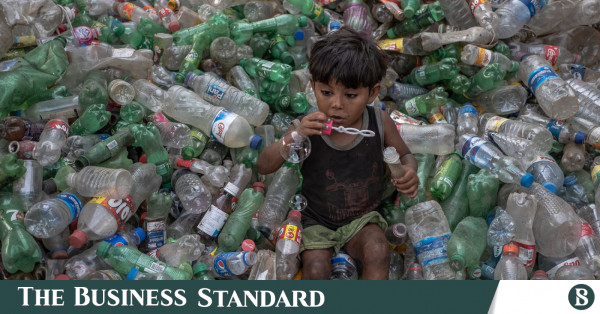
While a completely plastic-free future may be neither realistic nor desirable, the country must prioritise reducing plastic consumption and eliminating pollution through a commitment to Zero Plastic, Zero Noise Pollution and Zero Lead
According to World Bank data from 2021, Bangladesh is among the top countries for plastic pollution. Photo: TBS
“>

According to World Bank data from 2021, Bangladesh is among the top countries for plastic pollution. Photo: TBS
Bangladesh’s Chief Advisor champions transformative yet straightforward ideas to tackle global challenges. The “Three Zeros” framework is central to this vision, which urges individuals and institutions to adopt policies tailored to specific priorities aimed at achieving zero poverty, zero unemployment and zero carbon emissions.
In Bangladesh, we can shift the focus to environmental sustainability with a commitment to Zero Plastic, Zero Noise Pollution and Zero Lead. By integrating these principles into its environmental programmes, Bangladesh can work towards creating a healthier and more sustainable nation by 2025—setting an example for others to follow in the journey toward sustainable development.
The plastic crisis
Globally, an alarming 7 billion out of 9.2 billion tonnes of plastic waste ends up in landfills or is indiscriminately dumped. This staggering figure underscores a critical environmental crisis, with Bangladesh bearing a significant share of the burden.

Plastic pollution in Bangladesh is deeply intertwined with environmental degradation, public health risks, socio-economic challenges, and its escalating contribution to climate change and ecosystem dysfunction.
According to World Bank data from 2021, Bangladesh is among the top countries for plastic pollution, driven by inadequate waste management systems.
In Dhaka, annual per capita plastic consumption stands at 22.25 kg, three times higher than in rural areas, illustrating the disproportionate impact on urban environments. Despite efforts such as the ban on plastic bags, these initiatives often falter due to weak implementation and lack of enforcement.
As Bangladesh confronts the worsening effects of climate change, microplastics exacerbate the crisis, accelerating environmental damage and threatening long-term sustainability. While a completely plastic-free future may be neither realistic nor desirable, the country must prioritise reducing plastic consumption and eliminating pollution.
A comprehensive and integrated approach is essential to achieving this vision. By adopting sustainable plastic management as a cornerstone of its environmental strategy, Bangladesh can work towards significantly reducing plastic pollution by 2025, paving the way for a healthier, more sustainable future.
The ‘chronic’ noise pollution
Environmental noise has emerged as a serious public health concern in Bangladesh, profoundly affecting the well-being of its citizens. Dhaka recently ranked as the noisiest city among 61 densely populated urban areas globally.
According to the United Nations Environment Programme (UNEP), the city’s average noise level has reached an alarming 119 decibels—more than double the tolerable standard.
This chronic noise pollution has severe implications for Dhaka’s residents. A staggering 65% of traffic police report hearing loss and sleep disturbances due to prolonged exposure to high noise levels.
The health risks of long-term noise exposure are well-documented, spanning from annoyance and sleep disruption to serious consequences such as cardiovascular diseases, metabolic disorders and cognitive impairments in children.
Addressing this pressing issue demands urgent action. To achieve a noise-free Bangladesh by 2025, the nation must prioritise robust policies, increased public awareness and effective enforcement of noise regulations.
By tackling this environmental challenge, Bangladesh can create healthier, quieter cities and improve the quality of life for its people.
The deadly lead hazard
Lead pollution is a pervasive global issue affecting millions, and in Bangladesh, it poses a growing threat to public health and the environment. The rapid proliferation of electric three-wheelers, such as EZ bikes and e-rickshaws, has revolutionised urban mobility, with an estimated 30 to 40 lakh vehicles transporting over 11.2 crore passengers daily—surpassing the global fleet of Teslas in scale.
However, the reliance on lead-acid batteries (LABs) to power these vehicles has created severe environmental and health challenges, largely due to the unsustainable management and informal recycling of used lead-acid batteries (ULABs).
Each vehicle operates with four to five LABs, containing around 125 kilograms of lead per vehicle.
Alarmingly, only 10–20% of these batteries are recycled through formal channels, while the remaining 80% are processed informally, contributing to an estimated 167,000 metric tonnes of lead waste annually. This informal recycling sector has fuelled a silent yet devastating health crisis.
Recent studies in The Lancet indicate that two in three children in Bangladesh suffer from elevated blood lead levels, impairing cognitive development, attention and educational outcomes.
Lead poisoning also reduces IQ levels, diminishing earning potential and quality of life.
Furthermore, cardiovascular diseases linked to lead exposure have become a pressing public health concern, with an estimated 60,000 cardiac deaths annually, potentially rising to 138,054.
Bangladesh has taken notable steps to address lead pollution through remediation projects, source identification, and capacity-building initiatives. Specialised training programs, including the Benchmarking Assessment Tool (BAT), Environmentally Sound Management (ESM), and app-based enforcement strategies, offer opportunities to strengthen regulatory practices and enhance the knowledge of government officials.
These efforts represent a promising path toward reducing lead pollution, fostering sustainable recovery, and building community resilience.
By adopting the Zero Plastic, Zero Noise, and Zero Lead framework, Bangladesh can unlock its full potential, reduce health risks and align with Sustainable Development Goals (SDGs).
For instance, replacing plastics with sustainable alternatives, reducing noise for better health, and transforming the electric vehicle sector can collectively foster resilience and progress.
Dr Mahfuzar Rahman is the Country Director of Pure Earth, Bangladesh. He can be reached at: [email protected].
Dr Nusrat Khan is currently working at the University College London, UK.
Disclaimer: The views and opinions expressed in this article are those of the authors and do not necessarily reflect the opinions and views of The Business Standard.